


TFT Modules: Features, Benefits, Applications, and Buying Guide
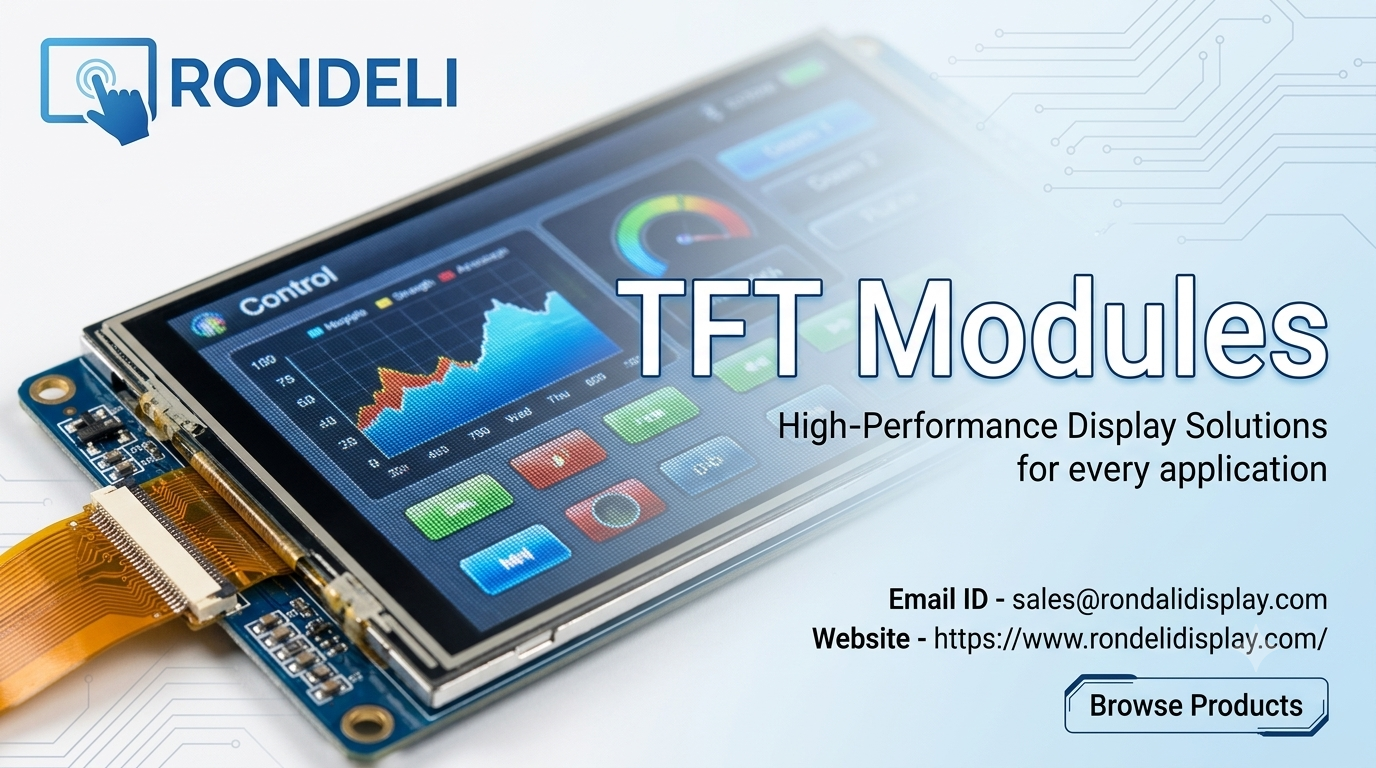
TFT Modules are widely used in modern electronic products that require clear, colorful, and responsive visual interfaces. Based on Thin-Film Transistor technology, these display solutions can present text, images, icons, charts, menus, and other graphical information with good clarity. They are commonly integrated into industrial equipment, medical devices, automotive systems, smart appliances, testing instruments, and consumer electronics. For manufacturers, selecting the right display requires more than choosing a suitable screen size. Resolution, brightness, viewing angle, interface, touch functionality, operating conditions, and mechanical dimensions all influence the final performance. RondeliDisplay provides display solutions designed to meet a variety of application and integration requirements.
Understanding TFT Display Technology
TFT technology uses individual thin-film transistors to control pixels across an LCD panel. This pixel-level control helps the screen produce detailed graphics and consistent color output. A typical TFT display assembly can include the LCD panel, backlight unit, driver components, connector, and supporting structures. Depending on the product design, manufacturers can also integrate touch panels, protective glass, customized mounting structures, or enhanced backlighting. The result is a flexible display platform suitable for products that need an informative and interactive visual interface.
How TFT Displays Produce Images
A TFT display uses a liquid crystal layer positioned between different optical layers. Electrical signals control the behavior of individual pixels, while the backlight provides the illumination needed to make the image visible. By controlling the amount of light passing through each pixel and combining red, green, and blue subpixels, the display can reproduce a wide range of colors and detailed graphics. This makes TFT technology suitable for interfaces where users need to read information quickly and interact with equipment efficiently.
Important Features to Consider
When evaluating TFT Modules, product developers should consider the complete set of display specifications rather than focusing on a single feature.
Screen Size and Resolution
Screen size determines how much physical space the display occupies, while resolution affects the amount of detail that can be shown. A compact instrument may require a smaller screen with moderate resolution, whereas an industrial dashboard may benefit from a larger display with higher pixel density.
Brightness and Contrast
Brightness affects readability under different lighting conditions. Applications exposed to strong indoor lighting or outdoor environments may require higher brightness. Contrast also contributes to the distinction between text, graphics, and backgrounds.
Viewing Angle
A wide viewing angle can improve usability when several people need to view the same screen or when the user cannot look directly at the panel. This feature can be particularly useful for industrial equipment, vehicle displays, and control interfaces.
Touchscreen Capability
Touch functionality can transform a conventional display into an interactive control interface. Capacitive and resistive touch technologies can be selected according to the application's requirements, user interaction method, environmental conditions, and required durability.
Interface Compatibility
The display interface must work correctly with the product's main controller. Depending on the module design, available interfaces may include SPI, RGB, MCU, or MIPI. Developers should confirm electrical specifications, connector type, signal requirements, and controller compatibility before integration.
Where TFT Modules Are Used
The versatility of TFT technology makes it suitable for many industries and product categories.
-
Industrial automation and HMI equipment
-
Medical and healthcare instruments
-
Automotive control systems
-
Smart home appliances
-
Point-of-sale terminals
-
Test and measurement equipment
-
Security and monitoring systems
-
Communication equipment
-
IoT devices
-
Portable electronics
TFT Displays in Industrial Applications
Industrial products often need to present operating information continuously and clearly. A TFT display can show machine parameters, warnings, production information, operating modes, graphs, and control menus in a single interface. Depending on the installation environment, manufacturers may also require higher brightness, improved temperature performance, rugged construction, or specialized touch solutions.
TFT Modules Compared With Other Display Options
Different display technologies are appropriate for different applications. The following comparison provides a general overview.
|
Feature |
TFT Display |
Monochrome Display |
OLED Display |
|
Color graphics |
Yes |
Limited |
Yes |
|
Image detail |
High |
Basic to moderate |
High |
|
Backlight |
Generally required |
Generally required |
Not required |
|
Typical applications |
Industrial, automotive, medical, consumer |
Instruments and simple interfaces |
Premium and compact electronics |
|
Touch integration |
Available |
Available in selected designs |
Available |
|
Design flexibility |
High |
High for simple interfaces |
High |
|
TFT technology is often a practical choice when manufacturers need detailed color graphics, broad application compatibility, and flexible integration. The best technology, however, depends on the product's technical and commercial requirements. |
How to Select the Right TFT Module
Choosing the appropriate display early in product development can help avoid compatibility issues and unnecessary redesign.
1. Define the Product Requirements
Identify what the display needs to show and how users will interact with it. Consider whether the product needs simple data, complex graphics, video, menus, or touchscreen controls.
2. Confirm Physical Dimensions
Measure the available space inside the product enclosure. Check the active display area, overall dimensions, thickness, mounting holes, connector position, and installation structure.
3. Evaluate Visual Performance
Review resolution, brightness, contrast, color performance, viewing angle, and response characteristics. Match these specifications to the expected viewing environment.
4. Check Electrical Specifications
Confirm operating voltage, current requirements, interface type, connector configuration, and controller compatibility before selecting a module.
5. Consider the Environment
Products used in factories, vehicles, outdoor equipment, or other demanding environments may face vibration, temperature changes, humidity, dust, or strong ambient light. The display should be selected accordingly.
6. Think About Production Requirements
For commercial products, long-term supply and technical support are important. Working with an experienced display supplier can make specification confirmation, customization, testing, and production planning easier.
Benefits of TFT Display Solutions
Well-selected TFT Modules can offer several advantages for product manufacturers:
-
Clear color graphics and readable information
-
Multiple screen sizes and resolutions
-
Support for graphical user interfaces
-
Compatibility with touchscreen technologies
-
Flexible integration into embedded equipment
-
Suitable solutions for many industries
-
Opportunities for customized display configurations
Custom TFT Solutions for Specialized Products
Not every electronic product can use a standard display without modification. Some projects require specific dimensions, connector positions, brightness levels, touch configurations, or mounting structures. Customization can help manufacturers create a display that fits their enclosure and user interface more effectively. Depending on project requirements, customization may involve the panel size, interface, backlight, touch panel, cover glass, cable, connector, or mechanical structure.
Frequently Asked Questions
What are TFT Modules?
TFT Modules are display assemblies based on Thin-Film Transistor technology that provide color graphics and visual information for electronic products.
What does TFT mean?
TFT means Thin-Film Transistor, a technology used to control individual pixels within a display panel.
Are TFT displays suitable for industrial equipment?
Yes. They are commonly used for industrial HMIs, automation systems, control panels, measurement equipment, and monitoring devices.
Can a TFT display include touch functionality?
Yes. TFT displays can be combined with capacitive or resistive touch panels depending on the application's requirements.
What screen sizes are available?
TFT technology is available across a broad range of screen sizes, from compact embedded displays to larger panels. The appropriate size depends on the product design.
Does resolution affect TFT display quality?
Yes. Higher resolution can provide more detailed images and sharper text, although the ideal resolution depends on screen size and application requirements.
Which interfaces can TFT displays use?
Depending on the module, interfaces may include SPI, RGB, MCU, and MIPI. Compatibility should be confirmed with the product's controller.
Are TFT displays suitable for bright environments?
Yes, but applications exposed to strong ambient light may require a high-brightness backlight and suitable optical configuration.
Can TFT displays be customized?
Yes. Depending on the supplier, customization can include dimensions, interfaces, backlighting, touch panels, connectors, cables, and mechanical structures.
What industries use TFT technology?
TFT technology is used in industrial automation, medical equipment, automotive electronics, smart appliances, instruments, security systems, IoT products, and consumer electronics.
Why should manufacturers work with an experienced display supplier?
An experienced supplier can assist with specification selection, customization, technical evaluation, quality control, and production support.
Conclusion
TFT technology continues to be an important choice for manufacturers developing electronic products with modern graphical interfaces. By considering resolution, screen size, brightness, viewing angle, interface compatibility, touch capability, environmental requirements, and long-term availability, developers can select a display that matches their application more effectively. RondeliDisplay focuses on practical display solutions for different product requirements and can support manufacturers looking for reliable TFT display options. Contact RondeliDisplay to discuss your project requirements and identify a TFT display solution designed for your product.
Email ID - sales@rondalidisplay.com
Website - https://www.rondelidisplay.com/
- Technology for Students
- Admissions & Applications
- Online Courses
- Career and Jobs
- Campus Life
- Drinks
- Film
- Fitness
- Food
- Games
- Gardening
- Health
- Home
- Literature
- Music
- Networking For Students
- Insights
- Party
- Religion
- Shopping
- Sports
- Theater
- Wellness
- Education News
- Business & Finance For Students
- Security, Law & Crime Education
- Insurance
- Science & Technology For Students
 English
 Arabic
 French
 Spanish
 Portuguese
 Deutsch
 Turkish
 Dutch
Dutch
 Italiano
 Russian
 Romaian
 Portuguese (Brazil)
 Greek
Greek