


ISO 45001 Mexico: What Manufacturing and Industrial Companies Really Need to Know
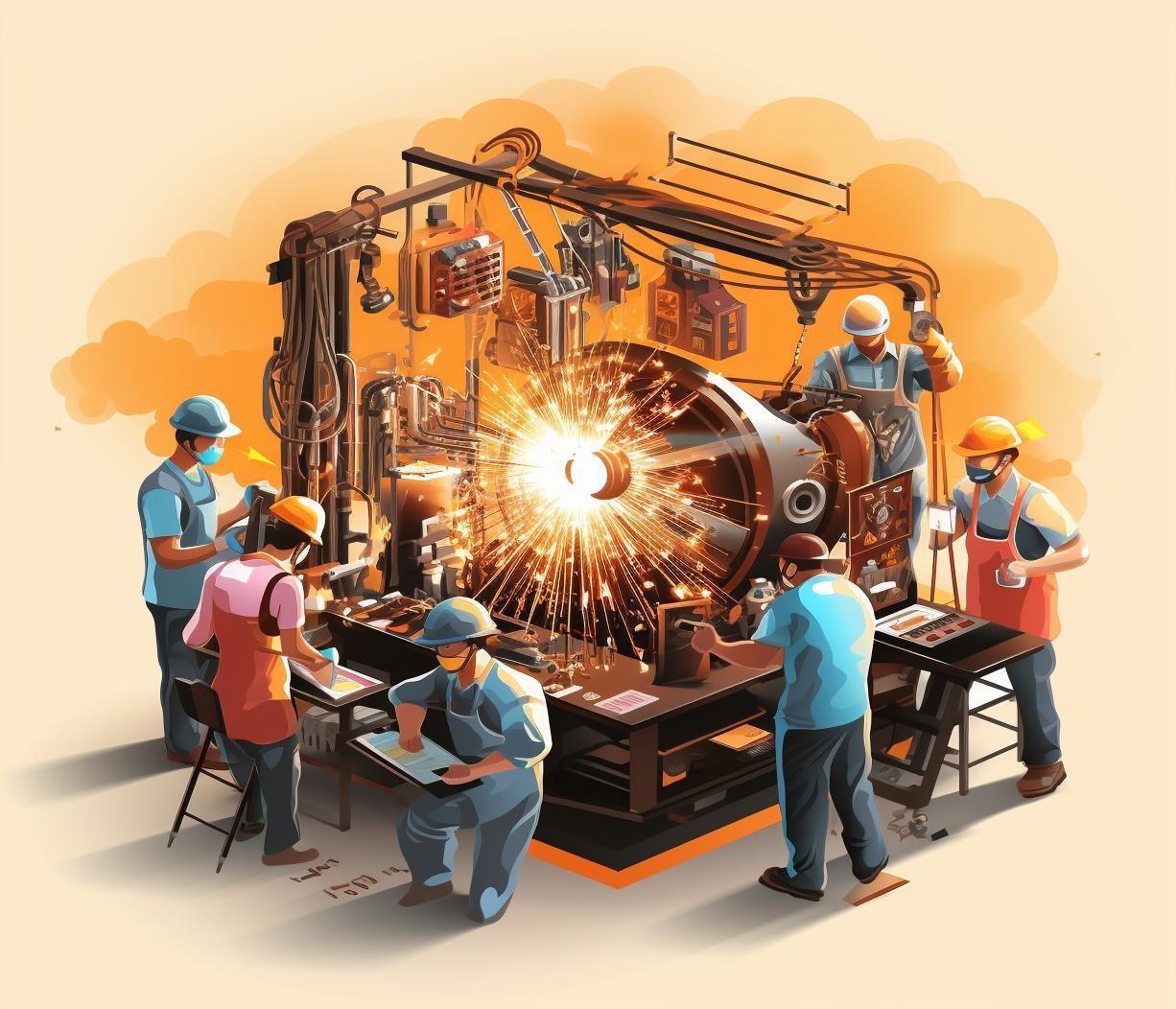
A Quick Reality Check Before We Start
If you work in manufacturing in Mexico, you already know one thing—nothing stays still for long. Machines run, targets shift, people rotate shifts, and somehow everything is expected to stay perfectly controlled. Not easy.
Now enter ISO 45001 Mexico.
It’s often introduced as an “occupational health and safety standard,” but that phrase doesn’t really explain what it feels like on a factory floor. In reality, it behaves more like a quiet system that watches everything—people, machines, timing, pressure—and tries to keep things from going off track.
Not dramatic. Just consistent.
And honestly, that consistency is what most industrial environments struggle with.
So let’s talk about what it really means inside manufacturing and industrial companies—without turning it into textbook language.
What Is ISO 45001 Really Doing Inside a Factory?
ISO 45001 Mexico is not decoration. It’s not a certificate you show during audits and forget afterward. In manufacturing plants, it behaves more like a background structure that influences how work actually happens.
At its core, it’s a system designed to prevent workers from getting hurt. Simple idea. But the execution touches almost everything—machines, behavior, communication, even timing between shifts.
In Mexican industrial environments—automotive plants, metal workshops, electronics assembly, packaging lines—you already feel the pressure. Production never really pauses. One shift overlaps another. Noise fills the space. Heat builds up. Movement is constant.
And in all that motion, safety can quietly slip.
ISO 45001 Mexico steps in and says something very grounded:
“Let’s slow down the risk before it becomes an accident.”
Not after. Before.
That single shift in thinking changes how a factory operates. Not overnight, but steadily. Like tightening loose bolts across a machine—small actions, big difference over time.
And here’s the thing: most companies don’t notice its value until they’ve lived without it.
Why Manufacturing Plants in Mexico Feel Constant Pressure
Walk into any manufacturing facility in Mexico and you’ll feel it instantly. It looks controlled from a distance. Up close, it’s a balancing act.
Now here’s something most people miss: manufacturing environments rarely fail because someone “doesn’t care.” That’s too simple. The real issue is accumulation.
A small shortcut here. A rushed inspection there. A machine guard slightly out of place. A shift change where instructions weren’t fully passed on.
Nothing big. Nothing alarming.
Until it becomes something big.
ISO 45001 Mexico helps companies notice these small signals early. It trains attention—not fear, not pressure, just awareness.
And in export-driven industries, this becomes even more important. Buyers don’t only want good products anymore. They want proof that the people making those products are safe.
So ISO 45001 quietly shifts from “nice to have” to “expected.”
Not loudly. Just firmly.
The Real Risks Inside Industrial Operations
Let’s talk about what actually happens on the ground. Not theory. Real factory life.
Manufacturing and industrial plants deal with risks that often don’t look serious at first glance:
-
Workers adjusting to production speed targets
-
Machines running continuously across long shifts
-
Temporary staff not fully familiar with safety routines
-
Maintenance happening while operations continue nearby
-
Noise levels masking verbal warnings or instructions
And then there’s something more subtle—normalization. That’s the tricky one.
People start saying things like “we always do it this way” or “nothing happened so far.” It feels harmless. But that mindset is where risk quietly grows.
You know what? Most industrial incidents don’t come from chaos. They come from repetition without reflection.
ISO 45001 Mexico tries to interrupt that cycle. It forces a simple question into daily thinking:
“Is this actually safe, or just familiar?”
That question doesn’t sound powerful—but in a factory environment, it is.
Because familiarity can hide risk better than anything else.
How ISO 45001 Works Inside Daily Industrial Life
Now let’s bring this down to earth. ISO 45001 is not meant to sit inside manuals or training slides. It shows up in everyday operations.
In a manufacturing plant, it becomes visible through actions like:
-
Safety checks before machines start running
-
Clear responsibility lines for supervisors and team leads
-
Incident reporting without hesitation or fear
-
Regular inspection of tools and equipment
-
Repeated training instead of one-time instruction
But here’s something people often misunderstand—it’s not just about procedures.
It’s about communication.
Because in real factories, communication is everything. When shifts change, when production pressure increases, when deadlines get tight—messages can break down easily.
And when communication breaks, safety gaps appear.
Honestly, that’s where many factories struggle. Not in machinery. In coordination.
ISO 45001 Mexico tries to fix that quietly by making communication part of the system, not just a habit.
Step by step, it builds clarity between teams who are often moving too fast to pause and align.
Why Manufacturing Companies in Mexico Actually Benefit
Let’s make this practical. What changes when ISO 45001 Mexico is properly implemented?
It’s not just about compliance. The real benefits show up in daily operations:
-
Fewer workplace injuries and disruptions
-
Reduced downtime caused by safety incidents
-
More consistent production flow
-
Better discipline in routine operations
-
Stronger trust from international clients
-
Clear accountability across departments
But there’s another benefit that rarely gets mentioned.
Calm.
Not silence. Not slow production. Just a sense that things are under control.
Workers feel safer. Supervisors stop guessing. Managers stop firefighting small issues all day.
And when that happens, productivity improves naturally. Not because of pressure—but because chaos reduces.
It’s a quiet improvement, but a real one.
The Challenges Nobody Likes Talking About
Now, let’s be honest. ISO 45001 Mexico is not always smooth to implement.
Manufacturing companies often face real friction at the beginning:
-
Too many documents and records to manage
-
Resistance from experienced workers
-
Training fatigue in rotating shifts
-
Inconsistent practices between departments
-
Production targets interfering with safety routines
And yes, it can feel frustrating. Especially when production deadlines don’t slow down for safety systems to settle.
But here’s the truth—this isn’t a contradiction. It’s a transition phase.
Factories are used to speed. ISO 45001 is asking for structure alongside speed.
That balance takes time. Not shortcuts.
And once it settles, things usually feel less chaotic than before.
Why Certification Approach Matters More Than the Certificate
This part is important, and often misunderstood.
ISO 45001 Mexico is not about passing an audit and framing a certificate. That’s the easy part.
The real challenge begins after certification.
If companies treat it as paperwork, nothing changes. Processes remain the same, risks stay hidden, and safety becomes reactive again.
But if companies treat it as a working system, something different happens:
-
Safety habits become consistent
-
Mistakes reduce over time
-
Operations become more predictable
-
Teams become more accountable
Same standard. Completely different outcome.
The difference is not the rulebook. It’s how deeply it becomes part of daily thinking.
That’s where real change lives.
Why Should You Choose ISO 45001 Certification?
For manufacturing and industrial companies in Mexico, ISO 45001 is not just about safety compliance—it’s about building stability into operations.
The main reasons are simple:
-
It reduces preventable workplace injuries
-
It minimizes production interruptions
-
It supports compliance with Mexican labor safety expectations
-
It strengthens trust with global buyers
-
It improves coordination across teams and departments
And maybe the most overlooked reason—less stress in management decisions.
When safety systems are clear, leadership doesn’t spend every day worrying about what might go wrong next.
That relief matters more than people admit.
Why Choose Integrated Assessment Service?
Implementing ISO 45001 Mexico can feel overwhelming if it’s treated as paperwork-heavy compliance work.
This is where Integrated Assessment Service becomes valuable.
Instead of pushing complicated documentation processes, the focus stays on real factory conditions and practical understanding.
Companies benefit through:
-
Simpler interpretation of ISO requirements
-
Better preparation for audits
-
Reduced confusion during implementation
-
More consistent safety practices across shifts
In manufacturing environments where time is always tight, clarity is not a luxury—it’s necessary.
And when teams actually understand what they are doing, they follow the system more naturally.
That’s where real sustainability begins.
Final Thoughts: Safety That Feels Real, Not Forced
ISO 45001 Mexico is not just another certification requirement for manufacturing and industrial companies. It slowly becomes part of how people think, act, and respond inside the workplace.
It changes the rhythm of a factory—not by slowing it down, but by making it more aware.
Over time, something subtle happens. Accidents reduce. Confusion reduces. Reaction-based decisions reduce.
And what remains is a more stable, more conscious industrial environment.
So yes, ISO 45001 is a standard. But in real manufacturing life, it’s also a mindset shift:
“We don’t wait for mistakes to teach us lessons.”
And in an industrial world where every minute matters, that mindset makes all the difference.
- Technology for Students
- Admissions & Applications
- Online Courses
- Career and Jobs
- Campus Life
- Drinks
- Film
- Fitness
- Food
- Games
- Gardening
- Health
- Home
- Literature
- Music
- Networking For Students
- Insights
- Party
- Religion
- Shopping
- Sports
- Theater
- Wellness
- Education News
- Business & Finance For Students
- Security, Law & Crime Education
- Insurance
- Science & Technology For Students
 English
 Arabic
 French
 Spanish
 Portuguese
 Deutsch
 Turkish
 Dutch
Dutch
 Italiano
 Russian
 Romaian
 Portuguese (Brazil)
 Greek
Greek