


Why Choose Gangnammould Buck Basket Injection Mould for Custom Products
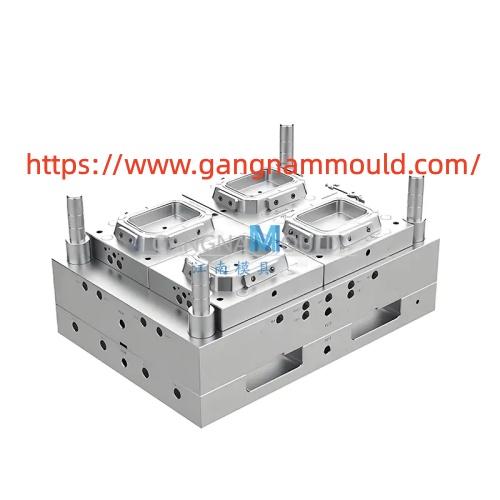
Buck Basket Injection Mould design has a direct influence on how conveniently a finished product can store everyday items and move from one place to another. Although a storage container may appear simple, its shape, grip position, wall structure, and internal capacity all affect the user experience. A practical design should make it easy to organize belongings, reach stored items, and carry the container without unnecessary effort. For manufacturers, these details deserve attention from the earliest stage of product development.
Storage convenience begins with the overall shape. Rectangular products can fit neatly along shelves, inside cabinets, or beside other containers. This arrangement helps users make better use of available space, especially in kitchens, utility rooms, workshops, and retail storage areas. Rounded designs may suit particular applications, while compact square formats can be useful when several units need to be arranged together. The intended location should guide the dimensions rather than relying on appearance alone.
Internal capacity is another important consideration. A container needs enough room for its intended contents, but a larger exterior does not always mean better usability. Thick corners, inward curves, and poorly positioned structural features can reduce the usable area. Product designers should consider the size and shape of the items that will be stored. For example, household cleaning supplies may need a different internal arrangement from vegetables, toys, tools, or personal accessories.
Carrying comfort depends greatly on handle placement. Handles positioned near the upper sides allow users to lift a filled container with a natural arm movement. Their opening size should provide sufficient finger clearance without making the surrounding wall unnecessarily weak. Rounded edges can make contact more comfortable, while gradual transitions between the handle and the side wall help avoid abrupt changes in structure.
Weight distribution also deserves attention. When heavier contents gather on one side, the container may tilt during movement. A balanced base and appropriately positioned grips can make lifting feel more controlled. For larger formats, designers may consider wider grip areas or additional reinforcement around the handle connections. These decisions should reflect the expected load and the people who will use the finished product.
The base and side walls work together to support stored items. A flat base helps the unit stand steadily on shelves, counters, and floors. Carefully arranged ribs can add stiffness without requiring unnecessarily thick walls. Reinforcement around corners may also help the product maintain its shape during regular handling. However, adding material everywhere is not always a practical solution. Wall thickness, rib dimensions, and corner transitions should be planned as a connected structure.
Ventilation is useful for applications involving produce, laundry, or items that may retain moisture. Openings along the sides allow air to circulate, while suitable gaps in the base can support drainage where the application requires it. The size and distribution of these openings should be considered alongside strength and appearance. Too many openings can affect rigidity, while poorly positioned gaps may make cleaning less convenient. A balanced layout helps the product serve its intended purpose.
Stacking and nesting features can improve storage efficiency when multiple empty units need to be kept together. Nesting shapes allow one container to fit partly inside another, reducing the space required during storage and return transport. Stackable designs, by comparison, need stable contact points so that filled units can be arranged with less movement. Designers should also check whether handles, rims, and side profiles interfere with one another when units are placed together.
These product features create specific requirements for tooling development. Handle openings, ventilation patterns, reinforced corners, and curved surfaces all influence how the cavity is arranged and how the finished part is released. Cooling channels should support balanced temperature control, while the feeding system needs to distribute material through the product geometry. Suitable draft angles and an effective ejection arrangement also help reduce the risk of surface marks or deformation during production.
Material selection should follow the expected working conditions. Different plastic grades offer different combinations of stiffness, impact resistance, weight, and processing characteristics. A lightweight household organizer may have different requirements from a carrier used in a workshop or commercial environment. Manufacturers should confirm the intended load, dimensions, colour, surface finish, and expected production quantity before finalizing the design. Sample testing can then help evaluate grip comfort, stability, stacking fit, and practical capacity.
For product developers, successful customization means connecting user needs with manufacturing details. Gangnammould works with customers on plastic product tooling projects, taking product geometry, structural features, and production requirements into consideration during development. Whether the planned design is intended for household organization, retail storage, or workplace use, careful coordination can help bring its functional details together. Buyers planning a new product can review the available solutions at https://www.gangnammould.com/product/ and discuss their drawings, dimensions, material preferences, and application requirements with the team. This provides a practical starting point for developing a design that fits its intended storage and carrying tasks.
- Technology for Students
- Admissions & Applications
- Online Courses
- Career and Jobs
- Campus Life
- Drinks
- Film
- Fitness
- Food
- Oyunlar
- Gardening
- Health
- Home
- Literature
- Music
- Networking For Students
- Insights
- Party
- Religion
- Shopping
- Sports
- Theater
- Wellness
- Education News
- Business & Finance For Students
- Security, Law & Crime Education
- Insurance
- Science & Technology For Students
 Turkish
 English
 Arabic
 French
 Spanish
 Portuguese
 Deutsch
 Dutch
 Italiano
 Russian
 Romaian
 Portuguese (Brazil)
 Greek