


Ergenergy Long-Duration Energy Storage System Tips for Practical Project Planning
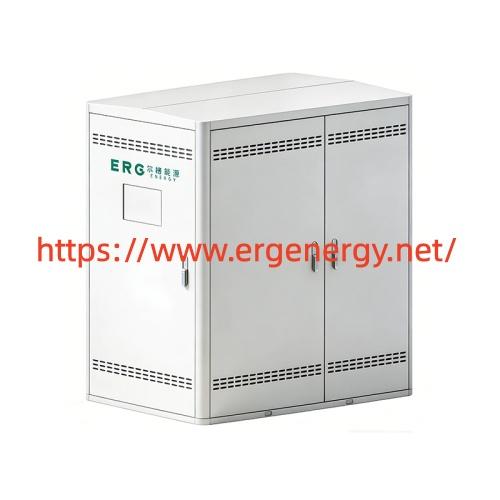
Long-Duration Energy Storage System selection should begin with the actual requirements of a project rather than a product specification alone. Buyers should examine how much electricity needs to be shifted, how long power may be required, what the load profile looks like, and how renewable generation changes throughout the day. The United States Department of Energy defines long duration storage as technology capable of delivering electricity for 10 hours or longer, while current industry discussions also consider applications extending beyond daily shifting.
Capacity is naturally one of the first specifications buyers review, but it should be considered together with output requirements and expected operating patterns. A facility with a stable industrial load may have different requirements from a solar plant, microgrid, utility project, or commercial building. Looking at historical electricity consumption can help buyers estimate when charging may occur and when stored electricity may be needed.
Discharge duration deserves particular attention. Two products with similar rated capacity can serve different purposes when their output periods are not the same. Buyers should therefore ask how the stated duration is calculated, under what operating conditions it applies, and whether the expected output changes during discharge. DOE materials categorize applications across several duration ranges, including inter day and multi day use cases.
Technology selection is another important consideration. Different approaches can have different requirements for installation, thermal management, controls, maintenance, and operating conditions. Buyers should compare these characteristics against the site rather than selecting equipment only from a general technology category. The surrounding infrastructure can be just as important as the core equipment because connection requirements, environmental conditions, and operating schedules all affect project planning.
Safety should be addressed before procurement moves forward. Buyers can ask manufacturers about protection functions, monitoring arrangements, temperature management, fault detection, emergency procedures, and applicable testing requirements. Site conditions should also be reviewed. Outdoor projects, industrial facilities, renewable plants, and grid connected installations may require different engineering arrangements.
Monitoring and control capabilities can have a direct effect on daily operation. Operators need useful information about operating status, charging conditions, output, alarms, and system health. Communication interfaces should also be reviewed when the equipment needs to connect with an energy management platform, renewable generation equipment, or other site controls. A clear interface plan can help avoid integration problems during installation.
Maintenance is another area that should not be treated as an afterthought. Buyers can ask about inspection schedules, component replacement, software support, remote monitoring, troubleshooting procedures, and spare parts. Clear technical documentation can make routine operation easier and give site teams a better understanding of what should be checked during service activities.
Scalability may also influence the purchasing decision. Electricity demand can change as a facility expands, production increases, or additional renewable generation is installed. Buyers considering future expansion should ask whether the original configuration can accommodate additional capacity and what infrastructure changes would be required. Planning this point early can make later modifications easier to evaluate.
Cost analysis should go beyond the initial purchase price. Installation work, auxiliary equipment, site preparation, maintenance, controls, grid connection, and future replacement requirements can all influence the overall project budget. Buyers should compare these factors alongside expected operating patterns. A transparent cost structure can provide a more useful basis for comparing different proposals.
Project compatibility is especially important for manufacturers and developers managing multiple sites. A solution that fits one location may require changes at another location because of differences in climate, available space, electrical infrastructure, or load behavior. Discussing these conditions with the manufacturer before final configuration allows technical requirements to be reviewed in context.
Ergenergy provides energy storage solutions for projects that require careful consideration of capacity, operating duration, control requirements, and site conditions. Its product approach can be evaluated according to the specific needs of commercial, industrial, renewable energy, and other stationary applications. For buyers, a detailed technical discussion can help connect product configuration with the way the project is expected to operate.
The wider electricity market is also placing greater attention on flexibility. The International Energy Agency reports that changing generation and demand patterns are increasing the need for flexible power infrastructure, with renewable generation, electric vehicles, heat pumps, data centers, and other large loads influencing system requirements. This makes careful equipment selection increasingly relevant for projects that need to manage changing supply and demand.
A practical purchasing process should therefore begin with several basic questions. How much output is required? How long should it be available? How often will the equipment operate? What environmental conditions will it face? How will it connect with existing infrastructure? What maintenance resources are available? Can the configuration accommodate future changes? Answering these questions gives buyers a clearer framework for comparing suppliers and technical proposals.
For project teams reviewing product configurations and application options, the Ergenergy product range is available at https://www.ergenergy.net/product/ Reviewing specifications alongside actual site requirements can help buyers create a practical purchasing plan and select equipment that aligns with their operating conditions, integration needs, and long term project objectives.
- Technology for Students
- Admissions & Applications
- Online Courses
- Career and Jobs
- Campus Life
- Drinks
- Film
- Fitness
- Food
- Игры
- Gardening
- Health
- Главная
- Literature
- Music
- Networking For Students
- Insights
- Party
- Religion
- Shopping
- Sports
- Theater
- Wellness
- Education News
- Business & Finance For Students
- Security, Law & Crime Education
- Insurance
- Science & Technology For Students
 Russian
 English
 Arabic
 French
 Spanish
 Portuguese
 Deutsch
 Turkish
 Dutch
Dutch
 Italiano
 Romaian
 Portuguese (Brazil)
 Greek
Greek