


CO Detector and LPG Gas Leakage Detector: Essential Gas Safety Solutions
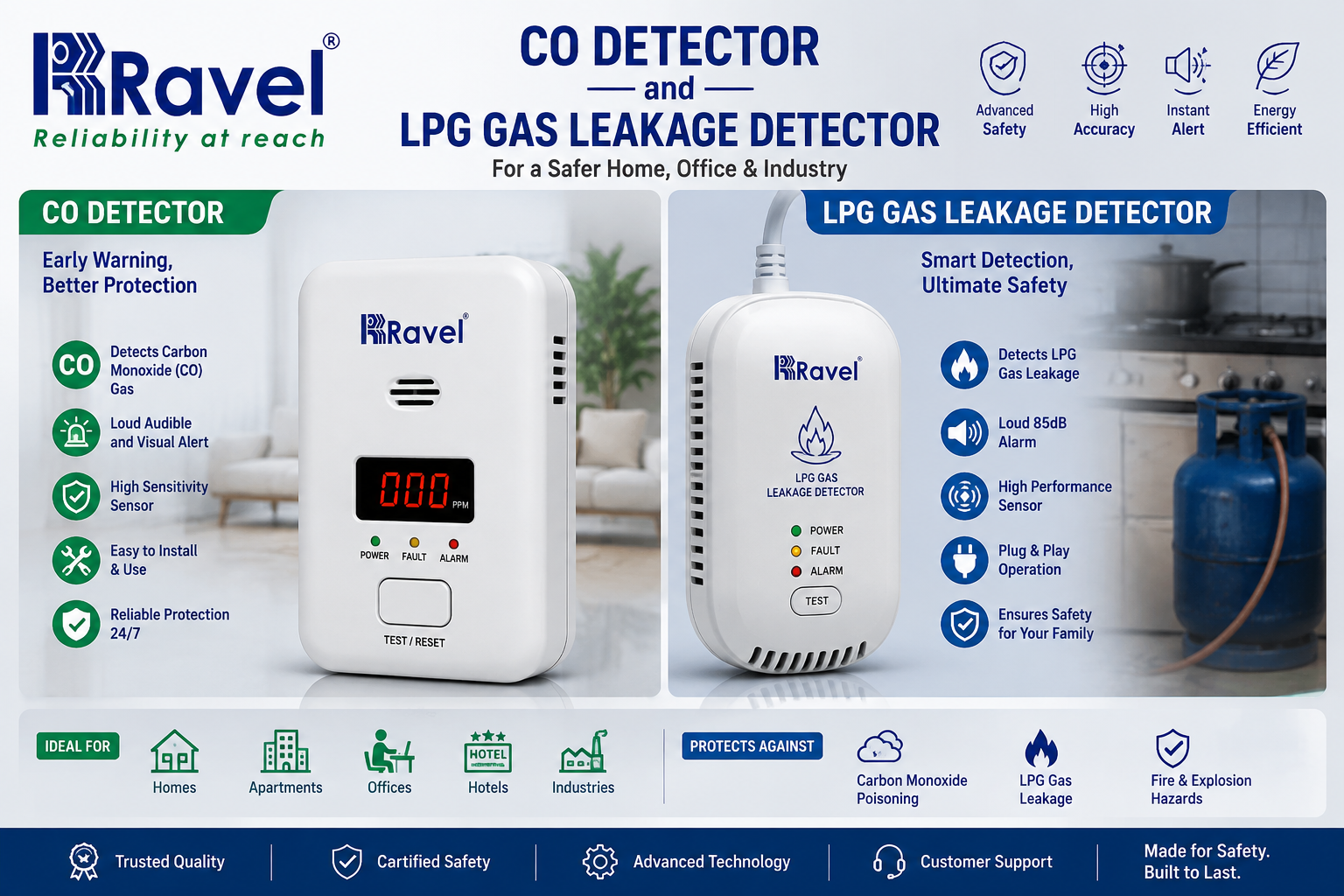
Gas-related hazards can occur in homes, restaurants, hotels, commercial kitchens, industrial facilities, laboratories, and other environments where fuel gases or combustion appliances are used. A reliable gas detection system can provide an additional layer of protection by identifying potentially dangerous conditions before they become more serious. A CO detector is designed to monitor carbon monoxide, while an LPG gas leakage detector is designed to detect the presence of liquefied petroleum gas. Although both devices are used for safety, they detect different hazards and should be selected according to the specific requirements of the installation.
What Is a CO Detector?
A CO detector is a safety device designed to detect carbon monoxide in the surrounding air. Carbon monoxide is a colorless and odorless gas that can be produced when fuels do not burn completely.
Potential sources can include gas appliances, boilers, furnaces, generators, fireplaces, and other combustion equipment. Because carbon monoxide cannot be reliably detected using human senses, a dedicated detector can provide an important warning when dangerous concentrations are detected.
A CO detector typically monitors the surrounding atmosphere continuously. When the concentration reaches a predefined alarm level, the device can activate an audible or visual warning, depending on its design.
Why Carbon Monoxide Detection Matters
Carbon monoxide can accumulate in enclosed or poorly ventilated spaces. People may not recognize its presence without specialized detection equipment.
Installing a CO detector in suitable locations can provide an additional safety measure for buildings containing combustion appliances.
Potential applications include:
-
Homes
-
Hotels
-
Restaurants
-
Commercial kitchens
-
Offices
-
Boiler rooms
-
Garages
-
Industrial facilities
-
Workshops
-
Utility rooms
The exact location and number of detectors should be determined according to the building design, appliance locations, ventilation, manufacturer's instructions, and applicable safety requirements.
What Is an LPG Gas Leakage Detector?
An LPG gas leakage detector is designed to detect the presence of liquefied petroleum gas in the surrounding environment. LPG is commonly used for cooking, heating, and industrial processes.
A leak can become hazardous when LPG accumulates in an enclosed space and reaches a concentration capable of igniting.
The detector monitors the atmosphere and provides an alarm when the gas concentration reaches its configured threshold.
How LPG Gas Leakage Detectors Work
An LPG detector uses a gas-sensitive sensor to identify LPG in the surrounding air. When the sensor detects gas at a potentially dangerous concentration, it can trigger an audible or visual alarm.
Some systems can also provide an output that can be connected to compatible equipment, such as a gas shut-off system or control panel, depending on the product design.
The detection technology, alarm threshold, response time, and output options vary between manufacturers and models.
CO Detector vs LPG Gas Leakage Detector
Although both devices monitor potentially dangerous gases, they are designed for different hazards.
A CO detector monitors carbon monoxide produced by incomplete combustion. An LPG gas leakage detector monitors LPG escaping from gas equipment, cylinders, pipes, or other sources.
Using the correct detector for the specific hazard is essential. A CO detector should not automatically be assumed to detect LPG, and an LPG detector should not be assumed to detect carbon monoxide.
In environments where both hazards may exist, separate or appropriately integrated detection solutions may be required.
Where Should an LPG Detector Be Installed?
LPG is generally heavier than air, which means leaked gas can accumulate at lower levels. This characteristic should be considered when determining detector placement.
Potential locations can include areas near LPG appliances, cylinders, gas connections, or other possible leak sources.
However, detector positioning should never be based solely on general rules. Room layout, ventilation, appliance configuration, manufacturer's installation requirements, and applicable regulations should all be considered.
Where Should a CO Detector Be Installed?
Carbon monoxide behaves differently from LPG, so detector placement requirements are different.
CO detection should consider potential sources of carbon monoxide, sleeping areas in residential applications, room configuration, airflow, and manufacturer recommendations.
The detector should be positioned where it can effectively monitor the intended area without being unnecessarily exposed to conditions that could interfere with its operation.
Benefits of Gas Detection Systems
Using the appropriate gas detection technology can provide several benefits:
-
Early warning of potentially hazardous gas conditions
-
Improved occupant awareness
-
Additional protection for homes and businesses
-
Support for emergency response procedures
-
Continuous atmospheric monitoring
-
Potential integration with other safety systems
Gas detectors should always be considered an additional safety measure rather than a replacement for proper installation, ventilation, equipment maintenance, and safe operating procedures.
Selecting the Right CO Detector
When choosing a CO detector, consider:
Sensor Technology
Different products use different sensing technologies. Review the manufacturer's specifications to determine suitability.
Alarm Levels
Check the device's alarm thresholds and operating characteristics.
Power Supply
Consider whether the detector uses batteries, mains power, or another power source.
Alarm Type
Determine whether an audible alarm, visual indicator, remote output, or combination is required.
Installation Requirements
Follow the manufacturer's instructions regarding location, mounting, testing, and maintenance.
Selecting an LPG Gas Leakage Detector
When choosing an LPG gas leakage detector, consider:
-
Gas compatibility
-
Detection range
-
Sensor technology
-
Alarm threshold
-
Installation environment
-
Power requirements
-
Output options
-
Maintenance requirements
-
System integration
-
Applicable approvals and standards
For commercial and industrial applications, professional assessment is strongly recommended.
Installation and Maintenance
Correct installation is essential for effective gas detection. Improper placement can reduce the ability of a detector to identify hazardous conditions.
Both a CO detector and an LPG gas leakage detector should be installed according to the manufacturer's instructions and relevant safety requirements.
Regular maintenance is equally important. Detectors should be inspected and tested at appropriate intervals. Sensors may have a limited service life, and replacement should be carried out according to manufacturer recommendations.
Maintenance can include visual inspection, functional testing, alarm verification, power checks, and examination for physical damage or contamination.
What to Do When a Gas Alarm Activates
If a gas alarm activates, occupants should follow the building's emergency procedures. Avoid creating ignition sources, do not operate electrical switches if gas leakage is suspected, move to a safe location, and contact the appropriate emergency or gas service from a safe area.
A detector should never be ignored simply because there is no obvious smell or visible sign of danger.
FAQ
What does a CO detector detect?
A CO detector detects carbon monoxide in the surrounding air and provides a warning when configured alarm conditions are reached.
What does an LPG gas leakage detector detect?
It detects the presence of liquefied petroleum gas in the atmosphere and can provide an alarm when the gas concentration reaches its specified threshold.
Can a CO detector detect LPG?
Generally, a CO detector is designed specifically for carbon monoxide and should not be assumed to detect LPG.
Can an LPG detector detect carbon monoxide?
Not unless the specific device is designed and rated for CO detection. Always check the manufacturer's specifications.
Why are both detectors important?
They address different hazards. Buildings using combustion appliances or LPG may have separate risks that require appropriate detection technologies.
Do gas detectors require maintenance?
Yes. Regular inspection and testing help ensure that the detector remains operational and that its alarm functions correctly.
Can gas detectors be connected to other safety systems?
Some models provide outputs for integration with compatible control panels, shut-off systems, or other equipment. Compatibility should be verified before installation.
CTA
Looking for a reliable CO detector or LPG gas leakage detector for your home, commercial kitchen, hotel, industrial facility, or other application? Start by identifying the specific gas hazards present in the environment and choose detection equipment designed for those hazards. Check technical specifications, installation requirements, alarm thresholds, compatibility, and applicable safety standards before purchasing. Professional installation, regular testing, and proper maintenance can help ensure that your gas detection system remains ready to provide an important early warning when a hazardous condition occurs.
- Technology for Students
- Admissions & Applications
- Online Courses
- Career and Jobs
- Campus Life
- Drinks
- Film
- Fitness
- Food
- Jocuri
- Gardening
- Health
- Home
- Literature
- Music
- Networking For Students
- Insights
- Party
- Religion
- Shopping
- Sports
- Theater
- Wellness
- Education News
- Business & Finance For Students
- Security, Law & Crime Education
- Insurance
- Science & Technology For Students
 Romaian
 English
 Arabic
 French
 Spanish
 Portuguese
 Deutsch
 Turkish
 Dutch
Dutch
 Italiano
 Russian
 Portuguese (Brazil)
 Greek
Greek