


Why Does Paperboard Selection Matter for a Box Gluing Machine? | CenWanMachine
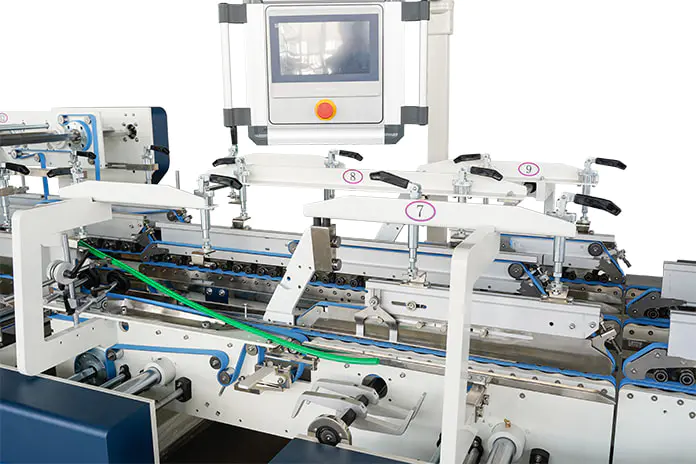
Can a Box Gluing Machine Work With Different Paperboard Materials?
Paperboard remains an important material for retail cartons, food packaging, cosmetic boxes, pharmaceutical containers, promotional packages, and numerous commercial products. Since each substrate can have different thickness, stiffness, coating, texture, and folding behavior, manufacturers need equipment capable of handling these variations with suitable adjustments. A Box Gluing Machine can play an important role in this process by combining feeding, folding, adhesive application, and compression within a coordinated production sequence. CenWanMachine develops carton and packaging machinery for manufacturers seeking practical production equipment, but what factors determine whether different paperboard materials can run smoothly through the same system?
Understanding Different Paperboard Characteristics
Paperboard is available in many grades, and its physical characteristics can vary according to fiber composition, manufacturing process, coating, surface treatment, and intended application. A lightweight printed sheet may behave differently from a rigid carton board, while laminated material can present another set of processing requirements.
Thickness is one of the primary factors affecting machine operation. Thinner substrates can be flexible and lightweight, whereas heavier boards may require stronger transport control and carefully adjusted folding pressure. If the machine settings are not matched to the substrate, feeding stability and folding consistency may be affected.
Surface treatment also deserves attention. Gloss coatings, matte finishes, films, and printed surfaces can change friction between the sheet and machine components. Proper feeding conditions can help maintain steady movement while reducing the possibility of scratches or surface marks.
The grain direction of paperboard can also influence folding behavior. Since fibers respond differently depending on the folding direction, carton design, creasing quality, and machine setup should be considered together when preparing a production process.
Feeding and Transport Performance
Stable feeding forms the foundation of consistent carton production. When paperboard enters a production line at an uneven angle or with inconsistent spacing, later folding and gluing stages may not achieve the intended alignment.
Feeding components should provide controlled contact with the substrate. Delicate printed stock may require gentle handling, while rigid board may benefit from a different pressure arrangement. Adjustable guides and transport sections can help operators adapt the line to different sheet dimensions.
Material preparation is also relevant. Paperboard stored in unsuitable environmental conditions may absorb or lose moisture, which can influence flexibility and dimensional stability. Static electricity can also affect feeding in dry environments.
For manufacturers handling different packaging orders, convenient adjustment is valuable. Operators may need to change guides, transport settings, folding positions, or pressure sections when moving from one carton format to another.
Folding and Carton Formation
Folding performance depends heavily on the relationship between the board and the carton structure. A well-prepared crease can provide a defined folding path, allowing panels to move into their intended positions during production.
Rigid paperboard may require careful folding pressure, while flexible stock can respond differently to transport and compression. The machine therefore needs suitable adjustment options to accommodate the characteristics of each substrate.
Carton structure is another important consideration. Straight-line cartons, multi-panel packages, crash-lock designs, and specialty folding cartons can place different demands on the folding section. A production system intended for varied packaging work should be evaluated according to both material and box construction.
Accurate alignment is particularly relevant when several panels need to meet at specific positions. Small deviations during feeding or folding can become visible in the finished package, making stable material transport and appropriate machine adjustment important parts of production management.
Adhesive Application and Paperboard Surfaces
The relationship between adhesive and substrate surface can influence the final bonding result. Coated, laminated, printed, and uncoated paperboards may react differently to a selected adhesive.
Adhesive type should be considered according to the material, production speed, drying conditions, and package requirements. Application quantity and glue-line position also need to correspond with the carton design.
Too much adhesive can create unnecessary residue or surface marks, while insufficient coverage may affect bonding strength. Consistent application is therefore an important part of carton manufacturing.
Operators can evaluate adhesive behavior through sample production before moving into regular manufacturing. Trial runs provide an opportunity to examine glue distribution, folding alignment, compression, drying behavior, and final carton appearance.
This approach is especially useful when a manufacturer plans to process several paperboard grades, because each material may require a slightly different combination of adhesive and machine settings.
Machine Flexibility for Different Orders
Packaging manufacturers often handle orders from several industries, and those projects may involve different substrates, dimensions, finishes, and carton structures. A flexible production system can help accommodate this variety.
Changeover procedures become important when production moves between formats. Operators may need to adjust guides, belts, folding sections, and pressure points. Equipment with accessible adjustment areas can make this preparation easier to manage.
Production flexibility does not simply mean accepting numerous board types. It also involves maintaining a controlled workflow in which each substrate receives suitable treatment. Material inspection, machine setup, sample testing, and operator monitoring should work together.
For businesses producing customized packaging, this adaptability can be useful because customer requirements may change frequently. One project may involve a simple retail carton, while another may require a specialty package with a different board structure.
What Buyers Should Evaluate
Selecting packaging equipment should begin with a clear understanding of production requirements. Buyers can consider the paperboard grades they commonly process, carton dimensions, folding structures, adhesive methods, production volume, and expected order variety.
Machine specifications provide useful technical information, but actual material testing can offer additional insight. A sample run can reveal how a specific board behaves during feeding, folding, gluing, and compression.
Operators should also receive suitable training because material changes can affect machine settings. Understanding how substrate characteristics influence transport and folding helps reduce setup errors and supports consistent production.
Maintenance should not be overlooked. Paper dust, fibers, adhesive residue, and mechanical wear can accumulate during regular operation. Cleaning feeding components, inspecting transport areas, and checking adhesive sections can help keep the production system in suitable working condition.
Exploring CenWanMachine Packaging Equipment
CenWanMachine provides packaging machinery for manufacturers involved in carton processing and related production activities. Its product range gives buyers an opportunity to examine equipment options according to different packaging requirements, machine structures, and production applications.
For businesses researching carton machinery, reviewing equipment categories before contacting a supplier can help clarify the type of configuration required. Buyers can compare production functions, material compatibility, format requirements, and customization possibilities according to their own projects.
A manufacturer's experience with packaging equipment can also be relevant when a business handles several carton formats. Practical communication about board characteristics, product dimensions, folding structures, and adhesive requirements can help establish a suitable equipment plan.
The product section at https://www.cenwanmachine.com/ allows visitors to explore the available machinery range and learn about solutions associated with carton and packaging production. This can provide a useful reference for companies preparing new equipment projects or reviewing options for production expansion.
Final Considerations
Different paperboard materials can require different production settings, but this does not necessarily prevent manufacturers from handling varied substrates within a flexible carton production system. Thickness, stiffness, surface treatment, grain direction, adhesive response, carton structure, and environmental conditions all deserve attention.
The key is to match the material with suitable feeding, folding, gluing, and compression conditions rather than treating every substrate in exactly the same way. Proper testing and careful setup can help manufacturers establish a controlled process for varied packaging applications.
For companies evaluating a Box Gluing Machine, material compatibility should therefore be considered alongside machine adjustment, carton design, adhesive selection, maintenance, and production requirements. With the right preparation and equipment configuration, manufacturers can build a dependable workflow for different paperboard packaging projects while maintaining orderly carton formation and consistent adhesive application.
- Technology for Students
- Admissions & Applications
- Online Courses
- Career and Jobs
- Campus Life
- Drinks
- Film
- Fitness
- Food
- Jogos
- Gardening
- Health
- Início
- Literature
- Music
- Networking For Students
- Insights
- Party
- Religion
- Shopping
- Sports
- Theater
- Wellness
- Education News
- Business & Finance For Students
- Security, Law & Crime Education
- Insurance
- Science & Technology For Students
 Portuguese
 English
 Arabic
 French
 Spanish
 Deutsch
 Turkish
 Dutch
Dutch
 Italiano
 Russian
 Romaian
 Portuguese (Brazil)
 Greek
Greek