


How Can Zjgycnc Mini CNC Lathe Support Small Machining Jobs
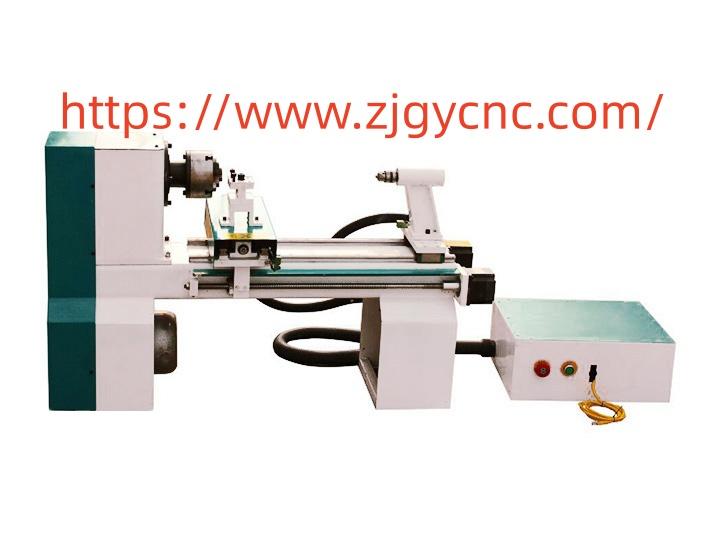
Mini CNC Lathe equipment is a compact computer controlled turning system designed for smaller workpieces and limited batch production. It can perform operations such as facing, threading, grooving, drilling, boring, and external turning according to programmed instructions and selected tooling. Zjgycnc provides turning machinery solutions for workshops and small manufacturers, supporting buyers with configuration discussions, customization, testing, inspection, installation, and delivery planning.
Start With The Workpiece
Small production jobs can involve many different components.
Typical parts may include shafts, pins, sleeves, bushings, fittings, collars, and threaded sections.
The machinery should correspond with the diameter, length, material, and geometry of these parts.
Before purchasing, buyers can review their regular product range and expected future orders.
This helps determine whether the available spindle capacity, workholding, tooling positions, and operating range fit the actual jobs.
Compact Layouts For Small Workshops
Workshop floor space can be limited.
A compact machine can leave room for inspection tables, raw material storage, workbenches, finished parts, and other equipment.
Buyers should measure the available area and consider operator access, maintenance clearance, electrical connections, ventilation, and material movement.
The goal is to create a practical arrangement rather than simply choosing the smallest available footprint.
A suitable layout can make daily work easier to organize.
Spindle Performance
The spindle rotates the workpiece during cutting.
Buyers should review speed range, holding capacity, power, chuck arrangement, and compatibility with their common materials.
Small parts may require precise rotation, while larger components within the intended range can place different demands on the setup.
The selected spindle should correspond with the actual production range.
Operators can then organize cutting conditions around the material, tool, and component geometry.
Workholding Options
Holding systems keep the part in position while machining takes place.
Chucks, collets, and fixtures can support different shapes and production requirements.
A workshop producing several part families may need flexible holding arrangements.
Buyers should confirm whether the available system can accommodate their usual diameters and component forms.
For repeat jobs, standardized fixtures can also simplify setup and make production preparation easier.
Tooling Arrangement
Different machining operations require different cutting tools.
A single component may need facing, external turning, internal boring, threading, drilling, and finishing.
Buyers should therefore review tool station quantity, holder compatibility, indexing method, and accessibility.
For small workshops, a practical arrangement can help operators switch between jobs without unnecessary setup complexity.
Tool management should also be considered because limited storage space can affect how many accessories can remain near the machine.
Programming And Controls
Computer controlled production relies on programmed movement.
Operators can create instructions for spindle rotation, feed movement, tool paths, and other process functions according to the part drawing.
Buyers should review the control interface, program storage, editing functions, coordinate management, and training requirements.
Small workshops may have fewer programming personnel than large factories.
A familiar control structure can therefore be useful when introducing new machinery into an existing team.
Power Requirements
Electrical capacity can vary between workshops.
Before installation, buyers should check available voltage, frequency, power capacity, and connection conditions.
The machine should fit the existing electrical environment.
This is especially important for older workshops where the available supply may have limitations.
Providing electrical information during the purchasing stage can help engineering teams confirm whether additional preparation is required.
Setup Time For Small Batches
Small machining jobs often involve short production runs.
When quantities are limited, lengthy preparation can consume a larger share of available production time.
Buyers should consider programming, tool changes, fixture changes, loading, and inspection during job setup.
Saved programs and standardized workholding can simplify repeat orders.
This makes preparation time an important consideration for workshops that frequently change from one component to another.
Suitable For Prototypes And Custom Parts
Prototype shops often need machinery that can handle changing product designs.
A project may require several revisions before the final component is approved.
Flexible setup, accessible controls, and practical tooling can help during this stage.
Custom part manufacturers may also appreciate a machine that can process different component forms without requiring a completely different production arrangement.
Buyers should review the expected variety of work before choosing a configuration.
Sample Testing
A sample run can provide useful information about actual machining behavior.
Operators can check loading, programming, cutting, dimensions, surface condition, part removal, and overall workflow.
If changes are required, they can be discussed before a larger purchase.
For customized projects, approved sample results can become references for future production and inspection.
Testing under representative conditions gives buyers information that cannot always be obtained from specifications alone.
Quality Inspection
Machine inspection should follow an agreed specification.
Checks may cover spindle operation, controls, workholding, tooling arrangements, electrical functions, accessories, dimensions, and general assembly.
Buyers can establish inspection procedures before shipment.
Sample parts may also be evaluated according to required dimensional and surface criteria.
Clear inspection requirements give purchasing and engineering teams a practical basis for accepting the delivered machinery.
Maintenance And Service Access
Small workshops may have limited maintenance personnel.
Easy access to frequently checked areas can therefore be useful.
Buyers should review access to the spindle, tooling section, electrical cabinet, lubrication points, coolant system, and chip collection area.
Maintenance schedules and replacement components should be discussed before purchase.
Clear technical documents can help operators organize routine servicing without creating unnecessary production interruptions.
Why Consider Zjgycnc
Zjgycnc provides turning machinery solutions for small manufacturing environments and supports discussions around spindle configuration, tooling, workholding, controls, customization, sample production, inspection, installation, and delivery.
For workshops, distributors, contractors, and engineering teams, supplier evaluation can include technical communication, documentation, testing, quality procedures, and repeat order support.
A practical sourcing process should connect machinery selection with actual production needs and available workshop resources.
Build A Practical Selection Process
A useful process can begin with workpiece analysis and continue through material review, spindle evaluation, holding system selection, tooling, control functions, electrical planning, sample testing, inspection, installation, and delivery.
Buyers should retain approved drawings, programs, specifications, and configuration records.
When product types or production quantities change, machinery requirements should be reviewed again.
This keeps the selected solution aligned with changing workshop conditions.
Small machining operations often need to balance floor space, production variety, setup time, operator experience, electrical capacity, maintenance, and future growth.
The appropriate machine should correspond with the workpiece range, batch size, tooling requirements, control preferences, workholding, and factory layout.
A structured purchasing process can help small manufacturers connect machinery characteristics with actual production tasks.
Zjgycnc provides turning solutions for different small and medium manufacturing applications, with available products and project information at https://www.zjgycnc.com/product/
- Technology for Students
- Admissions & Applications
- Online Courses
- Career and Jobs
- Campus Life
- Drinks
- Film
- Fitness
- Food
- Игры
- Gardening
- Health
- Главная
- Literature
- Music
- Networking For Students
- Insights
- Party
- Religion
- Shopping
- Sports
- Theater
- Wellness
- Education News
- Business & Finance For Students
- Security, Law & Crime Education
- Insurance
- Science & Technology For Students
 Russian
 English
 Arabic
 French
 Spanish
 Portuguese
 Deutsch
 Turkish
 Dutch
Dutch
 Italiano
 Romaian
 Portuguese (Brazil)
 Greek
Greek