


Should I see a dermatologist for a receding hairline?
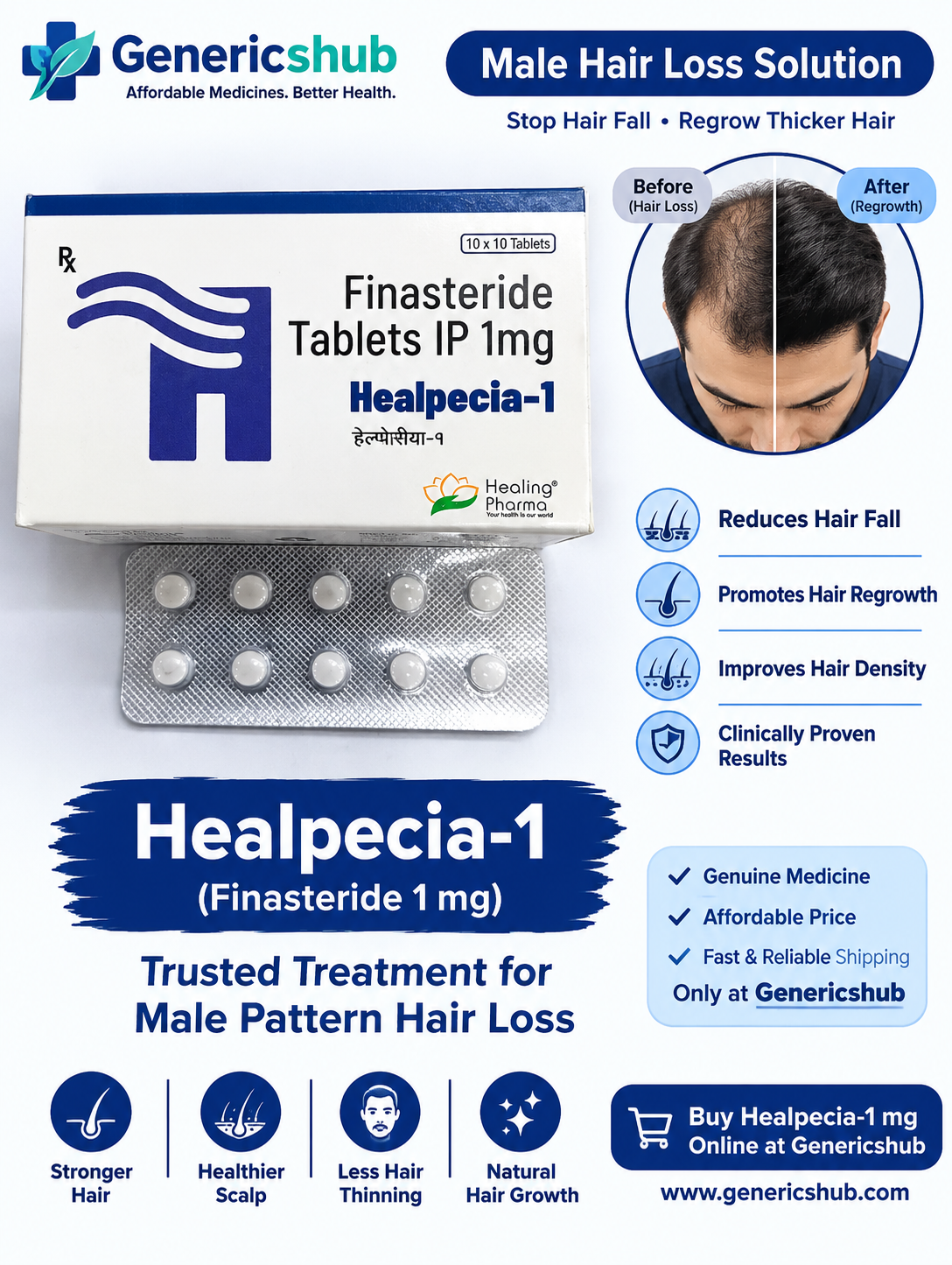
Receding hairline is among the very first symptoms of hair loss. It appears gradually within years in some patients, and rather quickly in others. Although slightly elevated hairline might be a result of natural processes of aging, the progressive recession of hairline is often associated with treatable condition called hair loss.
So, when should you visit a dermatologist because of a receding hairline? In most cases, the answer will be 'yes'. By visiting a dermatologist, you'll get an opportunity to undergo a thorough examination of your scalp, find out the reasons of hair loss and start the treatment before the situation gets worse.
According to the American Academy of Dermatology (AAD), in case of early detection and treatment of hair loss, you will increase chances of successful solution of your problem.
For those people in the United States who are planning to use treatments like Healpecia 1 mg , finasteride 1 mg tablets, or minoxidil, proper diagnosis is especially important.
Why Does the Hairline Recede?
There may be various reasons for the hairline receding. Male pattern hair loss, or androgenetic alopecia, is the most frequent reason among men.
As explained by the AAD, a receding hairline or a bald patch on the top of one’s head may be one of the first symptoms of genetic hair loss in men. Hairs get thinner as hair follicles start shrinking gradually.
Some other causes may include:
- Natural aging
- Genetic hair loss
- Alopecia areata
- Traction due to hairstyles that pull the scalp
- Inflammation or infection of the scalp
- Medications
- Deficiencies in nutrition
- Medical conditions related to hormones or something else
- Scarring forms of alopecia
As different causes require different treatments, one should not assume that each hairline recession is a result of male pattern baldness.
When Is It Time to See a Dermatologist Right Away?
Not all cases of hairline recession require an urgent medical consultation.
- Hair falls out quickly or suddenly
- Bald patches develop in the shape of circles or other patterns
- Intense itching, burning, redness, or pain on the scalp
- Flaking or sores on the scalp
- Balding eyebrows together with a receding hairline
- Hair loss in unexpected places
- Shiny scalp or any scars on the scalp
- Hair loss associated with beginning to use new drugs
- Heavy hair loss accompanied by other symptoms
For instance, FFA can look similar to a normal hairline recession, but it can result in irreversible damage to hair follicles. Timely intervention may help slow down the process.
What to Expect When You Visit a Dermatologist?
Typically, a dermatologist begins with your health history and physical examination.
The doctor can check:
- Hairline pattern – does it show a usual pattern?
- Hair density – is there a thinning of the hair?
- Conditions of the scalp – for signs of inflammation, flaking, infection.
- Condition of hair follicles – are the follicles healthy and of normal size?
- Body hair – any changes in eyebrows or beard.
In the case of ambiguous results, further testing or even a scalp biopsy can be suggested by the dermatologist.
It is necessary not only to find out if you are losing hair but also to find out the reason for it.
What is Finasteride 1 mg?
Finasteride 1 mg is a drug prescribed for the treatment of male pattern hair loss.
Finasteride decreases the formation of dihydrotestosterone (DHT). Dihydrotestosterone is involved in the follicle miniaturization in male pattern hair loss.
A dermatologist can prescribe finasteride to an appropriate male patient after evaluating the pattern and reason of hair loss.
It is vital not to get confused between the strengths of the drug:
- Finasteride 1 mg – this form of the drug is used to treat hair loss in men.
- Finasteride 5 mg – this form of the drug is used to treat BPH.
The dose for the treatment of hair loss is 1 mg per day, and the dose for enlarged prostate is 5 mg per day.
How Does Finasteride Act on Hair Loss?
As seen in male pattern hair loss, follicles that are sensitive can reduce in size due to the action of DHT.
Finasteride reduces the formation of DHT. This helps reduce the effects of miniaturization, hence promoting the formation of thicker hairs in some follicles.
However, finasteride is not a magic hair growth drug. It takes some time for its benefits to be evident. People taking it have to wait for months before noticing any changes, and continuous use is needed.
This is why seeing a dermatologist could be beneficial since treatment works best if the diagnosis is made early.
How Much Finasteride Should I Take?
When using finasteride 1 mg tablet as prescribed by a physician in treatment of male pattern hair loss, it should be taken daily.
Important things to know:
- Take it as per the prescription.
- It can be taken with or without food.
- Take it around the same time every day.
- Do not take extra tablets when missing doses.
- Do not increase from 1 mg to 5 mg without physician's guidance.
- Do not stop long term use without consultation with a health practitioner.
It is designed to be taken on a continuous basis in case it is prescribed to combat hair loss. Discontinuation of its use may lead to resuming hair loss.
What About Healpecia 5 mg?
The Healpecia 5 mg version of Healpecia shouldn't be used interchangeably with the Healpecia 1 mg hair loss dose.
Healpecia 5 mg is linked to the treatment of benign prostatic hyperplasia, whereas 1 mg is usually prescribed to men for male pattern hair loss.
You will not grow your hair faster and better if you use a stronger dose. Never adjust the dosage of finasteride on your own.
Is Finpecia Hair Loss Treatment for Everybody?
Finasteride could be suitable for some men suffering from androgenetic alopecia, but not everyone who is dealing with hair loss.
Other treatments could be recommended by a dermatologist if your hair loss is due to:
- Alopecia areata
- Scarring alopecia
- Traction alopecia
- A scalp infection
- Nutritional issues
- Hair loss related to certain medications
- Underlying medical conditions
Side Effects of Finasteride
While most people will not experience any issues, there are some potential side effects of finasteride.
Some of the known sexual side effects of finasteride are:
- Decreased libido
- Trouble getting or keeping an erection
- Problems with ejaculation
NHS also mentions that mood changes, including depression and suicide attempts, have been observed.
If you observe any worrying signs while using this drug, contact your healthcare practitioner.
Go to the emergency room if you suffer from severe allergies or suicidal thoughts during finasteride therapy.
Who Is Not Allowed to Take Finasteride or Should Talk to Their Doctor First?
This medicine is not suitable for all people.
Women that are currently pregnant or have the risk of becoming pregnant should avoid touching crushed or split finasteride tablets as the drug could harm the male fetus. Finasteride is rarely prescribed for women with hair loss due to the risks it brings.
Make sure to inform your physician about:
- Medications you are using now
- Your medical history
- Possible adverse reactions to finasteride
- Fertility concerns
- Sexual health
- Mental health
- Scheduled PSA tests
Finasteride may affect the result of your PSA tests, so make sure to mention this medication to your healthcare professional.
Finasteride Drug Interactions
Although there are no extensive drug interactions with finasteride, this does not mean that the drug is to be taken without the knowledge of your medications to the healthcare provider.
Inform your doctor or pharmacist about:
- Your prescription drugs
- Your OTC drugs
- Your vitamins
- Any herbal supplements
- Your hair loss medications
A pharmacist can review your full drug profile for possible drug interactions.
Mistakes People Often Make Regarding Receding Hairline
1. When too much hair is already lost
Evaluation at the very beginning may be useful since the therapy may be more successful when there is no extensive follicle miniaturization yet.
2. Taking a higher dose of the drug
High doses do not necessarily bring better results. When treating hair loss, one should take 1 mg of finasteride, while 5 mg is usually recommended for BPH treatment.
3. Getting medication from an unauthorized website
Medications online may be fake, may be poorly stored or incorrectly labeled. Order from a licensed pharmacy following the US prescriptions only.
4. Thinking that supplements can help to cope with the problem
Vitamins for hair are not a remedy for everything. Excessive intake of some minerals can even aggravate the hair loss problem, according to AAD.
5. Stopping the treatment prematurely
Hair growth therapies may need some time to produce visible results.
Conclusion
If your hairline is beginning to recede, visiting a dermatologist is a good choice—especially if the process is continuing or if you are not sure what is causing the problem.
A dermatologist will be able to differentiate between male pattern baldness and another problem and will be able to advise you on treatments such as finasteride 1 mg or minoxidil. Early consultation may be helpful since certain types of hair loss become more difficult to treat once follicles have been severely damaged.
If you are looking up finasteride 1 mg, finasteride 1 mg tablets, Healpecia 1 mg, Finpecia, finpecia 1mg, Healpecia 5 mg, finasteride price, or finpecia hair loss, your first priority should be getting a diagnosis.
- Technology for Students
- Admissions & Applications
- Online Courses
- Career and Jobs
- Campus Life
- Drinks
- Film
- Fitness
- Food
- Jocuri
- Gardening
- Health
- Home
- Literature
- Music
- Networking For Students
- Insights
- Party
- Religion
- Shopping
- Sports
- Theater
- Wellness
- Education News
- Business & Finance For Students
- Security, Law & Crime Education
- Insurance
- Science & Technology For Students
 Romaian
 English
 Arabic
 French
 Spanish
 Portuguese
 Deutsch
 Turkish
 Dutch
Dutch
 Italiano
 Russian
 Portuguese (Brazil)
 Greek
Greek