


How Modern CNC Machines Are Transforming Manufacturing Efficiency
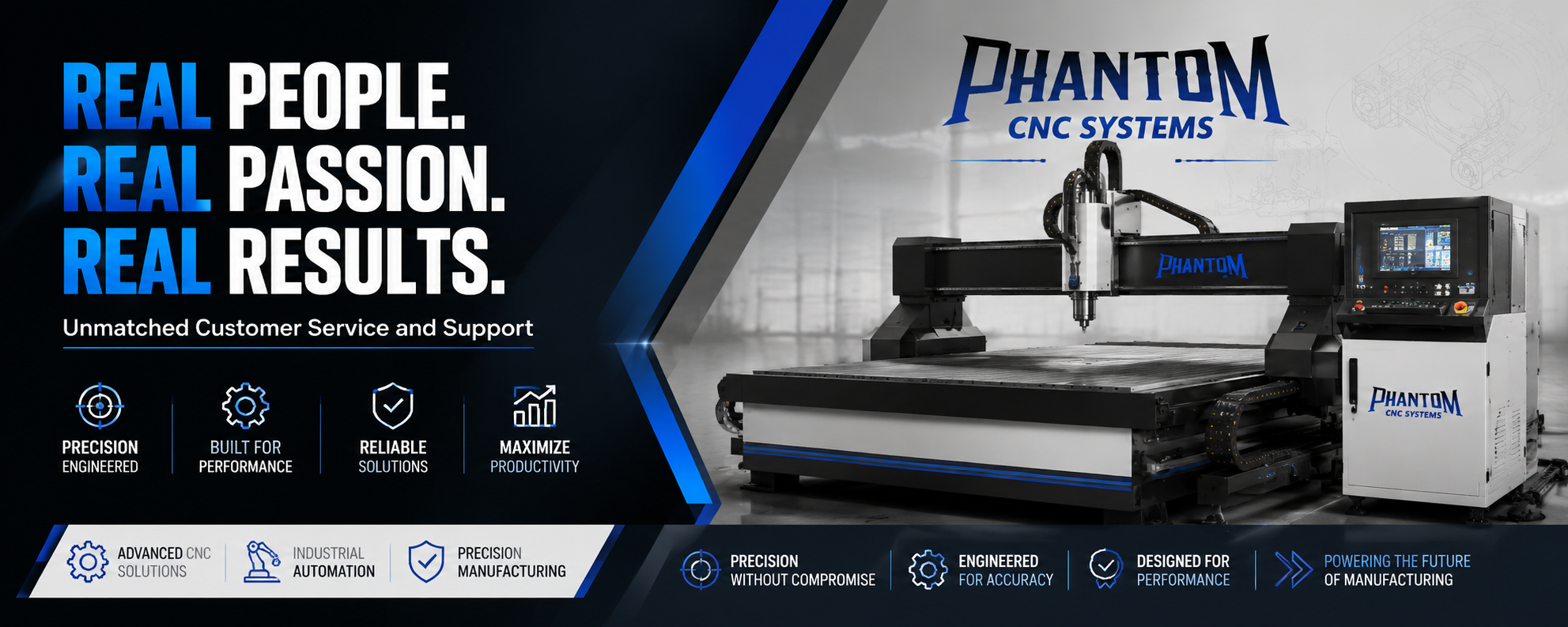
If you run a machine shop or manage a production line, you know the pressure. Tight tolerances, rising material costs, skilled labor shortages, and clients who needed their orders completed yesterday.
In years past, keeping up meant adding more shifts or pushing manual machinery to its absolute limits. Today, the competitive landscape has shifted dramatically. The real gains in throughput and profitability no longer come from working longer hours. They come from working with smarter equipment.
Modern Computer Numerical Control (CNC) machinery has evolved far beyond basic automated cutting. Today's equipment represents a full digital evolution. It integrates real-time data, high-speed multi-axis motion, and smart automation to rewrite what is possible on the factory floor.
Whether you process non-ferrous metals, dense hardwoods, or complex engineering plastics, upgrading to a high-performance system like a Phantom CNC System transforms bottlenecks into streamlined revenue streams.
Let us break down how modern CNC machines drive this transformation and what it means for your operation.
What is CNC Manufacturing Efficiency?
CNC manufacturing efficiency is the ratio of production output to operational inputs on the shop floor. It measures how effectively a Computer Numerical Control machine converts raw materials, electricity, labor hours, and time into finished, high-precision parts with minimal waste and downtime.
Modern shops evaluate this using Overall Equipment Effectiveness (OEE), tracking performance across three core areas:
-
Availability: Minimizing planned setup time and unplanned machine downtime.
-
Performance: Running operations at optimal speed without causing tool wear or accuracy loss.
-
Quality: Achieving tight tolerances on the first pass to eliminate scrap metal and rework.
5 Ways Next-Generation CNC Machinery Boosts Productivity
Modern CNC platforms are engineered to remove friction points across your entire production lifecycle. Here is where the biggest efficiency gains occur.
1. High-Speed Machining and Multi-Axis Versatility
Older 3-axis mills often require operators to manually unclamp, re-orient, and re-clamp workpieces to complete complex cuts. Every manual intervention introduces human error and adds non-value-added time.
Modern 4-axis and 5-axis CNC routers and mills allow simultaneous movement across multiple vectors. Machining intricate geometry in a single setup gives you:
-
Significant reduction in total cycle time
-
Superior surface finish quality
-
Elimination of alignment errors between operations
-
Extended cutting tool life through optimized toolpaths
2. Automated Tool Changers and Material Handling
Idle spindle time is lost profit. Modern machinery pairs powerful spindles with automated tool changers (ATC) that swap bits in seconds without operator input.
Beyond tool changes, automated loading and vacuum hold-down tables secure materials instantly. This keeps the spindle cutting instead of waiting on manual clamp setups.
3. Precision Engineering and Reduced Scrap Rates
Component rejection burns through profit margins quickly. Advanced digital controllers execute G-code instructions with sub-millimeter repeatable precision.
By combining heavy-duty frame rigidity with high-resolution servo motors, high-end machines eliminate chatter and vibration. The result is clean edges, tight tolerance adherence, and virtually zero wasted raw material.
4. Smart CAD/CAM Integration and Nested Optimization
Software lies at the heart of modern manufacturing speed. Advanced Computer-Aided Manufacturing (CAM) software communicates directly with machine controllers to optimize cutting paths automatically.
-
Nesting Algorithms: Arrange parts tightly on sheet stock to maximize material yield.
-
Dynamic Motion Control: Adjusts feed rates on the fly around sharp corners to prevent bit breakage.
-
Simulation Verification: Pre-runs jobs virtually to spot collisions before cutting actual stock.
5. Reduced Dependency on Specialized Labor
Finding veteran machinists grows harder every year. Modern CNC equipment bridges this skills gap. Intuitive touchscreen interfaces and standardized digital workflows allow entry-level operators to run complex jobs safely after minimal training.
Comparing Traditional Manufacturing vs. Modern CNC Systems
| Production Metric | Traditional/Manual Operations | Modern CNC Router & Mill Systems |
| Setup Time | High (manual fixtures and measurements) | Low (automated probing and zeroing) |
| Repeatability | Moderate to Low (dependent on operator skill) | Extreme (precise digital motor encoders) |
| Complex Geometries | Requires multiple setups and specialized jigs | Produced in single setups via multi-axis motion |
| Material Scrap | Higher due to human measurement error | Minimized through software sheet nesting |
| Unattended Operation | Impossible | Supported (lights-out manufacturing capable) |
Key Industries Driving the Demand for Advanced CNC Solutions
The push toward automated precision spans almost every major sector:
-
Cabinetry and Woodworking: High-speed nesting CNC routers cut cabinet boxes, doors, and custom millwork with perfect joint alignment.
-
Signage and Visual Communications: Automated routing through acrylic, aluminum composite materials (ACM), and foam boards keeps sign shops agile.
-
Aerospace and Automotive: Tight tolerances and rigid material cutting make high-performance CNC platforms essential for structural brackets and prototypes.
-
Prototyping and Custom Fabrication: Short runs become profitable because setup time drops from hours to minutes.
How to Calculate Your Potential CNC ROI
Upgrading equipment is a capital investment, but modern efficiency gains deliver quick payback periods. To evaluate your return on investment (ROI), consider these variables:
-
Direct Labor Savings: Calculate hours saved on manual setup, material positioning, and secondary finishing work.
-
Scrap Reduction: Track monthly waste costs and calculate the savings from a 90% drop in scrapped parts.
-
Capacity Expansion: Determine the profit margin on additional jobs you can accept with faster cycle times.
Most shops upgrading from entry-level or legacy gear to a robust commercial machine experience full payback within 8 to 18 months.
Actionable Steps to Upgrade Your Shop Floor Efficiency Today
To unlock maximum throughput from your machinery, follow these best practices:
-
Audit Your Bottlenecks: Identify whether your longest delays occur during file preparation, material clamping, or secondary sanding and deburring.
-
Standardize Tooling: Use high-quality carbide bits and maintain a documented library of feeds and speeds for every material you process.
-
Invest in Equipment Built for Rigidity: Lightweight machines flex under heavy loads, forcing you to run at slower speeds. Heavy steel frames absorb vibration and allow aggressive feeds.
-
Leverage Full Service Partners: Partner with machinery providers that offer comprehensive training, reliable replacement parts, and direct technical support.
Frequently Asked Questions
How does a modern CNC router improve material yield?
Modern CNC systems use advanced CAM nesting software to layout parts automatically across sheet goods. By keeping spacing tight and accounting for bit diameter, these systems cut waste significantly compared to manual layouts.
What is the difference between 3-axis, 4-axis, and 5-axis CNC machining?
A 3-axis machine moves along the X, Y, and Z spatial planes. A 4-axis machine adds rotation around one of these axes (usually the X or Y). A 5-axis machine rotates around two axes simultaneously, allowing the cutting tool to approach the workpiece from any angle without manual re-clamping.
Can upgrading to a modern CNC system lower energy costs?
Yes. Modern CNC machines feature efficient brushless servo motors, smart power-saving modes, and optimized cutting cycles. Because jobs finish faster, total kilowatt-hours used per part drop compared to running older, slower machinery.
Why is frame weight important in a commercial CNC machine?
Heavy welded steel frames provide structural rigidity. This rigidity dampens spindle vibration, prevents frame flexing during high-speed direction changes, and produces smoother surface finishes while extending tool life.
Elevate Your Production Capability
Manufacturing efficiency is not about pushing your team to work faster. It is about equipping your facility with technology that removes manual effort, cuts waste, and keeps your spindles turning.
Whether you need to scale up volume or tackle more complex custom work, investing in modern CNC technology provides the competitive edge required in today's market. Explore high-performance machinery solutions built to drive your productivity forward at Phantom CNC Systems.
- Technology for Students
- Admissions & Applications
- Online Courses
- Career and Jobs
- Campus Life
- Drinks
- Film
- Fitness
- Food
- Games
- Gardening
- Health
- Home
- Literature
- Music
- Networking For Students
- Insights
- Party
- Religion
- Shopping
- Sports
- Theater
- Wellness
- Education News
- Business & Finance For Students
- Security, Law & Crime Education
- Insurance
- Science & Technology For Students
 English
 Arabic
 French
 Spanish
 Portuguese
 Deutsch
 Turkish
 Dutch
Dutch
 Italiano
 Russian
 Romaian
 Portuguese (Brazil)
 Greek
Greek