


Nonwoven Fabric Making Machine: A Complete Guide for Modern Fabric Manufacturing
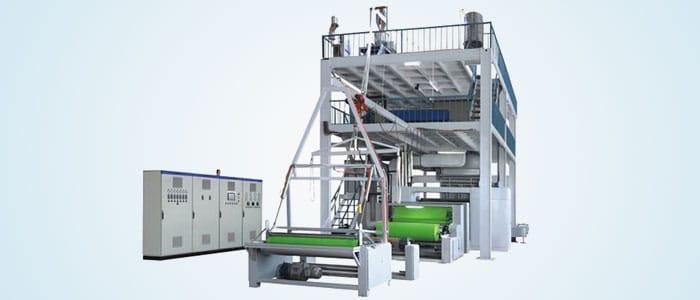
The demand for nonwoven fabrics has grown rapidly across industries such as healthcare, agriculture, packaging, construction, filtration, hygiene, and automotive manufacturing. Behind this growing market is advanced production equipment that can manufacture consistent, high-quality fabric at commercial scale. A Nonwoven Fabric Making Machine provides the technology needed to transform polymers or fibers into functional fabric without traditional weaving or knitting.
For manufacturers planning to enter the nonwoven industry or expand existing production, choosing the right machinery is an important investment decision. Factors such as production capacity, fabric GSM, working width, raw material, automation, energy consumption, maintenance, and after-sales support can directly influence production efficiency and profitability. YPNONWOVEN provides nonwoven production solutions designed to meet different manufacturing requirements and product applications.
What Is a Nonwoven Fabric Making Machine?
A Nonwoven Fabric Making Machine is an industrial production system used to manufacture fabric by bonding fibers or forming continuous polymer filaments rather than weaving yarns together. Depending on the technology, the manufacturing process may involve extrusion, spinning, fiber web formation, mechanical bonding, thermal bonding, or other techniques.
In PP spunbond production, polypropylene granules are commonly used as the primary raw material. The material is melted inside an extruder and passed through a spinning system to create continuous filaments. These filaments are cooled, stretched, distributed into a web, and bonded through a heated calender. The finished fabric is then wound into rolls for further processing.
This continuous manufacturing method allows factories to produce large quantities of uniform fabric while maintaining control over important characteristics such as thickness, GSM, width, strength, and appearance.
How Does a Nonwoven Fabric Making Machine Work?
Although machine configurations differ according to the production technology, a typical PP spunbond nonwoven production process includes several important stages.
1. Raw Material Feeding
The process begins with polypropylene granules or another suitable polymer. An automatic feeding system delivers the required quantity of material into the production line.
2. Extrusion and Melting
The polymer enters the extruder, where controlled heating melts the material. Temperature and pressure must be carefully controlled to achieve stable polymer flow.
3. Filtration and Metering
The molten polymer passes through filtration equipment to remove unwanted impurities. A metering pump then controls the polymer flow before it reaches the spinning system.
4. Filament Formation
The molten polymer passes through a spinneret containing numerous small openings. Continuous filaments are formed and subsequently cooled and stretched.
5. Web Formation
The filaments are distributed across the forming area to create a uniform fiber web. Proper web formation is essential because uneven distribution can affect fabric strength and appearance.
6. Thermal Bonding
The web passes through a heated calender or bonding unit. Controlled heat and pressure bond the filaments together and create the required fabric structure.
7. Winding and Slitting
After bonding, the finished nonwoven fabric is wound into rolls. Depending on customer requirements, the rolls can also be slit into different widths for downstream applications.
Different Types of Nonwoven Fabric Making Machines
The right machine depends heavily on the type of fabric a manufacturer wants to produce. Several technologies are available in the nonwoven industry.
PP Spunbond Nonwoven Machine
PP spunbond machines use polypropylene to produce continuous-filament nonwoven fabric. This technology is widely used because PP offers a useful combination of lightweight performance, strength, chemical resistance, and processing efficiency.
Typical applications include shopping bags, agricultural fabrics, hygiene products, medical materials, packaging, furniture materials, and industrial products.
Double-Beam and Three-Beam Spunbond Lines
Manufacturers with higher production requirements may consider double-beam or three-beam configurations. These systems can provide greater production flexibility and support multilayer fabric structures.
The appropriate configuration depends on production targets, fabric specifications, investment budget, and intended applications.
Spunmelt Production Lines
Spunmelt technology combines spunbond and meltblown processes. SMS, SMMS, SSMS, and SSMMS configurations can be used when manufacturers require a combination of strength, filtration, softness, and barrier properties.
These technologies are particularly relevant for specialized hygiene, medical, filtration, and industrial applications.
PET and Recycled PET Production Lines
PET spunbond systems use polyester rather than polypropylene. PET can be suitable for applications requiring durability, dimensional stability, and resistance to higher temperatures.
Recycled PET technology can also support manufacturers looking to incorporate recycled raw materials into their production strategy.
Why Is Nonwoven Manufacturing Growing?
One of the biggest advantages of nonwoven production is its versatility. Nonwoven materials can be engineered for specific applications by controlling variables such as fiber characteristics, GSM, bonding pattern, strength, softness, and filtration performance.
Unlike conventional woven fabrics, nonwoven production does not require yarn preparation and interlacing. This can simplify manufacturing and support continuous high-volume production.
Modern automation also makes it easier to monitor important process parameters. PLC controls, sensors, automatic feeding, temperature regulation, and production monitoring can improve consistency and reduce dependence on manual adjustments.
Major Applications of Nonwoven Fabric
The versatility of nonwoven materials has created opportunities across numerous industries. Depending on the fabric type and specifications, products manufactured using a Nonwoven Fabric Making Machine can be used for:
-
Medical and hygiene products
-
Agricultural crop protection
-
Shopping and reusable bags
-
Packaging materials
-
Filtration products
-
Construction materials
-
Furniture and mattress components
-
Automotive applications
-
Industrial protective materials
-
Geotextile and infrastructure applications
This wide range of applications gives manufacturers the opportunity to diversify their product portfolios rather than relying on a single market.
What Should You Consider Before Buying a Nonwoven Machine?
Buying production machinery is a long-term investment. Looking only at the purchase price can lead to higher operating costs later. Manufacturers should evaluate the complete production system before making a decision.
Production Capacity
First determine how much fabric you need to manufacture per day, month, or year. A machine that is too small can limit business growth, while excessive capacity can increase unnecessary capital expenditure.
Fabric GSM
GSM, or grams per square meter, is an important specification. Your target market may require lightweight fabric for certain applications or heavier material for industrial products. Select a machine capable of producing your desired GSM range.
Working Width
Working width should match your product requirements and downstream converting equipment. Common production widths vary depending on machine design and application.
Raw Material
Determine whether you plan to use PP, PET, recycled PET, PLA, or another material. Not every production line is designed for every polymer, so material compatibility should be confirmed before purchase.
Automation Level
Modern automated systems can improve production consistency and reduce manual intervention. Consider PLC control, automatic feeding, temperature monitoring, web control, winding systems, and other automation features.
Technical Support
Installation and commissioning are just the beginning. Reliable technical support, operator training, spare parts, maintenance guidance, and troubleshooting assistance can make a significant difference throughout the machine's operating life.
Machine Comparison: Which Configuration Is Right?
|
Machine Configuration |
Production Level |
Suitable For |
Main Advantage |
|
Single Beam |
Small to medium |
General-purpose products |
Lower initial investment |
|
Double Beam |
Medium to high |
Diverse commercial applications |
Higher productivity and flexibility |
|
Three Beam |
High |
Large-scale manufacturing |
Higher output and multilayer capability |
|
Spunmelt |
Specialized/high |
Hygiene, medical, filtration |
Combines multiple web technologies |
The best configuration is not necessarily the largest machine. Manufacturers should select equipment according to actual market demand, available investment, factory space, and future expansion plans.
Why Choose YPNONWOVEN?
YPNONWOVEN focuses on nonwoven production equipment and solutions for manufacturers looking to establish or upgrade their production capabilities. A reliable machinery supplier should provide more than equipment. The supplier should understand the manufacturer's intended products, raw materials, production targets, factory conditions, and future requirements.
When evaluating YPNONWOVEN or any other machinery supplier, manufacturers should ask about machine configuration, expected output, energy consumption, installation requirements, commissioning, operator training, spare parts, warranty coverage, and long-term technical support.
A detailed discussion before purchasing can help prevent costly mistakes and ensure that the selected production line matches the intended business model.
Tips for Improving Nonwoven Production Efficiency
Once the machine is installed, production efficiency depends on proper operation and maintenance. Manufacturers can improve long-term performance by following several practical practices:
-
Maintain recommended processing temperatures and pressures.
-
Inspect filters and critical components regularly.
-
Keep the production area clean to minimize contamination.
-
Monitor fabric GSM and uniformity during production.
-
Train operators before independent machine operation.
-
Schedule preventive maintenance instead of waiting for breakdowns.
-
Keep essential spare parts available.
-
Monitor energy consumption and identify process inefficiencies.
-
Record production data to identify recurring quality problems.
-
Review customer requirements regularly and adjust production accordingly.
Frequently Asked Questions
What is a Nonwoven Fabric Making Machine?
It is industrial equipment used to manufacture fabric without traditional weaving or knitting by forming and bonding fibers or polymer filaments.
What raw materials can be used?
Common materials include polypropylene and polyester. Specialized equipment may also process recycled or biodegradable polymers depending on its configuration.
What is a PP spunbond machine?
A PP spunbond machine converts polypropylene granules into continuous filaments, forms them into a web, and thermally bonds the web into nonwoven fabric.
What products can be made from nonwoven fabric?
Nonwoven fabric can be converted into bags, agricultural materials, hygiene products, medical products, packaging materials, filtration media, construction products, and industrial components.
Is nonwoven production suitable for large-scale manufacturing?
Yes. Continuous production technology makes nonwoven manufacturing suitable for high-volume industrial production when the machine is properly configured.
What does GSM mean in nonwoven fabric?
GSM means grams per square meter. It indicates the weight of the fabric per square meter and is an important specification for product quality and application.
Can one machine produce different GSM fabrics?
Many production lines can manufacture a range of GSM specifications, but the achievable range depends on machine design, raw material, speed, and process configuration.
How do I choose the correct machine capacity?
Start with your expected annual production volume, target GSM, working width, operating hours, product applications, and expected future demand.
Is automation important in nonwoven production?
Yes. Automation can help control important parameters such as temperature, pressure, material feeding, web formation, and winding, improving consistency and reducing manual intervention.
How long does a nonwoven production machine last?
Service life depends on machine quality, operating conditions, maintenance, production hours, and replacement of wear components. Preventive maintenance can help extend equipment performance.
What support should a machinery supplier provide?
Important services include installation, commissioning, operator training, technical support, troubleshooting, spare parts, and maintenance guidance.
Why is supplier experience important?
An experienced supplier can help match machine configuration with raw materials, product requirements, production capacity, factory conditions, and future expansion plans.
Contact - 138-6859-4229
Email ID - info@ypnonwoven.com
Website - https://www.ypnonwoven.com/
- Technology for Students
- Admissions & Applications
- Online Courses
- Career and Jobs
- Campus Life
- Drinks
- Film
- Fitness
- Food
- Игры
- Gardening
- Health
- Главная
- Literature
- Music
- Networking For Students
- Insights
- Party
- Religion
- Shopping
- Sports
- Theater
- Wellness
- Education News
- Business & Finance For Students
- Security, Law & Crime Education
- Insurance
- Science & Technology For Students
 Russian
 English
 Arabic
 French
 Spanish
 Portuguese
 Deutsch
 Turkish
 Dutch
Dutch
 Italiano
 Romaian
 Portuguese (Brazil)
 Greek
Greek