


How Wedge Geometry Influences Rockvalves API 600 Cast Steel Gate Valve Operation
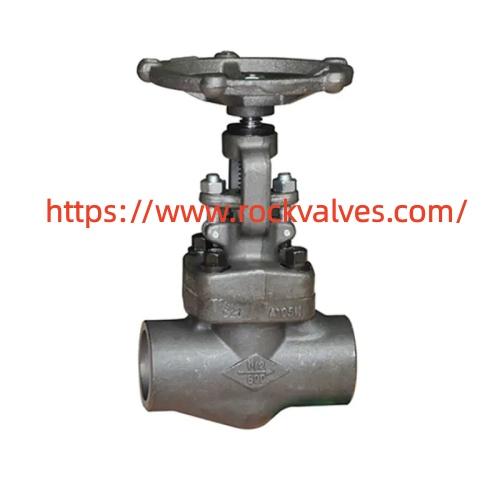
API 600 Cast Steel Gate Valve performance depends on coordinated design elements that govern strength flow characteristics and sealing behavior under industrial conditions. Body construction wedge profile stem guidance seat support and wall proportions each contribute to how the unit responds to pressure temperature and mechanical loads.
Body design sets the foundation for pressure containment and structural stability. Internal passages must allow smooth media movement while the outer form resists external forces from connected piping. Reinforced areas around the mid section and end connections help distribute stress evenly. A balanced wall layout reduces the chance of distortion when temperature changes cause expansion. Proper placement of the bonnet joint further supports overall rigidity so that internal components remain aligned during operation.
Wedge geometry directly influences seating force and contact quality. The angle of the solid or flexible wedge determines how load transfers to the seating surfaces as the stem lowers the disc. A well proportioned wedge promotes progressive engagement that avoids concentrated stress points. Surface finish on the wedge faces and matching seat rings allows the two to conform under pressure without excessive force. Consistency in these profiles keeps the sealing interface repeatable across many open and close cycles.
Stem features control the transmission of motion from the handwheel or actuator to the wedge. Adequate diameter and precise threading provide the mechanical advantage needed for reliable operation while limiting the torque required from the operator. Guiding elements along the stem path keep the wedge centered so that it approaches the seats without side loading. Clearances and surface conditions on these guides affect friction and long term wear. When the stem remains true the seating action stays uniform and packing wear around the stem is reduced.
Seat support and surface integrity decide how effectively the unit isolates flow. Seats that are securely retained within the body maintain their position even under thermal cycling. Matching hardness and finish between the wedge and seat faces limit the development of leakage paths. Hard facing or carefully selected alloys on the contact zones can extend the period before measurable wear appears. The width of the contact band also plays a role in distributing load and accommodating minor misalignment without creating a continuous leak route.
Wall thickness proportions contribute to both pressure rating and resistance to external loads. Sufficient material in critical zones prevents permanent deformation when internal force rises or when pipe strain acts on the ends. Uniform sections help manage thermal gradients so that differential expansion does not distort the seating plane. Designers balance weight against strength to keep the assembly practical for installation while still meeting the required pressure class.
These elements work together to shape overall behavior. Accurate body form and wedge geometry support consistent shutoff. Reliable stem guidance reduces operating effort and protects packing. Stable seats and adequate wall sections maintain integrity through temperature swings and pressure cycles. The result is a product that delivers predictable isolation and lower intervention frequency in demanding service.
Rockvalves applies defined machining and assembly controls to keep these design features within consistent ranges across production batches. Attention to dimensional accuracy and surface condition supports stable function in varied process environments.
Installation practices that minimize pipe strain and correct torque on end connections further protect the engineered geometry. Periodic checks of stem movement seating torque and external joint integrity allow early detection of changes before performance declines. Proper storage and handling before commissioning also preserve the carefully prepared contact surfaces.
When body construction wedge profile stem guidance seat support and wall proportions align the unit provides dependable flow isolation and operational consistency. Operators evaluating solutions for isolation duties can review available models and technical specifications at https://www.rockvalves.com/product/
- Technology for Students
- Admissions & Applications
- Online Courses
- Career and Jobs
- Campus Life
- Drinks
- Film
- Fitness
- Food
- Jocuri
- Gardening
- Health
- Home
- Literature
- Music
- Networking For Students
- Insights
- Party
- Religion
- Shopping
- Sports
- Theater
- Wellness
- Education News
- Business & Finance For Students
- Security, Law & Crime Education
- Insurance
- Science & Technology For Students
 Romaian
 English
 Arabic
 French
 Spanish
 Portuguese
 Deutsch
 Turkish
 Dutch
Dutch
 Italiano
 Russian
 Portuguese (Brazil)
 Greek
Greek