


Material Technology in Advanced Vehicle Lighting Molds
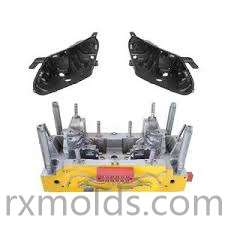
Modern vehicle lighting components require tooling systems that can reproduce complex geometries while maintaining stable production quality, making the Automotive Lamp Mold Supplier an important technical partner for automotive manufacturers and component producers. Lamp assemblies commonly combine transparent or translucent materials with detailed optical structures, decorative surfaces, and integrated mounting features. These characteristics place considerable demands on mold design and manufacturing. A professional tooling approach must therefore consider material behavior, cavity construction, heat transfer, surface treatment, and inspection methods as interconnected elements rather than isolated production stages.
Material engineering provides the foundation for reliable tooling performance. Mold steels and specialized alloys are selected according to their resistance to wear, thermal cycling, mechanical stress, and surface degradation. The internal properties of the selected material influence how effectively the mold maintains structural stability during repeated molding operations. Heat treatment can improve hardness and strength, while suitable surface treatments help protect critical cavity areas. For lighting applications, surface quality deserves particular attention because the cavity may contain optical features that must be reproduced accurately on the finished component.
Cavity design directly influences the quality of automotive lamp components. Modern lamps can contain curved optical surfaces, light diffusion patterns, reflective structures, and fine textures. Engineers use three-dimensional computer-aided design to define these features and examine their relationship with the surrounding mold structure. Simulation can also help evaluate material flow and potential manufacturing challenges before machining begins. By studying the complete cavity architecture during development, engineers can improve manufacturability while protecting important optical and structural features.
Optical surface processing is especially significant when producing lighting components. A transparent lens or textured surface can affect the way light travels through the finished part, meaning that cavity imperfections may influence both appearance and functional performance. Precision machining establishes the basic geometry, while polishing and specialized finishing processes refine the final surface condition. Different areas of a mold may require different finishing approaches depending on whether they form an optical surface, decorative texture, or structural feature. Careful control of these processes helps maintain consistent surface reproduction throughout production.
Thermal management is another major consideration in injection mold engineering. Polymer materials change behavior as they move through the cavity and cool into their final shape. Uneven temperature distribution can affect shrinkage, surface appearance, and dimensional consistency. Engineers therefore study the relationship between cavity geometry, material characteristics, and cooling structure when developing a tooling system. Efficient heat transfer helps create more stable molding conditions and can reduce variations between production cycles. This is particularly valuable for lighting components containing intricate optical structures where dimensional changes may affect the finished appearance.
Precision machining and inspection work together to establish reliable tooling accuracy. CNC machining can produce complex three-dimensional cavity structures, while electrical discharge machining can process detailed regions that are difficult to manufacture using conventional cutting methods. After machining, measurement equipment can verify critical surfaces and structural features against digital engineering data. Three-dimensional scanning and coordinate measurement provide useful information for identifying deviations and improving manufacturing control. These inspection methods also generate valuable feedback for future tooling optimization.
Maintenance and engineering analysis contribute to long-term mold stability. Production feedback can identify areas exposed to greater wear, thermal stress, or repeated mechanical loading. Engineers can use these observations to refine surface treatments, maintenance schedules, and future mold structures. Continuous improvement allows tooling systems to adapt to new lamp designs and evolving material technologies. By combining material expertise, optical surface engineering, precision machining, and thermal analysis, the Automotive Lamp Mold Supplier can provide comprehensive tooling support for demanding automotive lighting applications. Taizhou Renxin Mould Co., Ltd. develops automotive mold solutions with an emphasis on precision engineering and manufacturing quality, while more information about its capabilities is available at https://www.rxmolds.com.
- Technology for Students
- Admissions & Applications
- Online Courses
- Career and Jobs
- Campus Life
- Drinks
- Film
- Fitness
- Food
- Games
- Gardening
- Health
- Home
- Literature
- Music
- Networking For Students
- Insights
- Party
- Religion
- Shopping
- Sports
- Theater
- Wellness
- Education News
- Business & Finance For Students
- Security, Law & Crime Education
- Insurance
- Science & Technology For Students
 English
 Arabic
 French
 Spanish
 Portuguese
 Deutsch
 Turkish
 Dutch
Dutch
 Italiano
 Russian
 Romaian
 Portuguese (Brazil)
 Greek
Greek