


Medical Grade Commercial Cleaning: What Healthcare Facilities Actually Need
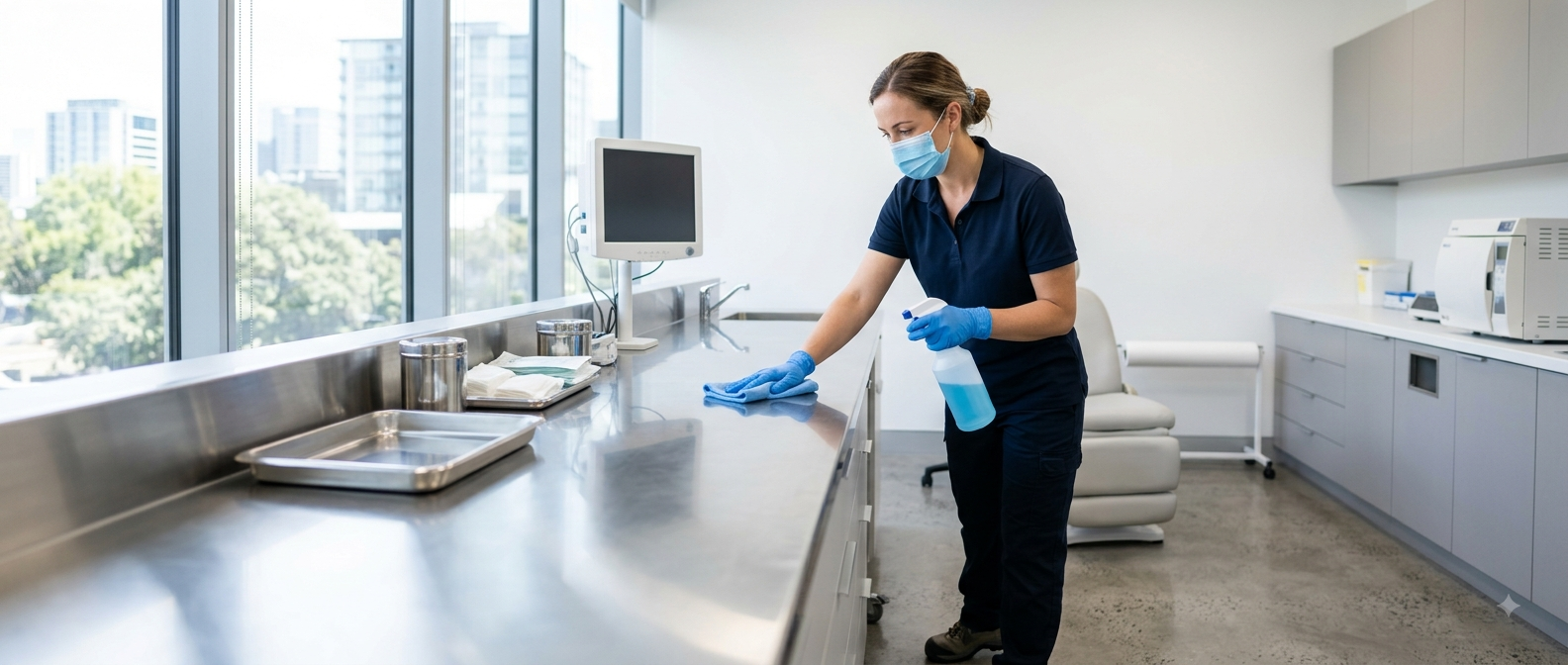
Medical Grade Commercial Cleaning: Why Healthcare Spaces Need More Than a Standard Clean
Walk into a clinic, a dental practice, or a treatment room and the standard of cleanliness feels different from the moment you step through the door. That's not by accident. Healthcare environments carry a level of risk that ordinary offices simply don't, which is exactly why Medical Grade Commercial Cleaning exists as its own category, rather than being treated as a slightly stricter version of general office cleaning.
For clinic managers, practice owners, and healthcare administrators, understanding what actually separates medical-grade cleaning from a standard commercial clean matters more than people often realise — both for patient safety and for meeting the expectations that come with running a healthcare facility in New Zealand.
Why Standard Cleaning Isn't Enough in Healthcare Settings
A general office clean is designed around comfort and presentation — tidy desks, vacuumed carpets, a fresh-smelling kitchen. Healthcare spaces need all of that too, but with a much higher priority placed on infection control, surface sanitisation, and consistency between visits.
Medical grade commercial cleaning is built around the understanding that healthcare environments deal with a constant flow of patients, some of whom may be unwell or immunocompromised, moving through shared spaces like waiting rooms, consultation rooms, and treatment areas. Surfaces that might only need a quick wipe in an office setting — door handles, chair armrests, reception counters — become far higher priority in a clinical setting, simply because of how many different people come into contact with them throughout the day.
What Medical Grade Commercial Cleaning Actually Involves
The scope of a proper medical-grade clean tends to go well beyond general tidiness. It typically covers:
- Thorough sanitisation of high-touch surfaces, including door handles, light switches, and reception counters
- Detailed cleaning of waiting areas, consultation rooms, and treatment spaces
- Bathroom and staff facility cleaning to a stricter hygiene standard
- Careful handling of shared equipment and communal touchpoints
- Consistent, standardised cleaning processes that don't vary depending on who's on shift
- Appropriate product selection suited to clinical environments, rather than general-purpose supplies
This level of detail is what separates Medical Grade Commercial Cleaning from a standard commercial service. It's not just about cleaning more often — it's about cleaning with a level of consistency and attention that healthcare environments genuinely require.
The Range of Facilities That Rely on This Standard
Medical-grade cleaning isn't limited to hospitals. A wide range of healthcare and wellness facilities across New Zealand depend on this higher standard, including:
- Medical clinics and general practice surgeries
- Dental offices and orthodontic practices
- Specialty treatment rooms and allied health clinics
- Physiotherapy and rehabilitation centres
- Diagnostic and testing facilities
Each of these environments has slightly different layouts and patient flows, but they share the same underlying need — a cleaning approach that treats hygiene as a core operational requirement, not an afterthought squeezed in around other tasks.
Consistency: The Detail That Matters Most
One of the biggest challenges in healthcare cleaning isn't the individual clean itself — it's making sure the same standard holds up visit after visit, regardless of which staff member is on shift or how busy the schedule has been. A single excellent clean followed by a rushed, inconsistent one undermines the entire purpose of having a medical-grade standard in the first place.
Reliable medical grade commercial cleaning relies on standardised processes — clear checklists, defined routines for each area, and some form of quality oversight to catch any drop in standard before it becomes a pattern. Facility managers evaluating a provider should specifically ask how this consistency is maintained, rather than simply assuming it will happen on its own.
Product Selection Matters More Than People Expect
Not every cleaning product is suitable for a clinical environment. Harsh chemicals can cause irritation for sensitive patients, while under-strength products may not provide adequate sanitisation for a healthcare setting. Getting this balance right is a core part of what makes medical grade commercial cleaning different from a general commercial service.
Facilities working with young children, elderly patients, or immunocompromised individuals need particular care around product choice, since these groups are often more sensitive to strong chemical residues or fragrances. A provider offering genuine medical-grade cleaning should be able to speak clearly about what products are used and why they're appropriate for a clinical setting, rather than defaulting to standard commercial-grade supplies.
Scheduling Around a Working Healthcare Facility
Healthcare facilities rarely have the luxury of shutting down for cleaning the way a retail store might close its doors after hours. Waiting rooms need to stay presentable throughout the day, treatment rooms often need turnaround cleaning between patients, and staff facilities need regular attention without disrupting appointments.
This means scheduling for Medical Grade Commercial Cleaning needs to be built around how the facility actually operates — not a fixed, generic timetable applied regardless of patient flow. Some facilities benefit from cleaning outside operating hours for a full deep clean, paired with lighter touch-point sanitisation during the day to keep high-traffic areas hygienic between full cleans.
What to Look for When Evaluating a Provider
Choosing the right provider for a healthcare facility comes down to more than general cleaning experience. A few specific things are worth confirming:
Experience in Clinical Environments
General commercial cleaning experience doesn't automatically translate to healthcare settings. It's worth asking directly whether a provider has experience specifically working in clinics, dental practices, or similar environments, rather than assuming the skills carry over automatically.
Clear, Documented Processes
Ask whether cleaning routines are standardised and documented, rather than left to individual discretion. This consistency is what protects the facility from quality dropping off between visits.
Appropriate Product Knowledge
A provider should be able to explain what products are used, why they're suitable for a clinical setting, and how they handle any specific sensitivities the facility might have around fragrance or chemical strength.
Flexibility Around Patient Flow
Confirm that the provider can work around appointment schedules, turnaround cleaning needs, and any specific timing requirements the facility has, rather than offering a single fixed visit time regardless of how the space operates.
A Track Record of Reliability
Healthcare facilities can't afford a missed or rushed clean the way a general office might tolerate one occasionally. Ask how the provider handles reliability — what happens if a scheduled visit needs to be covered unexpectedly, and how quickly any issue gets addressed.
The Bigger Picture: Why This Standard Matters
Beyond compliance and appearance, medical grade commercial cleaning plays a genuine role in patient and staff wellbeing. Reducing the risk of surface-based transmission in a healthcare setting isn't a nice-to-have — it's part of what allows a facility to operate safely and maintain the trust of the patients who walk through its doors every day.
Facilities that treat this as a genuine priority, rather than a background task, tend to reflect that standard in every other part of how they operate — from patient experience to staff confidence in their working environment. It's a detail that patients may not consciously notice, but they absolutely feel it in how safe and well cared for a facility appears.
A Quick Checklist for Facility Managers
Before choosing or reviewing a provider, it can help to run through a short list of practical questions:
- Does the provider have documented experience in clinical or healthcare settings?
- Are cleaning routines standardised across shifts, or dependent on individual staff?
- Can they explain their product choices and how they suit a clinical environment?
- Is scheduling flexible enough to work around appointments and patient flow?
- What happens if a scheduled visit is missed or an issue is reported?
Working through these questions before committing to a provider tends to surface the details that matter most, rather than relying on a general impression from a sales conversation alone.
Final Thoughts
Medical Grade Commercial Cleaning exists because healthcare environments genuinely need a different standard from general commercial spaces. It's not just about cleaning more thoroughly — it's about consistency, appropriate product use, and a process built around how a working healthcare facility actually operates. For clinics, dental practices, and treatment centres across New Zealand, getting this right isn't just about presentation. It's a meaningful part of keeping patients, staff, and visitors safe in a space where hygiene genuinely matters.
- Technology for Students
- Admissions & Applications
- Online Courses
- Career and Jobs
- Campus Life
- Drinks
- Film
- Fitness
- Food
- Jogos
- Gardening
- Health
- Início
- Literature
- Music
- Networking For Students
- Insights
- Party
- Religion
- Shopping
- Sports
- Theater
- Wellness
- Education News
- Business & Finance For Students
- Security, Law & Crime Education
- Insurance
- Science & Technology For Students
 Portuguese (Brazil)
 English
 Arabic
 French
 Spanish
 Portuguese
 Deutsch
 Turkish
 Dutch
Dutch
 Italiano
 Russian
 Romaian
 Greek
Greek