


Digital Printing on Fabric: A Complete Guide to Modern Textile Printing
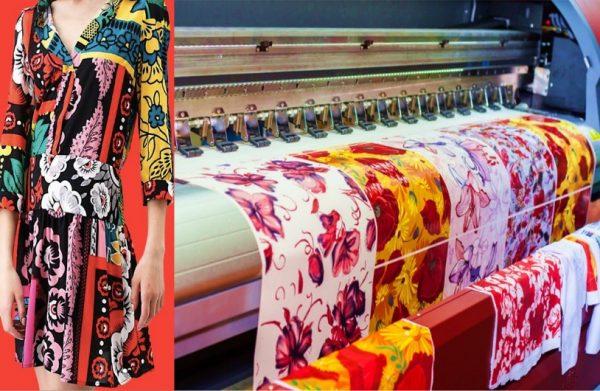
Digital printing on fabric is a textile printing process that uses digital technology to place ink directly onto a fabric surface. The design is prepared electronically and sent to a specialized textile printer, which creates the image without requiring conventional screens or engraved rollers. This makes it possible to print intricate patterns, photographs, fine details, gradients, and personalized artwork with considerable precision.
The popularity of Digital printing on fabric has increased because textile businesses need greater flexibility in design and production. Fashion companies can test new patterns in small quantities, interior designers can order customized materials, and manufacturers can produce different designs without preparing a new physical setup for every variation. The technology is useful across many applications, but choosing the right fabric, ink, and finishing process is essential for a successful result.
What Is Digital Printing on Fabric?
Digital fabric uses inkjet technology adapted specifically for textiles. A computer file containing the artwork is processed by printing software, which controls the movement of print heads and the amount of ink released onto the fabric.
The process differs from traditional printing because there is no need to create a separate screen for each color. A digital printer can reproduce a large range of colors from the supplied artwork. This is particularly useful for designs containing photographic details, smooth tonal changes, and complicated patterns.
Digital printing does not mean that every fabric can be printed in exactly the same way. Natural and synthetic fibers have different characteristics, so the ink and preparation method must be selected according to the material. Cotton, polyester, silk, nylon, and viscose may require completely different production procedures.
How Does Digital Fabric Printing Work?
Artwork Preparation
The first stage is preparing the artwork. A designer may create a pattern, illustration, photograph, logo, or repeating textile design using professional graphics software.
Before production, the file should be checked for resolution, dimensions, color settings, and pattern alignment. If the design is intended to repeat across a roll of fabric, the repeat must be carefully tested to prevent visible breaks or misalignment.
Color management is another important step. A color displayed on a monitor can differ from the shade produced on fabric. Printers often use color profiles, calibrated equipment, and physical samples to improve color accuracy.
Fabric Preparation
The fabric must be prepared according to the selected printing system. Some materials require chemical pretreatment before ink is applied. Pretreatment can control how the ink spreads and interacts with the fibers.
The textile should also be clean, dry, and free from wrinkles or contamination. Poor preparation can lead to uneven color, blurred edges, or inconsistent coverage.
Printing
The prepared material is fed through the digital textile printer. Print heads release microscopic droplets of ink according to the digital artwork.
The printer can control the placement and quantity of ink very precisely. Since the artwork is digital, the operator can change the design without manufacturing a new screen or engraving a new roller.
Fixation and Finishing
After printing, the ink may require a fixation process. The exact method depends on the ink and fabric combination.
Reactive dyes commonly require steaming to bond the dye with suitable fibers. Disperse dyes for polyester are generally fixed using heat. Pigment systems usually require curing so that the binder securely holds the pigment to the fabric.
Some printed fabrics are washed after fixation to remove unfixed dye or processing chemicals. The textile can then be dried and finished according to its intended application.
Main Types of Textile Printing Inks
Reactive Inks
Reactive inks are commonly used for cotton, linen, viscose, and other cellulosic fibers. During fixation, the dye chemically bonds with the fiber. When the process is properly controlled, reactive printing can provide strong colors and good wash durability.
Acid Inks
Acid inks are suitable for materials such as silk, wool, and nylon. They can produce vivid colors and detailed results, which makes them useful for selected fashion and premium textile applications.
Disperse Inks
Disperse inks are primarily designed for polyester and certain related synthetic materials. Heat allows the dye to enter the fiber. This method is widely used for polyester clothing, sportswear, flags, and display fabrics.
Pigment Inks
Pigment inks contain colored particles that are held to the textile with a binder. They can be used with various fabric types. Their final appearance and durability depend on the pigment formulation, binder, curing conditions, and fabric construction.
Key Benefits of Digital Printing on Fabric
Complex Designs Without Color Restrictions
Digital printing can reproduce photographs, fine illustrations, gradients, shadows, and detailed patterns. The artwork does not need to be simplified into a small number of colors simply because of screen limitations.
Practical for Small Production Runs
One of the strongest advantages is its suitability for short runs. A manufacturer can produce a limited quantity without investing in extensive screen preparation.
For example, a fashion brand developing a new collection can print several pattern samples, compare them, and place a larger order only after selecting the preferred designs.
Easy Personalization
Digital production makes variable artwork possible. Names, numbers, logos, photographs, and individual patterns can be incorporated into products without creating a separate physical printing setup for every design.
Faster Product Testing
Designers can make changes to digital artwork quickly. This helps businesses test color combinations, pattern sizes, and different concepts before committing to full production.
Lower Risk of Unsold Printed Stock
Printing according to demand can reduce the amount of pre-printed fabric held in storage. This can be particularly valuable for seasonal products, fashion collections, and designs that depend on current trends.
Where Is Digital Fabric Printing Used?
Fashion
Digitally printed fabrics are widely used for dresses, shirts, scarves, skirts, jackets, and accessories. The method allows designers to create distinctive patterns without necessarily ordering very large quantities.
Home Furnishings
Curtains, cushions, bedding, table textiles, and decorative fabrics can feature custom artwork. Digital printing also allows interior designers to create coordinated designs for specific spaces.
Sportswear
Polyester sportswear can be printed with team graphics, player numbers, names, logos, and full-surface patterns. Variable designs are particularly useful when each garment requires different information.
Advertising and Events
Fabric banners, flags, exhibition graphics, branded backdrops, and event decorations can be produced using digital textile printing. These applications often benefit from photographic imagery and bold graphics.
Art and Creative Products
Artists and photographers can transfer original work onto fabric for wall displays, installations, garments, and decorative products.
Choosing the Right Fabric for Printing
Fabric selection should come before choosing the printing process. The fiber determines which inks can be used and how the color will behave.
Cotton is frequently selected for apparel and household textiles. Polyester is common for sportswear, flags, and display materials. Silk is used for premium garments and accessories, while nylon is suitable for certain technical and fashion applications.
Fabric weight, weave, surface texture, and finishing can also affect print quality. A smooth, tightly constructed textile may produce sharper details than a heavily textured material.
Blended fabrics require testing because each fiber may interact differently with the ink. A small production sample is often the safest way to verify color, sharpness, and durability before printing a large quantity.
Practical Benefits and Key Insights
Digital textile printing is most valuable when flexibility matters. Businesses can test designs, produce samples, and respond to customer demand without maintaining large quantities of pre-printed material.
Another practical advantage is design variation. A single production run can contain multiple related designs rather than one identical pattern throughout the entire order. This can be useful for personalized products and collections containing several coordinated styles.
Testing should be part of the production workflow. A sample can reveal whether the selected fabric produces the desired color, whether the pattern scale is correct, and whether the final print survives the expected washing or handling conditions.
It is also important to evaluate the entire process rather than the printer alone. Ink compatibility, pretreatment, curing, washing, and fabric finishing can have as much influence on the final product as printer resolution.
Common Challenges and Considerations
Production Cost
Digital printing equipment can involve a significant initial investment. Operating expenses may include inks, software, maintenance, pretreatment chemicals, energy, curing, washing, and labor.
Large-Volume Production
Digital printing is highly adaptable, but it is not automatically the cheapest method for every order. For extremely large quantities of a simple repeating design, rotary screen printing can provide high production efficiency.
Color Reproduction
Color consistency can be difficult when fabric batches or production conditions change. Printer calibration, color profiles, ink formulation, pretreatment, and finishing should be controlled carefully.
Durability Requirements
The expected use of the fabric should determine the printing technology. Clothing may require strong resistance to washing and rubbing. Outdoor textiles may need better resistance to sunlight and weather. Decorative fabrics can have different performance requirements.
Fabric Waste and Defects
Poor fabric handling, incorrect pretreatment, or printing errors can result in wasted material. Testing and quality control help identify problems before they affect an entire production roll.
Frequently Asked Questions
1. What is digital printing on fabric?
It is a textile printing method that transfers digital artwork directly onto fabric using specialized inkjet printers and inks designed for textile fibers.
2. Can digital printing be used on cotton?
Yes. Cotton can be printed using technologies such as reactive or pigment printing. The appropriate preparation and fixation process depends on the selected ink.
3. Is digital printing suitable for custom fabric?
Yes. Custom fabric is one of the areas where digital printing is particularly useful because designs can be changed without creating new physical screens.
4. How durable are digitally printed fabrics?
Durability varies according to the ink, fabric, pretreatment, fixation, and finishing process. Properly processed prints can provide good resistance to washing, rubbing, and light, depending on the application.
5. Is digital printing better than screen printing?
The best method depends on the order. Digital printing is often advantageous for detailed designs, customization, samples, and short runs. Screen printing can be more economical for some very large orders with simple repeating artwork.
Conclusion
Digital printing on fabric has transformed textile production by making detailed and customized designs easier to manufacture. The technology eliminates many physical setup requirements and gives designers greater control over artwork, color variation, and production quantities.
Its success depends on matching the printing technology with the fabric and intended application. Proper artwork preparation, fabric treatment, suitable ink, accurate color management, correct fixation, and appropriate finishing are all necessary for a reliable result.
For short runs, personalized products, photographic designs, and complex patterns, digital printing offers significant practical advantages. Traditional methods can still be suitable for certain high-volume applications. Evaluating fabric type, design complexity, quantity, durability, and total production cost is the best way to determine which textile printing method is appropriate for a particular project.
- Technology for Students
- Admissions & Applications
- Online Courses
- Career and Jobs
- Campus Life
- Drinks
- Film
- Fitness
- Food
- Jogos
- Gardening
- Health
- Início
- Literature
- Music
- Networking For Students
- Insights
- Party
- Religion
- Shopping
- Sports
- Theater
- Wellness
- Education News
- Business & Finance For Students
- Security, Law & Crime Education
- Insurance
- Science & Technology For Students
 Portuguese
 English
 Arabic
 French
 Spanish
 Deutsch
 Turkish
 Dutch
Dutch
 Italiano
 Russian
 Romaian
 Portuguese (Brazil)
 Greek
Greek