


F&O Trading Explained for Beginners
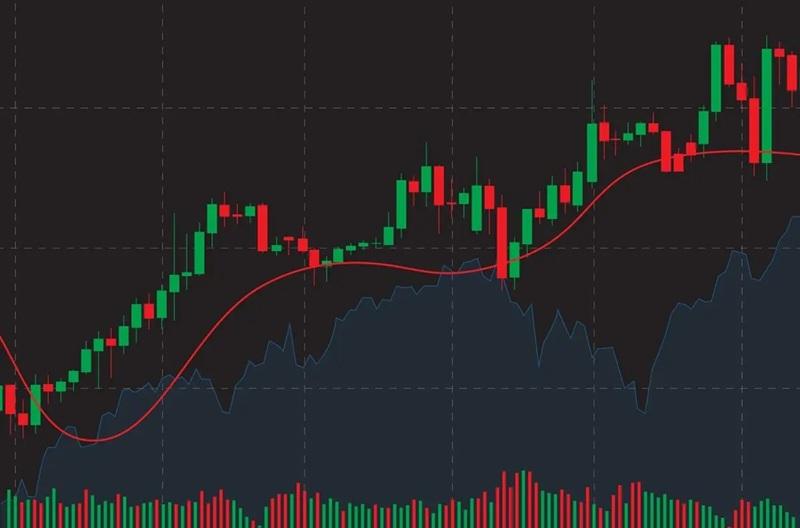
The financial markets offer investors a variety of ways to participate beyond simply buying and selling stocks. One such segment is F&O trading, which stands for Futures and Options trading. These financial derivatives are widely used by traders and investors to hedge risk, speculate on market movements, and improve portfolio management.
For beginners, F&O trading may seem complex because it involves contracts rather than directly owning shares. However, understanding the basic concepts can make it easier to learn how this market operates and how it fits into different investment strategies.
What Is F&O Trading?
F&O trading refers to the buying and selling of futures and options contracts that derive their value from an underlying asset such as stocks, stock indices, commodities, or currencies.
Unlike investing in shares, traders do not necessarily own the underlying asset. Instead, they trade contracts whose prices change based on the movement of the underlying security.
This makes F&O trading different from traditional equity investing.
Understanding Futures Contracts
A futures contract is an agreement to buy or sell an underlying asset at a predetermined price on a specified future date.
The value of the contract changes as the market price of the underlying asset changes. Traders use futures to speculate on price movements or to protect existing investments from market fluctuations.
Because futures contracts are standardized, they are traded on regulated exchanges.
Understanding Options Contracts
Options provide traders with greater flexibility than futures.
An options contract gives the buyer the right, but not the obligation, to buy or sell an underlying asset at a predetermined price before the contract expires. There are two primary types of options: call options and put options.
Call options are generally used when traders expect prices to rise, while put options are often used when they anticipate prices may decline.
Why Investors Use F&O Trading
Many investors participate in F&O trading for different reasons.
Some use derivatives to hedge their portfolios against market volatility, while others use them to benefit from short-term price movements. Institutional investors frequently use futures and options to manage large portfolios and reduce market risk.
The flexibility of derivative contracts makes them useful in a variety of market conditions.
The Role of Leverage
One of the defining features of F&O trading is leverage.
Leverage allows traders to control larger contract values by depositing only a fraction of the total value as margin. While this increases the potential for higher returns, it also increases the possibility of larger losses if the market moves against the trade.
Understanding leverage is essential before entering the derivatives market.
Margin Requirements
Unlike cash equity investing, F&O trading requires traders to maintain margin with their broker.
Margin acts as a security deposit that covers potential losses arising from market movements. Margin requirements vary depending on the underlying asset, market volatility, and exchange regulations.
Traders should always ensure they have sufficient capital to meet margin obligations.
Benefits of F&O Trading
F&O trading offers several advantages for experienced market participants.
It provides opportunities to profit in both rising and falling markets, supports portfolio hedging, offers leverage, and allows exposure to multiple asset classes including equities, indices, commodities, and currencies.
These features make derivatives an important component of modern financial markets.
Risks Involved in F&O Trading
Although F&O trading offers flexibility, it also involves significant risks.
Leverage can magnify losses just as easily as it increases gains. Rapid market movements, unexpected economic events, and insufficient risk management may lead to substantial financial losses.
Because of these risks, beginners should approach derivatives with caution and avoid taking positions beyond their financial capacity.
Importance of Risk Management
Risk management is critical in F&O trading.
Successful traders typically define their maximum acceptable loss before entering a trade. They use stop-loss orders, appropriate position sizing, diversification, and disciplined trading plans to protect their capital.
Managing risk consistently is often more important than accurately predicting every market movement.
Learn Before You Trade
Beginners should invest time in learning how derivative markets operate before trading with real money.
Understanding contract specifications, expiration dates, margin requirements, pricing mechanisms, and market behavior can significantly improve decision-making. Many traders begin by studying market trends or practicing on simulated trading platforms before investing actual capital.
Continuous learning remains an important part of successful trading.
F&O Trading vs Equity Investing
Although both involve financial markets, F&O trading and equity investing serve different purposes.
Equity investing generally focuses on long-term ownership of company shares and wealth creation through business growth. F&O trading is more commonly used for short-term trading opportunities, portfolio hedging, and managing market risk.
Many experienced investors use both approaches as part of a diversified financial strategy.
Conclusion
F&O trading provides investors with access to futures and options contracts that can be used for hedging, speculation, and portfolio management. While these instruments offer flexibility and leverage, they also involve higher levels of complexity and risk compared to traditional stock investing.
For beginners, building a strong understanding of futures, options, leverage, margin requirements, and risk management is essential before entering the derivatives market. With proper education, disciplined trading practices, and realistic expectations, F&O trading can become a valuable tool within a well-balanced investment strategy.
- Technology for Students
- Admissions & Applications
- Online Courses
- Career and Jobs
- Campus Life
- Drinks
- Film
- Fitness
- Food
- Παιχνίδια
- Gardening
- Health
- Κεντρική Σελίδα
- Literature
- Music
- Networking For Students
- Insights
- Party
- Religion
- Shopping
- Sports
- Theater
- Wellness
- Education News
- Business & Finance For Students
- Security, Law & Crime Education
- Insurance
- Science & Technology For Students
 Greek
Greek
 English
 Arabic
 French
 Spanish
 Portuguese
 Deutsch
 Turkish
 Dutch
Dutch
 Italiano
 Russian
 Romaian
 Portuguese (Brazil)