


What Does a Laundry Consultant Do? A Beginner's Guide
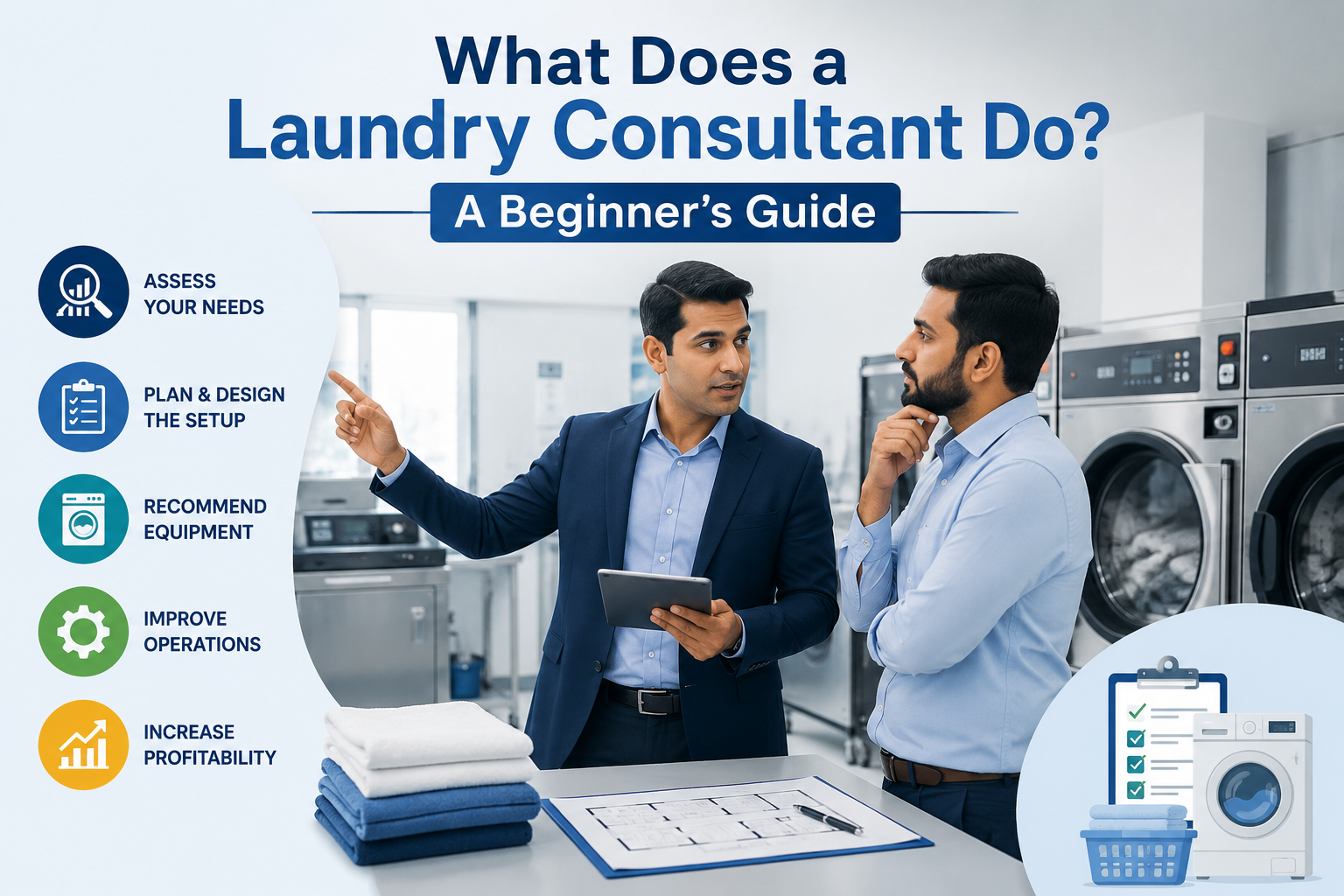
Starting a commercial laundry business involves much more than purchasing washing machines and renting a facility. Whether you plan to serve hotels, hospitals, restaurants, or individual customers, every decision you make during the planning stage affects your long-term profitability. From selecting the right equipment to designing an efficient workflow, success depends on careful planning and industry expertise.
This is where professional guidance becomes invaluable. Many entrepreneurs underestimate the complexity of setting up a modern laundry operation, leading to unnecessary expenses, operational inefficiencies, and delayed returns on investment. By understanding how industry experts contribute to the planning and implementation process, business owners can make informed decisions and reduce costly mistakes.
This beginner's guide explains the responsibilities, benefits, and value that an experienced laundry consultant brings to a commercial laundry project.
Understanding the Role
A professional advisor in the commercial laundry industry helps businesses plan, design, establish, and optimize laundry facilities. Their primary objective is to ensure that every aspect of the operation functions efficiently while meeting industry standards and customer expectations.
Instead of relying on guesswork, business owners receive expert recommendations based on years of practical experience. These professionals understand equipment performance, utility requirements, workflow optimization, labor management, compliance standards, and future scalability.
Their involvement may begin during the concept stage and continue through installation, staff training, and operational improvement.
Helping Businesses Plan from the Beginning
One of the biggest challenges for first-time entrepreneurs is knowing where to start. Before purchasing equipment or leasing a building, a detailed business strategy should be developed.
Industry experts assist with:
-
Business feasibility studies
-
Investment planning
-
Market analysis
-
Capacity estimation
-
Budget preparation
-
Service planning
-
Revenue forecasting
-
Operational strategy
Proper planning minimizes financial risks while ensuring the business is designed to meet future demand.
Designing an Efficient Laundry Facility
Facility layout directly impacts productivity.
Poor planning can create unnecessary movement, bottlenecks, contamination risks, and labor inefficiencies. A well-designed plant allows linen and garments to move smoothly through each processing stage.
The layout generally includes:
-
Receiving area
-
Sorting section
-
Washing area
-
Drying section
-
Ironing and finishing
-
Folding stations
-
Packaging area
-
Storage space
-
Dispatch section
Proper workflow reduces handling time while improving employee productivity.
Equipment Selection
Choosing commercial laundry equipment is one of the largest investments in any project.
With hundreds of equipment models available, selecting machinery without proper evaluation often leads to overspending or purchasing machines that fail to meet production requirements.
Equipment recommendations are based on factors such as:
-
Daily processing volume
-
Utility availability
-
Fabric types
-
Energy efficiency
-
Water consumption
-
Available floor space
-
Automation requirements
-
Maintenance costs
Balanced equipment selection improves productivity while controlling operating expenses.
Utility Planning
Commercial laundry plants consume significant amounts of:
-
Water
-
Electricity
-
Steam
-
Fuel
-
Compressed air
Proper utility planning ensures adequate supply without excessive infrastructure costs.
Experts evaluate:
-
Water storage
-
Boiler capacity
-
Electrical load
-
Drainage systems
-
Heat recovery opportunities
-
Wastewater treatment
-
Ventilation
-
Gas supply
Efficient utility planning contributes to lower operating costs and greater sustainability.
Workflow Optimization
Productivity depends on more than equipment.
An efficient workflow ensures garments and linens move continuously from one process to another with minimal waiting time.
Workflow planning considers:
-
Material handling
-
Employee movement
-
Machine positioning
-
Sorting methods
-
Batch scheduling
-
Loading efficiency
-
Folding operations
-
Packaging procedures
Optimized workflow reduces labor costs while increasing daily production capacity.
Cost Control Strategies
Every commercial laundry business aims to maximize profit while maintaining service quality.
Experienced professionals help identify opportunities to reduce operational costs through:
-
Energy-efficient equipment
-
Water recycling systems
-
Proper chemical dosing
-
Preventive maintenance
-
Labor optimization
-
Utility monitoring
-
Inventory management
Small improvements across multiple areas can significantly increase profitability over time.
Quality Assurance
Consistent quality builds customer trust.
Whether processing hotel linens or healthcare textiles, maintaining cleanliness, fabric care, and presentation standards is essential.
Quality management involves:
-
Standard operating procedures
-
Fabric-specific wash formulas
-
Chemical control
-
Moisture monitoring
-
Inspection processes
-
Folding consistency
-
Packaging standards
High-quality output encourages customer retention and positive referrals.
Compliance and Safety
Commercial laundry facilities must comply with various regulations related to:
-
Worker safety
-
Fire protection
-
Environmental standards
-
Chemical storage
-
Waste disposal
-
Water discharge
-
Electrical systems
-
Industrial hygiene
Ignoring these requirements may result in legal issues, fines, or operational disruptions.
Professional guidance helps ensure the facility follows applicable regulations while maintaining a safe working environment.
Staff Training
Even the most advanced equipment performs poorly without trained operators.
Training programs typically cover:
-
Machine operation
-
Preventive maintenance
-
Chemical handling
-
Quality inspection
-
Safety procedures
-
Workflow management
-
Customer handling
-
Equipment troubleshooting
Well-trained employees reduce downtime while improving operational consistency.
Improving Existing Laundry Operations
Support is not limited to new businesses.
Established laundry companies often seek expert assistance to improve efficiency, reduce costs, or expand production.
Operational assessments may identify:
-
Underutilized equipment
-
Inefficient layouts
-
High utility consumption
-
Labor bottlenecks
-
Maintenance issues
-
Production delays
-
Quality inconsistencies
Implementing targeted improvements can significantly increase profitability without major capital investment.
Supporting Business Expansion
As customer demand increases, many laundry businesses require expansion.
Growth may involve:
-
Additional machinery
-
Facility enlargement
-
Automation
-
New customer segments
-
Multi-location operations
-
Process standardization
Expansion planning ensures increased production without sacrificing efficiency or quality.
Technology Integration
Modern commercial laundries increasingly adopt digital technologies.
These include:
-
Production monitoring
-
RFID linen tracking
-
Inventory management software
-
Automated chemical dispensing
-
Utility monitoring systems
-
Predictive maintenance
-
Data analytics
-
Customer management software
Technology improves operational visibility while supporting better decision-making.
Industries That Benefit
Commercial laundry expertise is valuable across multiple industries, including:
-
Hotels
-
Hospitals
-
Hospitality groups
-
Restaurants
-
Industrial uniforms
-
Healthcare facilities
-
Linen rental companies
-
Dry cleaning businesses
-
Commercial laundromats
-
Institutional laundries
Each sector has unique processing requirements that require specialized planning.
Why Professional Guidance Matters
Many business owners believe they can save money by handling planning independently. However, mistakes during equipment selection, plant design, or workflow planning often result in much higher long-term costs.
Working with an experienced laundry consultant helps avoid expensive errors while ensuring the facility is designed for efficiency, scalability, and profitability.
Professional guidance also accelerates project completion by coordinating planning, procurement, installation, and operational readiness.
Choosing the Right Expert
Not every advisor offers the same level of expertise.
Before hiring one, consider factors such as:
-
Industry experience
-
Previous projects
-
Technical knowledge
-
Equipment familiarity
-
Process optimization expertise
-
Client references
-
Project management capabilities
-
After-installation support
Selecting the right laundry consultant can make the difference between a struggling operation and a profitable, well-organized business.
Conclusion
Launching or improving a commercial laundry business requires strategic planning, technical expertise, and careful execution. Every decision—from facility design and equipment selection to workflow optimization and quality management—affects long-term success.
Rather than relying on trial and error, businesses benefit from professional guidance that minimizes risks and maximizes operational efficiency. An experienced laundry consultant helps create a strong foundation, ensuring that investments deliver sustainable returns while supporting future growth. Whether you're entering the industry for the first time or expanding an existing operation, expert planning can significantly improve performance, profitability, and customer satisfaction.
- Technology for Students
- Admissions & Applications
- Online Courses
- Career and Jobs
- Campus Life
- Drinks
- Film
- Fitness
- Food
- Oyunlar
- Gardening
- Health
- Home
- Literature
- Music
- Networking For Students
- Insights
- Party
- Religion
- Shopping
- Sports
- Theater
- Wellness
- Education News
- Business & Finance For Students
- Security, Law & Crime Education
- Insurance
- Science & Technology For Students
 Turkish
 English
 Arabic
 French
 Spanish
 Portuguese
 Deutsch
 Dutch
Dutch
 Italiano
 Russian
 Romaian
 Portuguese (Brazil)
 Greek
Greek