As artificial intelligence becomes more capable, organizations are looking for better ways to connect AI assistants with business tools, databases, and internal systems. This is where the MCP Server (Model Context Protocol Server) plays a vital role. It acts as a bridge between AI applications and external resources, allowing AI models to securely access enterprise data, APIs, file systems, and other business services.
Whether you're building an AI assistant, integrating business software, or creating intelligent automation, understanding how an MCP Server works can help you design more powerful and scalable AI solutions.
What Is an MCP Server?
An MCP Server is a server that implements the Model Context Protocol (MCP), an open standard that enables AI applications to communicate with external tools and data sources in a structured way.
Instead of embedding business logic directly into an AI model, developers expose resources through an MCP Server. The AI client can then request information or perform actions through standardized APIs.
This architecture improves flexibility, security, and interoperability across different AI platforms.
How an MCP Server Works
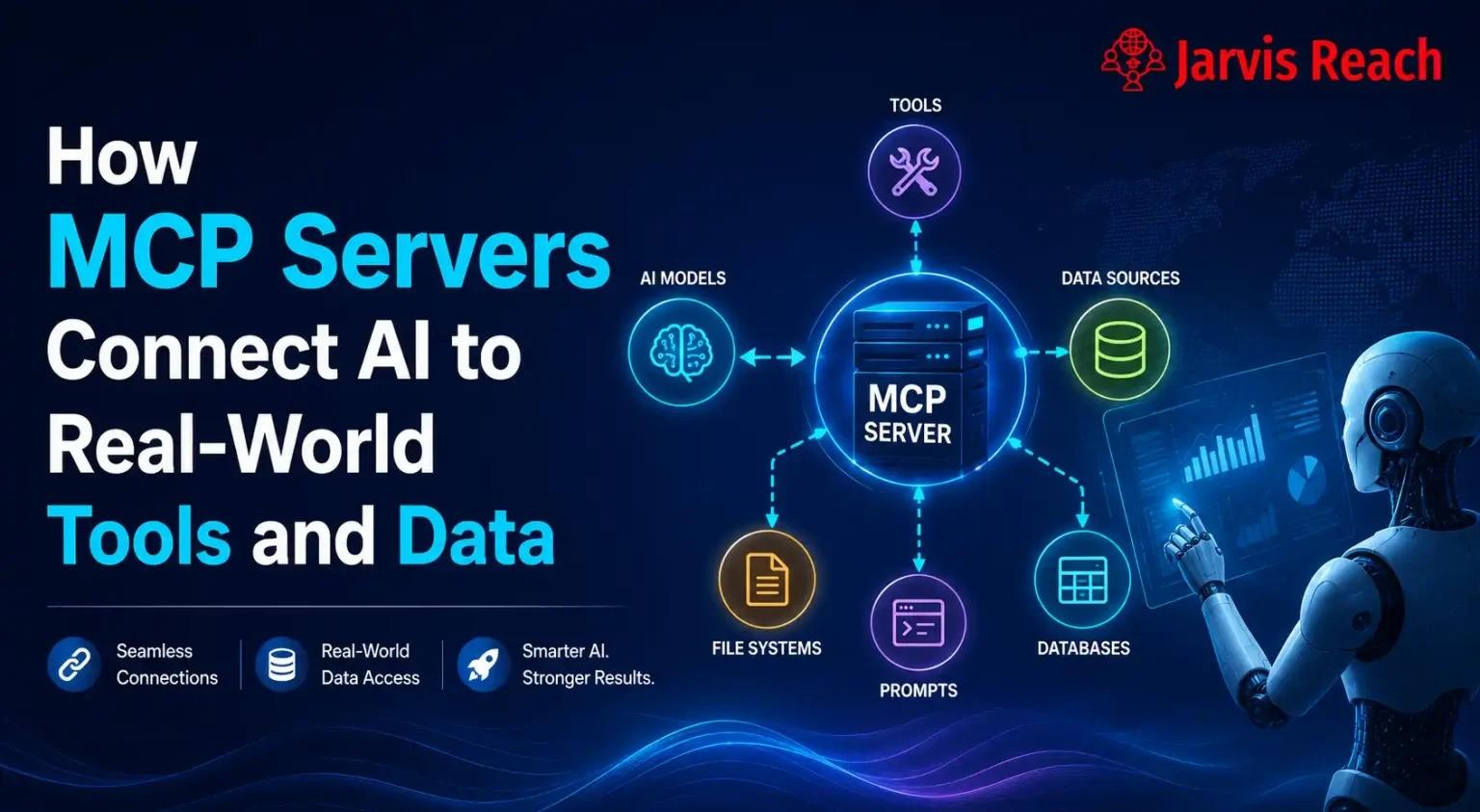
A typical MCP architecture consists of three main components:
- MCP Client – The application that sends requests on behalf of the AI model.
- MCP Server – Processes requests and connects to external services.
- Data Sources – Databases, APIs, file systems, or enterprise applications that provide information.
When a user asks an AI assistant a question, the MCP Client forwards the request to the MCP Server. The server retrieves the required data and returns it in a format the AI can understand.
MCP Client
The MCP Client is responsible for communicating with the MCP Server.
Its responsibilities include:
- Sending requests
- Receiving responses
- Managing sessions
- Passing user context
- Handling authentication
The client allows AI models to interact with external systems without requiring direct database access.
API Integration
Modern businesses rely heavily on API integrations.
An MCP Server can connect with:
- CRM systems
- Email platforms
- Payment services
- Project management tools
- HR software
- Analytics platforms
Instead of building separate integrations for every AI application, organizations expose these APIs through a centralized MCP Server.
Connecting Enterprise Data
Businesses generate large amounts of enterprise data stored across multiple systems.
An MCP Server can securely access:
- Customer records
- Sales reports
- Employee information
- Internal documentation
- Business knowledge bases
This allows AI assistants to answer business-specific questions using real organizational data instead of relying only on public knowledge.
SQL Databases
Many organizations store information inside SQL databases.
An MCP Server can connect to:
- MySQL
- PostgreSQL
- Microsoft SQL Server
- SQLite
- Oracle Database
Rather than giving AI direct database access, the MCP Server safely retrieves only the required information.
Managing Multiple Data Sources
Modern organizations rarely use a single database.
Common data sources include:
- SQL databases
- Cloud storage
- REST APIs
- Document repositories
- Internal knowledge bases
- File systems
The MCP Server combines these resources into a unified interface that AI applications can access efficiently.
Prompt Templates
Prompt templates improve consistency when AI interacts with external tools.
Templates help:
- Standardize requests
- Reduce prompt errors
- Improve response quality
- Maintain formatting
- Simplify automation
Organizations often create reusable templates for customer support, reporting, document generation, and analytics.
Stateless vs Stateful Communication
Understanding stateless and stateful systems is important when designing MCP solutions.
Stateless
A stateless request contains all required information independently.
Advantages include:
- Better scalability
- Easier load balancing
- Faster recovery
- Simpler architecture
Stateful
A stateful connection remembers previous interactions.
Benefits include:
- Personalized conversations
- Session continuity
- Context-aware responses
- Improved user experience
Many enterprise AI systems combine both approaches depending on their requirements.
Authentication and Security
Security is essential when AI accesses business information.
An MCP Server typically supports:
- API keys
- OAuth authentication
- Access tokens
- Role-based permissions
- Secure HTTPS communication
Proper authentication ensures that only authorized users and AI systems can access sensitive resources.
File Systems
Many organizations store valuable information in file systems rather than databases.
An MCP Server can securely retrieve:
- PDFs
- Word documents
- Excel spreadsheets
- CSV files
- Internal reports
- Technical documentation
This allows AI assistants to answer questions using existing business files without requiring manual uploads.
Backends and AI Platforms
An MCP Server works with many different backends and AI platforms.
Examples include:
- Customer support systems
- Enterprise search engines
- Internal business applications
- Workflow automation platforms
- AI assistants
- Large Language Models
Because MCP is standardized, organizations can change AI providers without rebuilding every integration.
Benefits of Using an MCP Server
Implementing an MCP Server offers several advantages:
- Centralized AI integrations
- Secure enterprise data access
- Standardized APIs
- Better scalability
- Easier maintenance
- Improved security
- Reusable prompt templates
- Flexible backend connections
These benefits make MCP an attractive choice for businesses building AI-powered applications.
Best Practices
When deploying an MCP Server:
- Protect sensitive business data.
- Implement strong authentication.
- Monitor API usage.
- Validate incoming requests.
- Keep prompt templates updated.
- Limit database permissions.
- Log system activity.
- Test integrations regularly.
These practices improve reliability and maintain security.
Conclusion
The MCP Server is becoming an essential component of modern AI infrastructure. By connecting MCP Clients with APIs, enterprise data, SQL databases, file systems, and multiple backends, it enables AI applications to deliver accurate, context-aware responses while maintaining security and scalability.
As more organizations adopt AI across their operations, understanding how MCP Servers manage authentication, prompt templates, stateless and stateful communication, and diverse data sources will become increasingly valuable. Whether you're a developer, IT professional, or business leader, learning MCP can help you build smarter, more connected AI solutions.



 Deutsch
 English
 Arabic
 French
 Spanish
 Portuguese
 Turkish
 Dutch
Dutch
 Italiano
 Russian
 Romaian
 Portuguese (Brazil)
 Greek
Greek