


How to Evaluate a Manufacturing Company in Mexico Before Signing a Contract
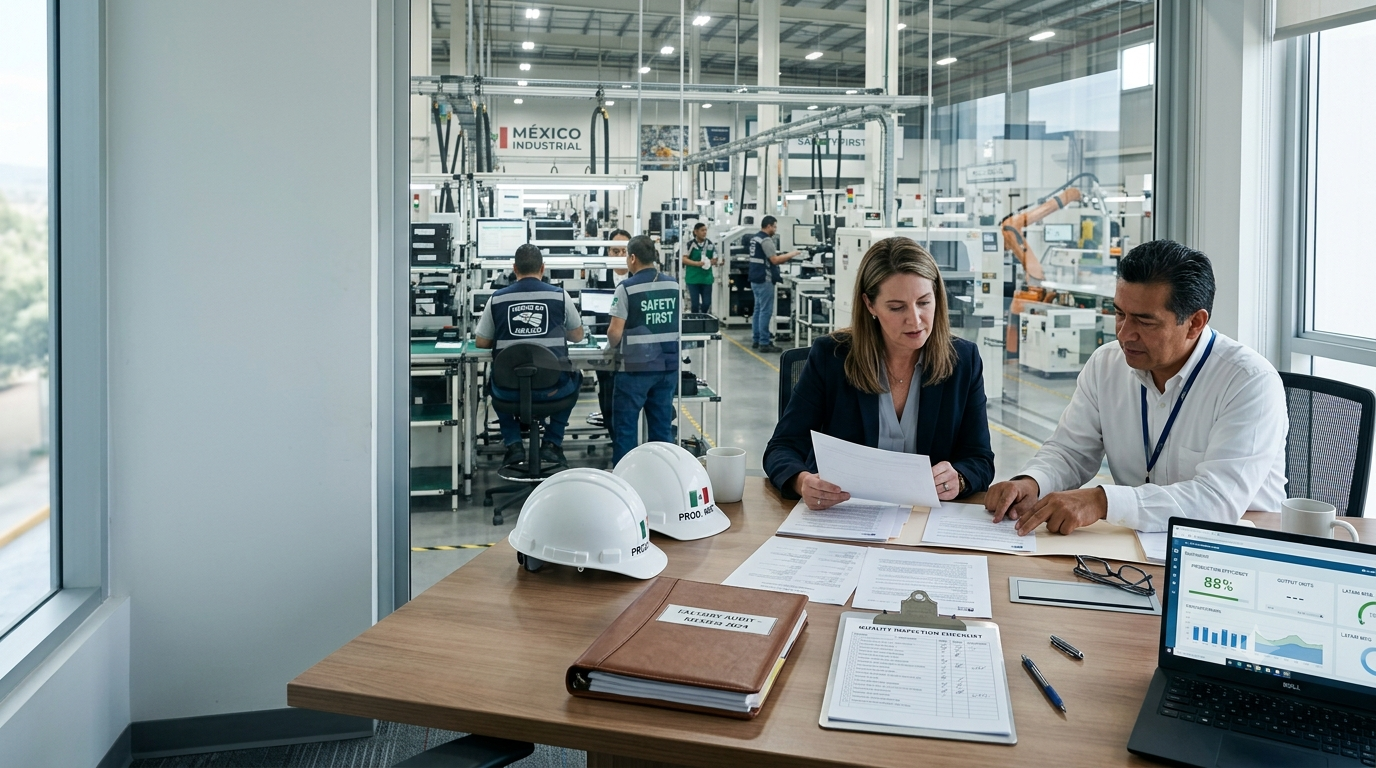
Nearshoring to Mexico has moved from a cost-cutting trend to a strategic necessity. Mexico became the United States' top trading partner in 2023, overtaking China for the first time in over two decades, and manufacturing investment along the border has continued climbing ever since. Companies are racing south, drawn by shorter supply chains, lower freight costs, and time zones that actually match their U.S. teams' working hours.
But here's the uncomfortable truth nobody puts in the glossy investment brochures: a shocking number of these partnerships fail within the first eighteen months. Not because Mexico is a bad place to manufacture — it isn't — but because companies sign contracts before they've actually evaluated who they're signing with.
If you're considering how to evaluate a manufacturing company in Mexico, you're already ahead of most buyers who learn this lesson the expensive way. This guide walks through exactly what to check, what to ask, and what red flags should stop you cold before ink hits paper.
In this guide, you will learn:
-
The financial and legal documentation every serious manufacturer should provide
-
How to assess real production capability versus what's promised in a sales pitch
-
The quality certifications and compliance standards that actually matter
-
Common mistakes that sink nearshoring partnerships
-
A practical framework for comparing multiple manufacturing partners
-
Questions to ask during a facility visit that most buyers forget
Why Evaluating a Mexican Manufacturing Partner Is Different Than You Think
Many buyers approach vetting a Mexican manufacturer the same way they'd vet a domestic supplier — a quick reference check, a look at the website, maybe a call with the sales team. That approach works fine when the legal system, banking norms, and business culture are familiar. It falls apart quickly across an international border.
Mexico's manufacturing sector is genuinely world-class in places. Automotive, aerospace, electronics, and medical device production out of cities like Tijuana, Juárez, and Querétaro rival facilities anywhere in the world. But the sector is also uneven. For every polished, ISO-certified operation, there are shops that look impressive in photos and fall apart under real production pressure.
The difference between those two outcomes almost always traces back to the evaluation process — or the lack of one.
Step 1: Start With Corporate and Legal Verification
Before discussing pricing, tooling, or timelines, confirm the company actually is who it says it is.
Check business registration and standing
Every legitimate manufacturer in Mexico should be registered with the Registro Público de Comercio and hold a valid RFC (tax ID) with the SAT, Mexico's tax authority. Ask for these directly. A company unwilling to share basic registration details is not a company worth pursuing further.
Review IMMEX status if relevant
If you're planning to import materials duty-free for assembly and re-export finished goods, your partner needs active IMMEX (maquiladora) program status. This isn't optional paperwork — it directly affects your landed cost and customs compliance. Verify the certificate is current, not expired or pending renewal.
Confirm ownership structure
Ask who actually owns the company. Some manufacturing operations are subsidiaries of larger conglomerates with real financial backing; others are single-owner shops operating on thin margins with little cushion against a bad quarter. Neither is automatically disqualifying, but you need to know which one you're dealing with.
Actionable Takeaway: Request copies of the RFC, business registration, and (if applicable) IMMEX certificate before your first serious conversation about production. A legitimate company will send these without hesitation, often within a day or two.
Step 2: Assess Real Production Capability, Not Sales Claims
This is where most buyers get burned. A well-rehearsed sales presentation can make a mid-size shop sound like an industry leader.
Ask for capacity data, not capacity claims
Request actual production output numbers for the past 12 months, broken down by product line. Compare that to what they're proposing for your contract. If a facility claims it can handle your volume but has never produced anywhere close to that scale, treat the claim with real skepticism.
Look at their existing client roster
Ask which companies they currently manufacture for, and whether you can speak with at least one reference client — ideally one in a similar industry or with similar volume requirements. Reputable manufacturers are generally comfortable providing this; hesitation is worth noting.
Evaluate equipment age and maintenance records
Outdated or poorly maintained equipment is one of the biggest hidden risks in Mexican manufacturing partnerships. Ask about machine age, maintenance schedules, and downtime history over the past year. A facility that can't answer these questions clearly probably isn't tracking them at all.
Understand their workforce stability
Labor turnover in Mexican manufacturing hubs, particularly border cities, can be significant — some regions see annual turnover rates well above what U.S. manufacturers are used to. High turnover directly affects quality consistency and training costs. Ask about average tenure, training programs, and how they handle seasonal labor swings.
Actionable Takeaway: Request a facility tour that isn't scheduled entirely by the sales team. Ask to walk the floor during a normal production shift, not a staged demonstration.
Step 3: Verify Quality Systems and Certifications
Certifications alone don't guarantee quality, but their absence is a meaningful warning sign — especially for regulated industries like automotive, medical devices, or aerospace.
|
Certification |
What It Signals |
Relevant Industries |
|
ISO 9001 |
Baseline quality management system |
General manufacturing |
|
IATF 16949 |
Automotive-specific quality standards |
Automotive, Tier 1/2 suppliers |
|
ISO 13485 |
Medical device quality management |
Medical devices, healthcare products |
|
AS9100 |
Aerospace quality management |
Aerospace, defense |
|
C-TPAT |
U.S. Customs security compliance |
Cross-border shippers |
Don't just ask if they're certified — ask to see the actual certificate, the issuing body, and the last audit date. Certifications lapse, and some companies continue advertising expired credentials.
Common Mistakes and Warning Signs
Even experienced buyers fall into predictable traps when evaluating manufacturing partners in Mexico. Here are the ones that show up most often.
-
Rushing the due diligence timeline. Pressure to sign quickly, especially paired with a "limited capacity" pitch, is a classic tactic to prevent thorough vetting.
-
Accepting verbal commitments on pricing. Get everything — unit pricing, tooling costs, minimum order quantities, currency terms — in writing before serious negotiations proceed.
-
Ignoring geopolitical and tariff exposure. Trade policy between the U.S. and Mexico has shifted multiple times in recent years. Understand how tariff changes or USMCA compliance issues would affect your specific product category.
-
Skipping the site visit entirely. Photos and video calls cannot replace walking the actual production floor. Conditions, cleanliness, organization, and worker morale are impossible to fully assess remotely.
-
Overlooking communication infrastructure. If your day-to-day contact doesn't speak fluent business English (or you don't have reliable translation support), expect friction on technical specifications down the line.
-
Failing to check financial health. A manufacturer in financial distress may cut corners on materials or maintenance to preserve margin, often without disclosing it until quality slips.
The consequence of ignoring these signs isn't usually a dramatic failure. It's a slow erosion — missed deadlines that creep longer each month, quality defects that get explained away, and communication that becomes harder to get straight answers from.
Real-World Example: How a Missed Red Flag Cost Six Months
A mid-size electronics company based in Texas signed a contract with a Juárez manufacturer after a strong sales presentation and a single video call. The facility looked modern in photos, quoted competitive pricing, and promised a four-week ramp-up.
Three months in, defect rates on a key component climbed past 8%, far above the agreed threshold. When the company finally sent someone to visit the floor in person, they discovered the manufacturer had subcontracted a portion of production to a third-party shop without disclosure — one with far less rigorous quality control.
The company spent the next six months renegotiating terms, adding in-person quality inspectors, and eventually transitioning to a different partner. The total cost, between scrapped inventory, missed retail deadlines, and the transition itself, ran into six figures.
The manufacturer they eventually switched to was vetted using exactly the process outlined above: verified registration, reference calls with existing clients, an unannounced portion of the facility tour, and confirmed certifications. Production has run smoothly for over two years since.
The lesson wasn't that Mexican manufacturing failed them. It was that skipping verification did.
Due Diligence vs. Signing on Faith
|
Approach |
What It Looks Like |
Typical Outcome |
|
Full due diligence |
Legal verification, reference calls, unannounced site visits, certification checks |
Fewer surprises, stronger long-term partnership |
|
Signing on faith |
Trusting the sales pitch, skipping site visits, accepting verbal terms |
Higher risk of quality issues, hidden subcontracting, contract disputes |
Expert Tips for a Smoother Evaluation Process
-
Bring a third-party auditor for at least the first facility visit if you lack in-house manufacturing expertise. The cost is small compared to a bad long-term contract.
-
Ask for a small trial production run before committing to full volume. How a facility handles a modest test order tells you a lot about how they'll handle scale.
-
Build in a quality escape clause. Contracts should specify defect-rate thresholds that trigger renegotiation or termination rights.
-
Visit more than once, and vary the timing. A facility that looks great on a scheduled Tuesday morning tour can look very different during an unannounced Friday afternoon shift.
-
Talk to logistics providers who already move freight through the region. They often have unfiltered, practical insight into which facilities reliably ship on time.
Frequently Asked Questions
What documents should I request before signing a manufacturing contract in Mexico? At minimum, request business registration, RFC tax ID, IMMEX certification if applicable, relevant quality certifications, and financial references. Reputable manufacturers provide these without significant delay.
How long should the evaluation process take? For most mid-size to large contracts, plan for four to eight weeks, including at least one in-person facility visit and reference checks. Rushing this timeline is one of the most common causes of partnership failure.
Is ISO certification mandatory for a good manufacturing partner in Mexico? Not always mandatory, but it's a strong indicator of process discipline. For regulated industries like automotive or medical devices, industry-specific certifications are effectively non-negotiable.
What's the biggest red flag when evaluating a Mexican manufacturer? Reluctance to allow an unscheduled facility visit or unwillingness to provide reference clients. Both suggest something the company doesn't want a prospective partner to see.
Should I hire a local consultant to help evaluate manufacturers in Mexico? For companies without prior nearshoring experience, yes. A consultant with regional expertise can navigate language, cultural, and regulatory nuances that are easy to miss from a distance, often paying for themselves many times over in avoided mistakes.
Final Thoughts
Manufacturing in Mexico offers real, measurable advantages — proximity, cost, and speed that few other regions can match. But those advantages only materialize when the partnership underneath them is solid.
The companies that get burned aren't unlucky. They're usually the ones that let excitement about faster timelines and lower costs override basic diligence. The companies that thrive are the ones that treat evaluation as seriously as they'd treat any major capital investment, because that's exactly what it is.
Take the time. Ask the uncomfortable questions. Walk the floor unannounced. If you need guidance navigating the process, working with an experienced nearshoring consultant or manufacturing advisor can save you far more than their fee costs — and it might just save your next product launch.
- Technology for Students
- Admissions & Applications
- Online Courses
- Career and Jobs
- Campus Life
- Drinks
- Film
- Fitness
- Food
- Jocuri
- Gardening
- Health
- Home
- Literature
- Music
- Networking For Students
- Insights
- Party
- Religion
- Shopping
- Sports
- Theater
- Wellness
- Education News
- Business & Finance For Students
- Security, Law & Crime Education
- Insurance
- Science & Technology For Students
 Romaian
 English
 Arabic
 French
 Spanish
 Portuguese
 Deutsch
 Turkish
 Dutch
Dutch
 Italiano
 Russian
 Portuguese (Brazil)
 Greek
Greek