Property asset management has traditionally involved multiple disconnected processes including ownership tracking, financial reporting, leasing administration, maintenance coordination, compliance monitoring, and investor communication. As real estate portfolios grow, these activities become increasingly resource-intensive and difficult to manage efficiently.
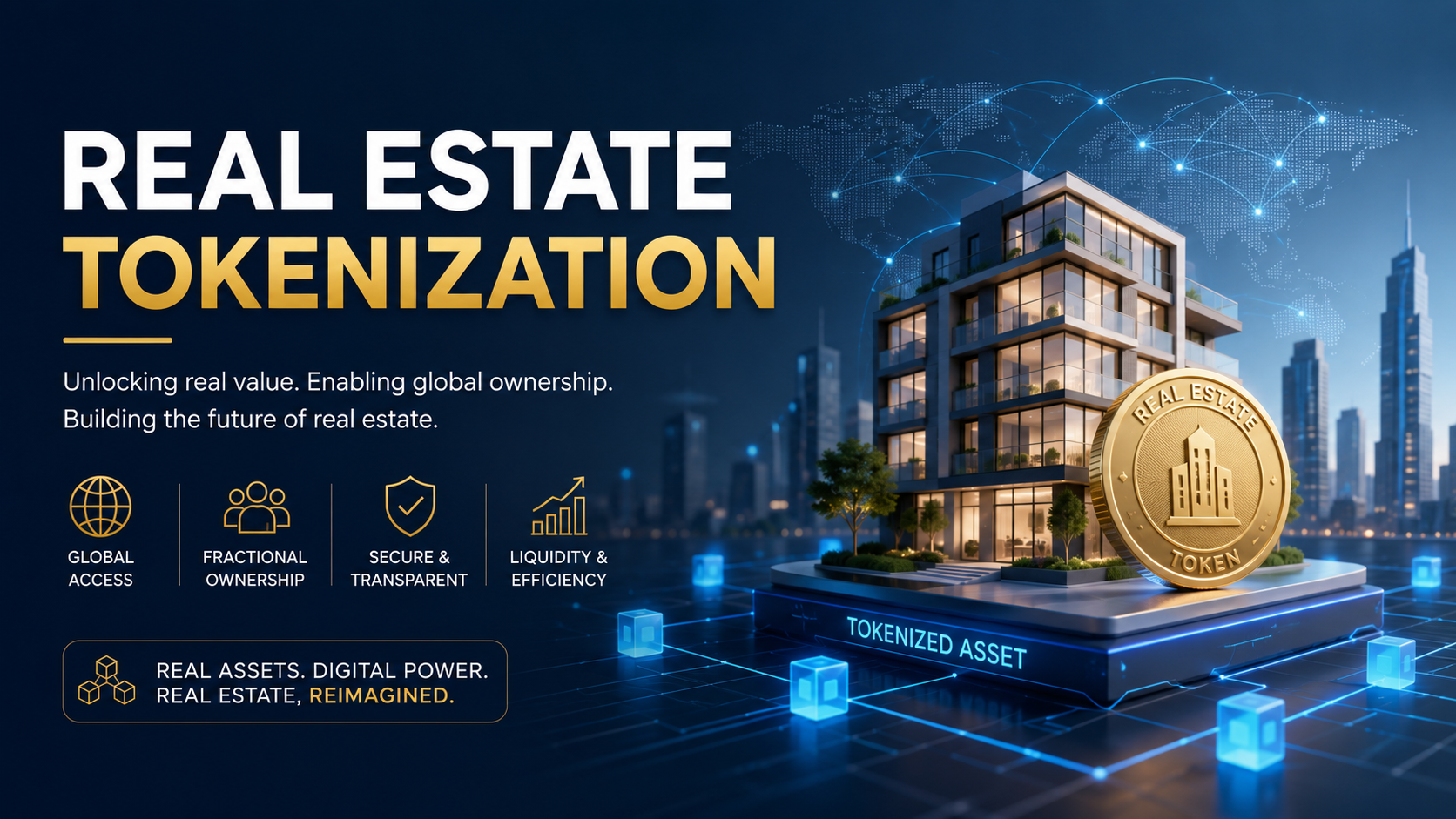
Real estate tokenization is introducing a new operational framework by converting property assets into blockchain-based digital representations. Through tokenization, businesses can manage ownership, transactions, revenue flows, and asset performance within an integrated digital environment.
This transition is changing property management from a document-driven process into a data-driven and automated asset management model.
Understanding Real Estate Tokenization in Asset Management
Real estate tokenization refers to the process of converting ownership interests or economic rights tied to physical properties into blockchain-based digital tokens. These tokens represent full or fractional ownership and are governed through smart contracts that automate rules for transactions, distributions, and administrative processes. In property asset management, tokenization extends beyond investment access. It creates a digital infrastructure that supports asset monitoring, ownership administration, operational efficiency, and portfolio optimization throughout the property lifecycle.
Why Traditional Property Asset Management Creates Inefficiencies
Traditional property management often depends on fragmented systems and manual coordination across multiple stakeholders.
Common challenges include:
- Complex ownership documentation
- Slow transaction and settlement processes
- Manual rent and revenue administration
- Limited portfolio transparency
- High operational overhead
- Difficulty scaling across multiple properties
These limitations can increase administrative costs and reduce responsiveness to changing market conditions. Real estate tokenization addresses many of these inefficiencies through automation and unified asset infrastructure.
How Real Estate Tokenization Enables Efficient Property Asset Management
1. Centralized Digital Ownership Management
Property ownership records are often maintained across separate legal, financial, and operational systems. Tokenization consolidates ownership data into a blockchain-based ledger where every transfer, update, and ownership allocation is recorded transparently. This creates a unified source of truth for property ownership and simplifies administration across multiple stakeholders.
2. Automated Revenue Distribution
Managing rental income and investor payouts manually can become increasingly complex as ownership structures expand. Smart contracts automate revenue allocation based on predefined ownership percentages and distribution rules. This reduces administrative workload while ensuring consistent and transparent payment execution. For businesses managing large portfolios, automated distribution significantly improves operational efficiency.
3. Improved Liquidity Management
Traditional property assets are highly illiquid, making portfolio adjustments difficult. Tokenization enables partial ownership transfers through digital tokens, allowing businesses and investors to reallocate capital more efficiently without requiring full asset sales. This flexibility improves liquidity planning and supports more dynamic portfolio management strategies.
4. Real-Time Asset Monitoring and Reporting
Traditional asset reporting often relies on periodic updates and manual reconciliation. Tokenized property systems can integrate operational data directly into digital management platforms, enabling real-time visibility into:
- Occupancy performance
- Rental income activity
- Maintenance schedules
- Investor participation
- Transaction history
Access to continuous data improves decision-making and asset responsiveness.
5. Streamlined Leasing and Contract Administration
Lease management involves documentation, payment monitoring, renewals, and compliance oversight. Tokenization platforms can automate lease execution and lifecycle tracking through smart contracts. This reduces administrative delays and ensures that contractual obligations are enforced consistently. Businesses can manage larger property portfolios without proportionally increasing operational complexity.
6. Enhanced Transparency Across Stakeholders
Property asset management typically includes owners, tenants, investors, operators, and regulators. Blockchain-based tokenization provides transparent access to verified records, reducing information asymmetry between participants. This transparency improves trust and simplifies reporting requirements.
7. Simplified Portfolio Diversification
Managing diversified property holdings often requires separate operational structures for each asset class. Tokenization enables multiple assets to be managed through a standardized framework, allowing businesses to oversee residential, commercial, industrial, and mixed-use properties within one ecosystem. This supports scalable asset management across expanding portfolios.
Role of Smart Contracts in Property Management Efficiency
Smart contracts serve as the operational engine of tokenized real estate systems.
They automate activities such as:
- Ownership updates
- Rent collection workflows
- Revenue allocation
- Compliance execution
- Maintenance triggers
- Investor notifications
Automation reduces dependence on manual intervention and minimizes operational errors.
Business Benefits of Tokenized Property Asset Management
Lower Administrative Costs
Automation reduces repetitive operational tasks and lowers management overhead.
Improved Operational Speed
Transactions, reporting, and approvals occur faster through integrated digital processes.
Higher Transparency and Accountability
Blockchain records create immutable audit trails for all asset activities.
Greater Investor Engagement
Digital ownership models provide investors with easier access to asset information and performance metrics.
Scalable Portfolio Operations
Businesses can expand property holdings without proportionally increasing management complexity.
Applications Across Real Estate Segments
Residential Property Management
Tokenization improves rental administration and ownership coordination across multi-unit developments.
Commercial Real Estate
Businesses can manage office buildings and retail spaces with automated reporting and leasing systems.
Industrial and Logistics Assets
Warehouse and logistics operators can track performance and manage ownership structures more efficiently.
Hospitality and Mixed-Use Developments
Tokenized systems support integrated management of multiple revenue-generating property functions.
Challenges in Implementing Tokenized Asset Management
Despite its advantages, tokenized property management introduces implementation challenges.
These include:
- Regulatory uncertainty regarding digital ownership
- Integration with existing property management systems
- Data governance and cybersecurity requirements
- Market adoption barriers
- Technical infrastructure costs
Addressing these challenges is essential for long-term scalability.
Future Outlook: Intelligent and Automated Property Ecosystems
The future of property asset management is moving toward intelligent, programmable infrastructure.
Emerging developments include:
- AI-assisted property optimization
- Predictive maintenance systems
- Real-time valuation models
- Cross-platform asset interoperability
- Automated compliance monitoring
These capabilities will further improve operational efficiency and transform how real estate assets are managed.
Conclusion
Real estate tokenization is redefining property asset management by introducing automation, transparency, liquidity, and centralized digital control. By converting traditional properties into programmable assets, businesses can streamline ownership administration, improve reporting accuracy, automate financial operations, and scale portfolio management more efficiently. As digital infrastructure continues to evolve, tokenized asset management is expected to become an increasingly important framework for modern real estate operations.



 Romaian
 English
 Arabic
 French
 Spanish
 Portuguese
 Deutsch
 Turkish
 Dutch
Dutch
 Italiano
 Russian
 Portuguese (Brazil)
 Greek
Greek