


Best Self-Driving Car: The Top Features of the Best Connected Car
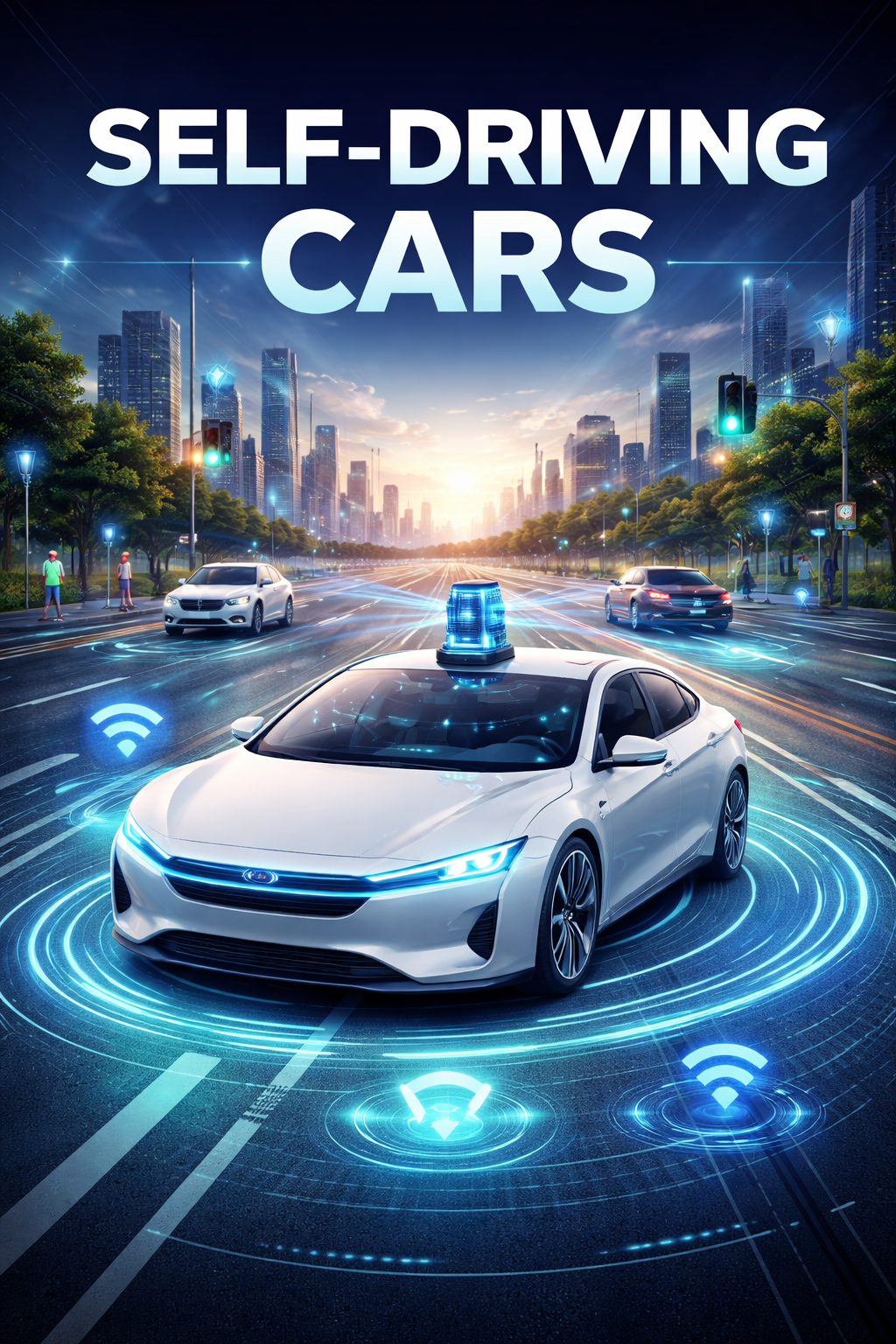
The automotive industry is undergoing a revolutionary transformation. With the rise of self-driving cars, the question is no longer if vehicles will drive themselves; it's which features define the best of them. From advanced safety in cars to seamless connectivity, today's autonomous vehicles are packed with innovations that were once the stuff of science fiction.
Whether you're a tech enthusiast, a safety-conscious driver, or simply curious about the future of mobility, this guide breaks down the top features that define the best connected cars on the market today.
What Makes a Car "Self-Driving"?
Before diving into features, it's worth understanding what separates a driverless car from a conventional vehicle. The Society of Automotive Engineers (SAE) defines six levels of driving automation from Level 0 (fully manual) to Level 5 (fully autonomous). Most vehicles today operate between Level 2 and Level 3, meaning the car can handle many driving tasks but still requires occasional human oversight.
The best self-driving cars combine sophisticated hardware (sensors, cameras, radar) with AI-powered software to navigate roads safely and efficiently. And at the heart of every great autonomous vehicle is a robust set of car safety features
Top Features of the Best Self-Driving Cars
1. Advanced Driver Assistance Systems (ADAS)
ADAS is the backbone of any modern autonomous vehicle. These systems work together to monitor the environment, assist the driver, and, in higher-level vehicles, take full control when needed. Key ADAS features include:
-
Adaptive Cruise Control (ACC): Maintains a safe following distance automatically.
-
Lane Keeping Assist (LKA): Gently steers the vehicle back into its lane if drift is detected.
-
Automatic Emergency Braking (AEB): One of the most critical car safety features, AEB applies the brakes instantly when it detects a collision risk.
-
Blind Spot Detection: Alerts drivers to vehicles in hard-to-see zones.
These systems collectively represent the safety feature innovations that have made modern cars dramatically safer than their predecessors.
2. LiDAR, Radar, and Camera Fusion
The best features of self-driving cars depend on how well the vehicle "sees" its environment. Industry-leading autonomous vehicles use a fusion of three primary sensor technologies:
-
LiDAR (Light Detection and Ranging): Generates a precise 3D map of surroundings in real time.
-
Radar: Detects distance and speed of objects, especially useful in poor weather.
-
Cameras: Identify lane markings, traffic signs, traffic lights, and pedestrians.
The combination of all three gives the vehicle a 360-degree, redundant view of its surroundings, critical for ensuring safety in cars at all speeds and in all conditions.
3. Passive Safety Features in Cars
While active systems like AEB grab headlines, passive safety features in cars are equally important. These features don't prevent a crash, but they minimize harm if one does occur:
-
Crumple Zones: Engineered to absorb and redirect crash energy away from occupants.
-
Airbag Systems: Modern self-driving vehicles come equipped with multi-stage airbags, including front, side, curtain, and knee airbags.
-
Reinforced Passenger Cells: High-strength steel and aluminum structures protect occupants during a collision.
-
Seatbelt Pre-tensioners: Automatically tighten seatbelts upon detecting an imminent collision, working in tandem with active braking systems.
The best cars with best safety features combine both active and passive layers of protection, making them far safer than vehicles that rely on either alone.
4. Connected Car Technology
Perhaps the most defining feature of a next-generation autonomous vehicle is its connectivity. Connected car technology allows the vehicle to communicate with the world around it in ways that dramatically enhance both safety and convenience:
-
V2V (Vehicle-to-Vehicle) Communication: Cars share speed, position, and direction data, helping to avoid accidents before sensors even detect a hazard.
-
V2I (Vehicle-to-Infrastructure) Communication: The vehicle talks to traffic lights, road signs, and smart highways to optimize routing and prevent collisions.
-
Over-the-Air (OTA) Updates: Software improvements and safety patches are delivered remotely, just like a smartphone update.
-
Cloud-Based Navigation: Real-time traffic, weather, and hazard data are streamed directly to the vehicle's navigation system.
Connected cars are no longer just smarter vehicles; they're networked nodes in a broader smart mobility ecosystem.
5. AI-Powered Decision Making
The intelligence behind a driverless car lies in its ability to make split-second decisions. Modern autonomous vehicles use deep learning algorithms trained on billions of real-world driving scenarios. Key capabilities include:
-
Object Classification: Distinguishing a cyclist from a pedestrian from a parked car.
-
Predictive Behavior Modeling: Anticipating what other road users are likely to do next.
-
Edge Case Handling: Navigating unusual scenarios like road construction, emergency vehicles, or unmarked intersections.
This AI layer is what transforms a car loaded with sensors into a truly intelligent machine, one capable of real-world driving across diverse environments.
6. Human-Machine Interface (HMI) and Override Controls
Even the most advanced self-driving cars need to communicate clearly with their occupants. The best HMI systems include:
-
Intuitive dashboards that display what the car "sees" in real time.
-
Audible and visual alerts for when driver attention is needed.
-
Seamless handover protocols that allow the human driver to take control smoothly and safely.
-
Voice control integration with AI assistants for hands-free operation.
A well-designed HMI ensures that the driver remains informed and in control, even while the vehicle handles the driving a key safety feature in any autonomous system.
7. Cybersecurity and Data Privacy
With connected car technology comes a new frontier of risk: cyberattacks. The best self-driving vehicles implement multi-layered cybersecurity measures to protect both the vehicle and passenger data:
-
Encrypted Communications: All V2V and V2I data transmissions are encrypted.
-
Intrusion Detection Systems: Continuously monitor for unauthorized access to the vehicle's network.
-
Secure OTA Update Pipelines: Prevent malicious code from being pushed through software updates.
-
Data Anonymization: Personal travel data is anonymized before being shared with cloud systems.
This is a dimension of car safety features that goes beyond the physical protecting drivers in the digital world as much as on the road.
Cars With the Best Safety Features: What to Look For
When evaluating cars with the best safety features, look beyond the marketing and examine how a vehicle scores on these benchmarks: The highest-rated vehicles in independent safety tests consistently feature both best-in-class passive safety features in cars and comprehensive active systems, not just one or the other.
-
Active Safety Systems – Ensure features like Automatic Emergency Braking (AEB), Lane Keeping Assist (LKA), and Adaptive Cruise Control (ACC) are available as standard.
-
Passive Safety Features – Check the number of airbags, crumple zone design, and structural integrity of the vehicle.
-
Connectivity Features – Look for Over-the-Air (OTA) updates and Vehicle-to-Everything (V2X) readiness for future connectivity.
-
Cybersecurity Protocols – Verify the presence of encrypted communications, secure software architecture, and regular security updates.
-
Autonomous Driving Capability – Prefer vehicles with SAE Level 2+ autonomous features for enhanced driving assistance and automation.
The Road Ahead: What's Next for Self-Driving Cars?
The evolution of self-driving cars is accelerating rapidly. Here's what's on the horizon:
-
Level 4 Autonomy in Urban Environments: Several manufacturers are targeting geofenced city deployments of fully autonomous taxis within the next few years.
-
AI-Assisted Road Infrastructure: Smart roads that communicate with vehicles in real time.
-
Biometric Monitoring: In-cabin systems that monitor driver alertness and health, blending safety in cars with personal wellness.
-
Shared Autonomous Fleets: The rise of robotaxi services redefining car ownership entirely.
The convergence of AI, connected cars, and advanced sensor technology is setting the stage for a future where traffic fatalities become rare and where getting from A to B is safer, smarter, and more efficient than ever before
Conclusion
The best self-driving car isn't defined by a single feature; it's the sum of dozens of intelligent systems working in harmony. From the features of self-driving cars like sensor fusion and AI decision-making, to fundamental passive safety features in cars like crumple zones and multi-stage airbags, every layer contributes to a safer, smarter driving experience.
As connected car technology continues to mature and regulations catch up with innovation, the vehicles of tomorrow will be not just self-driving but profoundly safer for everyone on the road.
- Technology for Students
- Admissions & Applications
- Online Courses
- Career and Jobs
- Campus Life
- Drinks
- Film
- Fitness
- Food
- Giochi
- Gardening
- Health
- Home
- Literature
- Music
- Networking For Students
- Insights
- Party
- Religion
- Shopping
- Sports
- Theater
- Wellness
- Education News
- Business & Finance For Students
- Security, Law & Crime Education
- Insurance
- Science & Technology For Students
 Italiano
 English
 Arabic
 French
 Spanish
 Portuguese
 Deutsch
 Turkish
 Dutch
Dutch
 Russian
 Romaian
 Portuguese (Brazil)
 Greek
Greek