What Challenges Does Real Estate Asset Tokenization Face in 2026?
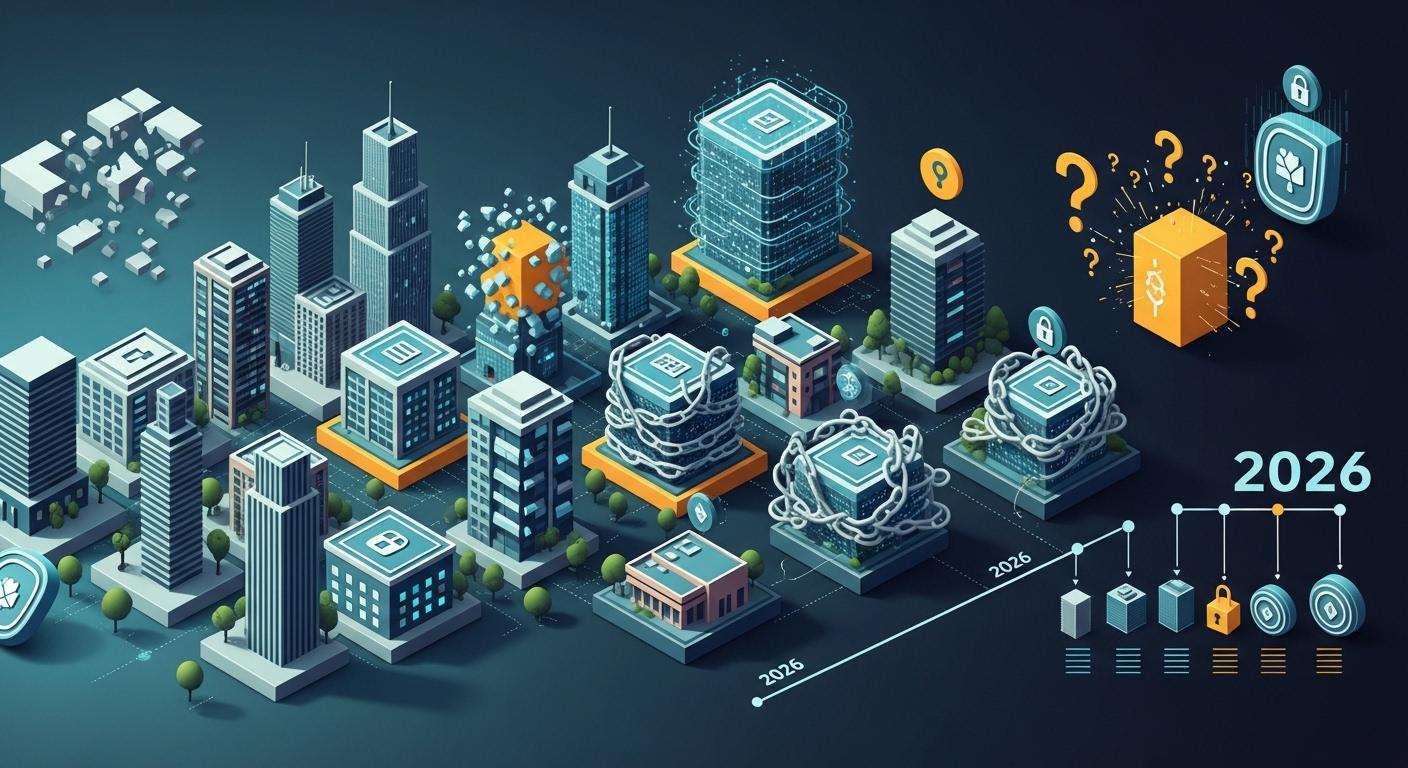
Real estate has long been considered one of the most stable investment classes, yet it has also remained complex, capital-intensive, and slow-moving. In recent years, the concept of real estate asset tokenization has gained attention as a way to digitize property ownership using blockchain-based tokens. By dividing property value into smaller units, it opens access to a wider pool of investors and introduces new ways to manage ownership and transactions.
Even with growing interest, the journey is not without obstacles. In 2026, the adoption of Real Estate Tokenization continues to face several practical, legal, and technological challenges. While the idea is appealing, real-world execution reveals gaps that businesses, investors, and developers must address carefully.
This blog examines the major issues affecting real estate asset tokenization in 2026, along with methods that can help reduce risks and improve adoption.
Regulatory Uncertainty Across Regions
One of the most significant challenges in Real Estate Tokenization is the lack of consistent regulations across countries. Each region has its own laws related to securities, property ownership, and digital assets. This creates confusion for investors and companies attempting cross-border operations.
In some jurisdictions, tokenized real estate is treated as a security, requiring strict compliance with financial laws. In others, the legal classification is still unclear. This inconsistency slows down the growth of any Real Estate Tokenization company that wants to operate globally.
For example, a project launched in one country may not be accessible to investors in another due to compliance restrictions. Licensing requirements, taxation policies, and investor protection rules vary widely, adding layers of complexity.
Methods to Address This
Companies involved in real estate tokenization development need to work closely with legal experts in each jurisdiction. Creating region-specific compliance frameworks can reduce legal risks. Partnering with local financial institutions also helps align operations with existing laws.
Another approach is focusing on jurisdictions that already support digital asset regulations. This allows companies to establish a stable foundation before expanding into more complex markets.
Legal Ownership and Property Rights Issues
Tokenizing a property does not automatically simplify ownership rights. Real estate is governed by land registries, legal documentation, and long-standing ownership systems. Integrating digital tokens with these traditional systems remains difficult.
A major concern is whether token holders truly have legal ownership or just economic exposure. In many cases, tokens represent shares in a company that owns the property rather than direct ownership of the asset itself. This distinction can create confusion among investors.
Real Estate Tokenization Development Services often rely on special purpose vehicles (SPVs) to manage property ownership. While this approach helps structure investments, it adds another layer of legal complexity.
Methods to Address This
Clear legal frameworks must define the relationship between tokens and property ownership. Real Estate Tokenization Platform Development should include legal documentation that explicitly states investor rights, voting powers, and profit distribution.
Integrating token records with government land registries, where possible, can also strengthen ownership clarity. Although this is still evolving, some regions are beginning to experiment with such integrations.
Market Liquidity Challenges
One of the main promises of Real Estate Tokenization is improved liquidity. However, in 2026, liquidity remains inconsistent. Tokenized assets still rely on secondary markets, which are not as mature as traditional stock exchanges.
Many platforms have limited trading volumes, making it difficult for investors to buy or sell tokens quickly. Without sufficient market participants, price discovery becomes inefficient.
This issue affects investor confidence. If investors feel they cannot exit their investments easily, they may hesitate to participate in real estate asset tokenization.
Methods to Address This
To improve liquidity, Real Estate Tokenization Services should focus on building strong secondary marketplaces. Collaborating with regulated exchanges can provide a more reliable trading environment.
Incentives for market makers can also help increase trading activity. Additionally, educating investors about long-term holding strategies may reduce pressure on immediate liquidity.
Technology Integration and Infrastructure
The technical side of real estate tokenization development presents its own challenges. Blockchain systems must integrate with property management tools, payment systems, and legal documentation platforms.
Interoperability issues can arise when different platforms use different blockchain networks. This fragmentation makes it difficult to transfer assets or data between systems.
Security is another concern. Smart contract vulnerabilities, hacking risks, and system failures can impact investor trust. Even a minor technical issue can have significant financial consequences.
Methods to Address This
A Real Estate Tokenization Development company should prioritize secure smart contract design and conduct regular audits. Using well-established blockchain frameworks can reduce risks.
Standardization across platforms is also important. Industry-wide protocols can improve compatibility between systems. Investing in user-friendly interfaces will also make it easier for non-technical investors to participate.
High Initial Setup Costs
While tokenization aims to reduce barriers to entry, the setup costs for companies can be substantial. Developing a platform, ensuring compliance, and structuring legal frameworks require significant investment.
Real Estate Tokenization Platform Development involves expenses related to blockchain integration, legal advisory, cybersecurity, and marketing. For smaller firms, these costs can be difficult to manage.
This challenge can limit participation to larger organizations, slowing the overall growth of the industry.
Methods to Address This
Companies can adopt a phased approach to development. Starting with a limited number of properties allows them to test the model before scaling operations.
Outsourcing to experienced Real Estate Tokenization Development Services providers can also reduce costs. These providers often have ready frameworks that can be adapted to specific projects.
Investor Awareness and Trust Issues
Despite increasing interest in digital assets, many investors still lack a clear understanding of how real estate asset tokenization works. Misconceptions about risk, ownership, and returns can discourage participation.
Trust is another factor. Investors may be hesitant to invest in digital tokens tied to physical assets, especially if they are unfamiliar with the technology.
A Real Estate Tokenization company must address both knowledge gaps and trust concerns to attract a broader audience.
Methods to Address This
Educational initiatives are essential. Providing detailed guides, webinars, and case studies can help investors understand the benefits and risks.
Transparency in operations, including regular updates and clear reporting, can build investor confidence. Third-party audits and certifications also add credibility.
Valuation and Pricing Difficulties
Determining the value of tokenized real estate assets can be complex. Traditional property valuation methods may not align with token pricing mechanisms.
Market demand, property location, rental income, and external economic factors all influence value. When these factors are translated into tokens, discrepancies can arise.
Incorrect valuation can lead to overpricing or underpricing, affecting investor returns and market stability.
Methods to Address This
Accurate valuation requires a combination of traditional real estate appraisal and digital market analysis. Real Estate Tokenization Services should involve professional appraisers and financial analysts.
Regular revaluation of assets can keep pricing aligned with market conditions. Transparent valuation methods will also help investors make informed decisions.
Taxation Complexity
Tax treatment of tokenized real estate varies across jurisdictions. Investors may face multiple layers of taxation, including capital gains tax, property tax, and income tax on rental earnings.
Unclear tax guidelines can create confusion and increase compliance risks. For international investors, cross-border taxation adds another layer of difficulty.
Methods to Address This
Clear tax reporting systems should be integrated into real estate tokenization development platforms. Providing investors with detailed tax documentation can simplify compliance.
Working with tax advisors in different regions can help companies design tax-efficient structures. Governments also need to provide clearer guidelines to support the growth of Real Estate Tokenization.
Limited Standardization Across Platforms
In 2026, the lack of standardization remains a major issue. Different platforms follow different protocols, token structures, and compliance methods.
This fragmentation creates barriers for investors who want to diversify across multiple platforms. It also makes it difficult for developers to create interoperable systems.
Methods to Address This
Industry collaboration is necessary to develop common standards. Real Estate Tokenization Development company initiatives can contribute to creating shared frameworks.
Adopting widely accepted token standards can improve compatibility and reduce fragmentation. Over time, this will create a more unified ecosystem.
Operational and Management Challenges
Managing a tokenized real estate asset involves more than just issuing tokens. Property maintenance, tenant management, and financial reporting still require traditional processes.
Coordinating these activities with digital platforms can be complex. Any mismatch between physical operations and digital records can lead to disputes.
Methods to Address This
Integrated management systems that connect property operations with blockchain platforms can reduce discrepancies. Real Estate Tokenization Platform Development should include features for real-time updates and reporting.
Hiring experienced property managers and aligning them with digital workflows will also improve efficiency.
Cybersecurity Risks
Digital platforms are always exposed to cybersecurity threats. In the context of real estate asset tokenization, these risks can affect both financial assets and sensitive data.
Unauthorized access, phishing attacks, and smart contract vulnerabilities can lead to losses. Even a single breach can damage the reputation of a Real Estate Tokenization company.
Methods to Address This
Strong security measures are essential. Regular audits, multi-factor authentication, and encryption can reduce risks.
Working with cybersecurity experts and implementing continuous monitoring systems will help detect and prevent threats early.
Conclusion
Real estate asset tokenization presents a new way to approach property investment, offering fractional ownership and broader access. However, the path forward in 2026 is shaped by a range of challenges that require careful attention.
From regulatory uncertainty and legal complexities to liquidity issues and technological barriers, each obstacle highlights the gap between concept and large-scale adoption. Companies involved in Real Estate Tokenization, including every Real Estate Tokenization Development company and provider of Real Estate Tokenization Development Services, must adopt practical strategies to navigate these concerns.
Addressing these challenges requires collaboration between regulators, developers, and investors. With consistent efforts, clearer frameworks, and improved infrastructure, real estate tokenization development can move toward wider acceptance.
As the industry continues to mature, those who approach these challenges with preparation and adaptability will be better positioned to build sustainable and reliable tokenized real estate ecosystems.
- Technology for Students
- Admissions & Applications
- Online Courses
- Career and Jobs
- Campus Life
- Drinks
- Film
- Fitness
- Food
- الألعاب
- Gardening
- Health
- الرئيسية
- Literature
- Music
- Networking For Students
- Insights
- Party
- Religion
- Shopping
- Sports
- Theater
- Wellness
- Education News
- Business & Finance For Students
- Security, Law & Crime Education
- Insurance
- Science & Technology For Students
 Arabic
 English
 French
 Spanish
 Portuguese
 Deutsch
 Turkish
 Dutch
Dutch
 Italiano
 Russian
 Romaian
 Portuguese (Brazil)
 Greek
Greek