


What Is a Roller Slewing Bearing and How Does It Work?
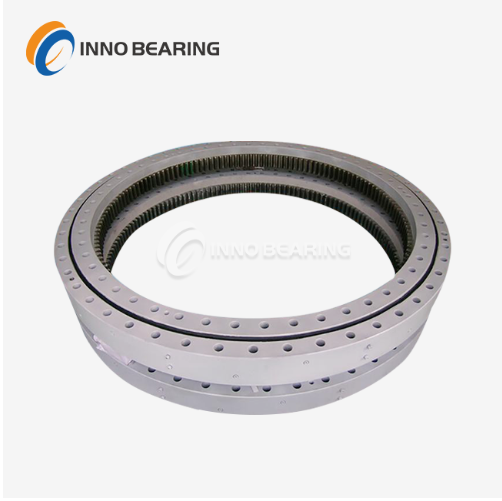
A Roller Slewing Bearing represents a sophisticated mechanical component designed to facilitate rotation between two structural components while simultaneously managing axial, radial, and tilting moment loads. Unlike standard small-scale bearings, these units are typically large in diameter and feature mounting holes for direct installation. At its core, a Roller Slewing Bearing operates by utilizing cylindrical rollers as the primary rolling elements, which traverse between precision-ground raceways. As the upper structure rotates, these rollers distribute the immense pressure evenly across the bearing surface, minimizing friction and preventing structural deformation. This intricate interplay between the inner and outer rings, coupled with the precision of the rolling elements, allows for seamless movement in heavy-duty machinery. Whether supporting the turret of an excavator or the massive blades of a wind turbine, the Roller Slewing Bearing serves as the critical pivot point that ensures stability and fluid motion under extreme conditions. Its design is a testament to mechanical engineering, balancing the need for massive weight support with the requirement for microscopic accuracy and smooth operational performance across diverse industrial landscapes.
The Anatomical Breakdown of a Roller Slewing Bearing
The fundamental architecture of these bearings involves two concentric rings, often forged from high-strength alloy steel, which house the internal rolling components. These rings are meticulously machined to provide smooth pathways for the rollers to glide through. Integrated gear teeth, either on the internal or external periphery, often accompany the design to facilitate driven rotation via a pinion. The structural integrity of these rings is paramount, as they must maintain their shape while under intense stress. Manufacturers often employ sophisticated quenching techniques to ensure the metal achieves the necessary hardness without becoming brittle. This balance of properties allows the bearing to survive in harsh environments where vibration and impact are common. The seamless integration of these rings ensures that the bearing acts as a unified bridge between the stationary base and the rotating assembly of the machine.
The Precision-Engineered Raceway System
Raceways are the soul of the bearing, determining how effectively loads are transmitted. Induction hardening techniques are frequently employed to enhance the surface hardness of these paths, ensuring they withstand the constant contact stress from the rollers without succumbing to fatigue. The geometry of the raceway must be perfectly aligned to prevent uneven wear and ensure the rollers maintain an optimal contact patch during every degree of rotation.
High-Strength Cylindrical Rolling Elements
Cylindrical rollers offer a significantly larger contact area compared to ball bearings, which translates to superior load-carrying capacity. These elements are often separated by cages or spacers to prevent friction and wear, maintaining a consistent orientation that optimizes the bearing's overall efficiency during heavy-duty cycles. The material used for these rollers is typically a high-chrome steel, chosen for its exceptional resistance to deformation under extreme pressure.
Deciphering the Operational Mechanics
Understanding how these units function requires looking at the distribution of force across the internal geometry. When a machine engages in movement, the Roller Slewing Bearing absorbs the weight of the superstructure while resisting the leverage created by off-center loads. The rollers transmit these forces from one ring to the other through line contact rather than point contact. This distinction is vital for heavy-duty applications because it spreads the stress over a larger surface area, drastically reducing the risk of material failure. The bearing functions as a massive joint, allowing for 360-degree rotation while keeping the entire assembly centered and stable. By effectively managing the friction generated during these movements, the bearing ensures that the mechanical energy is used for work rather than being lost to heat. This operational efficiency is what makes large-scale industrial machinery viable and safe for long-term use.
Simultaneous Load Handling Capabilities
The genius of this design lies in its ability to handle multi-directional stresses. Axial loads press down vertically, radial loads push horizontally, and tilting moments attempt to tip the bearing. The internal arrangement of the rollers ensures that these forces are neutralized, maintaining structural equilibrium. This versatility is achieved through the specific orientation of the roller rows, which are positioned to counteract specific force vectors as they occur during operation.
Low Friction Rotation for Massive Assemblies
Minimizing resistance is crucial when moving hundreds of tons. By utilizing rolling motion instead of sliding motion, the bearing drastically reduces the torque required to initiate rotation. This efficiency preserves the life of the drive motors and ensures that the mechanical energy is focused on the task at hand rather than overcoming internal drag. High-quality surface finishes on the rollers and raceways further enhance this smooth movement, allowing for precise control of the rotating structure.
Common Configurations and Specialized Designs
Not every application demands the same internal structure, leading to various configurations tailored for specific stressors. Engineers must choose a design that balances size, weight, and performance requirements. Some systems prioritize compact dimensions, while others focus on maximizing the static and dynamic load ratings to handle gargantuan weights in mining or offshore environments. The selection process involves analyzing the specific duty cycle, environmental exposure, and expected lifespan of the machinery. Specialized coatings or seal designs might be added to protect the internal components from corrosive saltwater or abrasive desert sand. Each configuration represents a unique solution to a specific mechanical challenge, proving that there is no one-size-fits-all approach to heavy-duty rotation. By optimizing the internal geometry, manufacturers can create bearings that are both lighter and stronger than previous generations.
Triple-Row Cylindrical Roller Structures
This configuration is often considered the powerhouse of the industry. By separating the loads into three distinct rows—two for axial forces and one for radial forces—this design achieves unparalleled stability and capacity. It is the preferred choice for heavy-duty cranes and large-scale material handling equipment where the weight involved demands the highest possible safety margins. Each row is dedicated to a specific type of force, allowing the bearing to operate with maximum efficiency.
Crossed Roller Arrangements for Space Efficiency
In a crossed roller setup, the rollers are oriented at right angles to each other in a single raceway. This clever geometry allows a single row of rollers to handle loads from all directions. It provides a compact footprint and high rotational accuracy, making it ideal for precision applications like robotics or medical imaging where space is at a premium. Despite its smaller profile, the crossed roller design offers surprising stiffness and reliability.
Why Material Selection and Lubrication Matter
The longevity of a Roller Slewing Bearing is deeply rooted in the quality of its materials and the consistency of its maintenance. Environmental factors like moisture, dust, and temperature fluctuations can wreak havoc on metal surfaces if they are not adequately protected. Selecting the right steel grade and surface treatment is the first step in ensuring a long service life. Beyond the metal itself, the seals used to keep contaminants out are just as critical. A failed seal can allow grit into the raceways, leading to rapid wear and catastrophic failure. Furthermore, the internal environment must be managed to prevent condensation and oxidation. High-performance bearings often utilize specialized alloys that provide a blend of toughness and hardness, ensuring the component can withstand the rigors of industrial use without frequent replacements. Investing in superior materials from the start significantly reduces the total cost of ownership over the bearing's lifespan.
Metallurgy and Heat Treatment Durability
The use of quenched and tempered steel provides the necessary toughness to resist cracking under impact. Specialized heat treatments, such as surface induction hardening on the raceways, create a hard "skin" that resists wear while the core of the ring remains ductile enough to absorb shocks without fracturing. This metallurgical harmony is essential for bearings that operate in unpredictable outdoor conditions where sudden shifts in load can occur.
Ensuring Longevity via Strategic Lubrication
Lubrication serves as a protective film that prevents direct metal-on-metal contact. It also helps dissipate heat generated during rotation and acts as a barrier against contaminants. Regular greasing schedules are vital, especially in harsh environments, to prevent premature oxidation and ensure the rolling elements continue to move with minimal resistance. Modern automatic lubrication systems are often integrated to provide a steady supply of grease to the raceways without manual intervention.
Selecting the correct Roller Slewing Bearing is a decision that impacts the safety and efficiency of any heavy-duty operation. These components are more than just rings and rollers; they are the foundation of motion for global infrastructure. With nearly 30 years of focus on the bearing field, Luoyang INNO Bearing Co., Ltd. is a professional enterprise integrating R&D, production, sales and service of mill bearings, cross roller bearings, self-aligning roller bearing, split bearings and high-precision bearings. Luoyang INNO Bearing Co., Ltd. is a professional Roller Slewing Bearing manufacturer and supplier in China. If you are interested in Roller Slewing Bearing, please feel free to discuss with us.
Harris, T. A., and Kotzalas, M. N. Rolling Bearing Analysis: Concepts and Design of Roller Bearings. CRC Press.
ISO 281:2007. Rolling bearings — Dynamic load ratings and rating life.
Brändlein, J., Eschmann, P., Hasbargen, L., and Weigand, K. Ball and Roller Bearings: Theory, Design, and Application. Wiley.
American Gear Manufacturers Association (AGMA). Design Guide for Slewing Ring Bearings.
Zaretsky, E. V. Rolling-Element Bearing Life: A Review of the Models and Their Evolution. NASA Technical Memorandum.
ISO 76:2006. Rolling bearings — Static load ratings.
- Technology for Students
- Admissions & Applications
- Online Courses
- Career and Jobs
- Campus Life
- Drinks
- Film
- Fitness
- Food
- Jocuri
- Gardening
- Health
- Home
- Literature
- Music
- Networking For Students
- Insights
- Party
- Religion
- Shopping
- Sports
- Theater
- Wellness
- Education News
- Business & Finance For Students
- Security, Law & Crime Education
- Insurance
- Science & Technology For Students
 Romaian
 English
 Arabic
 French
 Spanish
 Portuguese
 Deutsch
 Turkish
 Dutch
Dutch
 Italiano
 Russian
 Portuguese (Brazil)
 Greek
Greek