


How Do Experienced PICU Manufacturers Support Specialized Pediatric Care?
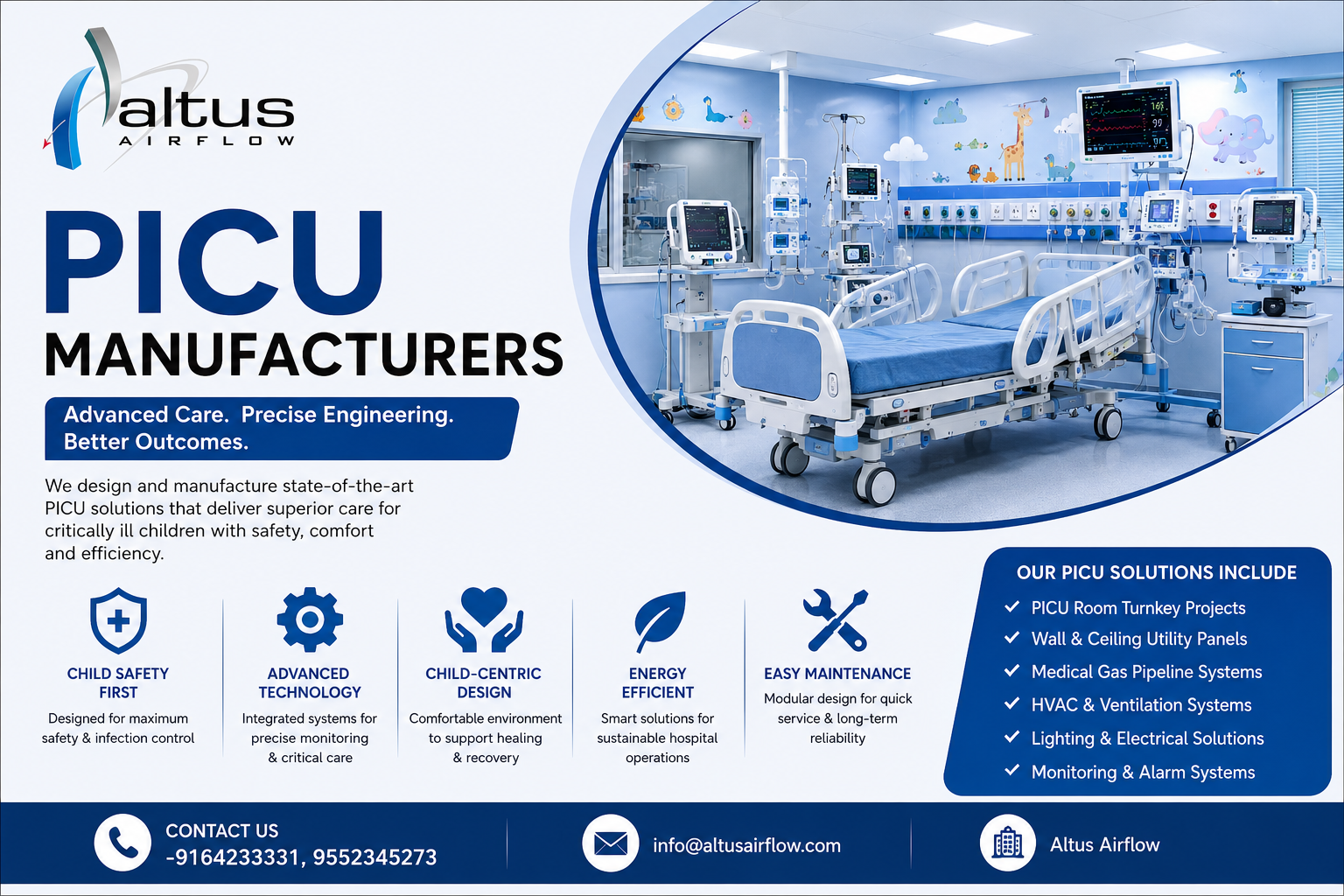
Introduction
Pediatric Intensive Care Units (PICUs) provide specialised treatment to infants and children who require continuous monitoring and advanced medical support. Unlike adult intensive care environments, pediatric units must accommodate different age groups, body sizes, clinical needs, and equipment requirements. Their infrastructure should support medical teams while creating a safe, organised, and comfortable environment for young patients.
Selecting experienced PICU Manufacturers is an important step when hospitals plan to establish or upgrade specialised pediatric critical care facilities. Experienced manufacturers understand the importance of appropriate patient bed arrangements, medical gas connections, electrical systems, monitoring equipment, ventilation, and infection prevention.
Their role goes beyond supplying individual components. They help hospitals coordinate essential infrastructure elements to develop functional pediatric intensive care environments that support clinical activities and patient safety.
Understanding the Requirements of a Pediatric Intensive Care Unit
A PICU is designed to provide intensive medical care to critically ill infants and children. It requires specialised infrastructure that allows healthcare professionals to monitor patients, access emergency equipment, and perform necessary procedures.
Unlike general hospital wards, pediatric intensive care environments must accommodate equipment and facilities suitable for different patient sizes and clinical conditions.
A well-planned PICU may include:
-
Dedicated pediatric patient bed spaces
-
Medical gas outlets and suction facilities
-
Electrical connections and emergency power provisions
-
Patient monitoring equipment interfaces
-
Ventilator and respiratory support connections
-
Nurse observation and central monitoring stations
-
Isolation facilities where required
-
Equipment storage and utility areas
-
Appropriate lighting and environmental controls
-
Accessible spaces for healthcare professionals and caregivers
Experienced manufacturers understand how these elements contribute to the functionality of a specialised pediatric care environment.
How Experienced PICU Manufacturers Support Specialized Pediatric Care
1. Developing Child-Focused Infrastructure
Children have different physical and clinical requirements compared with adult patients. A pediatric intensive care environment must therefore be planned around age-appropriate patient facilities and medical equipment.
Experienced manufacturers consider bed arrangements, equipment accessibility, medical utility positioning, and available working space during the design process.
The infrastructure should accommodate different patient categories, including infants, toddlers, and older children, depending on the hospital's clinical requirements.
Child-focused planning also considers the experience of young patients and their families. Suitable lighting, welcoming surroundings, and organised patient areas can contribute to a more supportive care environment.
2. Supporting Safe Patient Monitoring
Continuous monitoring is essential in pediatric critical care. Healthcare professionals need convenient access to patient monitoring equipment and related connections to observe important clinical parameters.
Manufacturers help coordinate the infrastructure required for monitors, electrical connections, communication systems, and bedside equipment.
Proper positioning of these components can reduce unnecessary movement and make essential equipment easier to access.
The design should also consider visibility from nursing stations and the placement of monitoring facilities according to the hospital's operational requirements.
3. Integrating Medical Gas and Electrical Systems
PICU patients may require oxygen, medical air, suction, ventilatory support, and other essential medical services. Reliable infrastructure is necessary to provide appropriate access to these utilities.
Experienced manufacturers coordinate bedhead panels, medical gas outlets, electrical sockets, emergency power provisions, and equipment interfaces according to the approved design.
Each patient bed area should provide suitable access to essential connections without creating unnecessary congestion.
Proper coordination also helps hospital engineering teams inspect and maintain these systems more effectively.
4. Improving Infection Prevention Through Suitable Materials
Infection prevention is a major consideration in pediatric intensive care because critically ill children may require extensive medical support.
The selection and installation of appropriate wall panels, ceilings, flooring, and other surfaces can influence cleaning and maintenance activities.
Experienced manufacturers understand the importance of smooth, non-porous, and easy-to-clean finishes where appropriate. Properly finished joints and carefully planned service openings can also reduce difficult-to-clean areas.
Material selection should be coordinated with the hospital's infection prevention policies and the intended clinical use of each space.
5. Supporting Ventilation and Environmental Control
A well-planned PICU requires suitable environmental conditions for patient care and medical equipment operation.
Ventilation planning should consider air circulation, temperature, humidity, filtration, and the specific requirements of different patient areas.
Manufacturers can support the coordination of HVAC components, ducting, filtration arrangements, and air distribution systems as part of the overall infrastructure project.
Isolation spaces may also require specialised environmental arrangements according to their intended use and applicable technical requirements.
6. Making Equipment and Bedside Services Accessible
Pediatric intensive care involves several types of medical equipment, including ventilators, infusion pumps, patient monitors, suction devices, and emergency support equipment.
The placement of these systems should allow healthcare professionals to access them without obstructing patient care activities.
Experienced manufacturers consider equipment dimensions, mounting arrangements, utility connections, and available working clearances during planning.
Well-organised bedside infrastructure can help reduce cable congestion and make routine clinical activities more manageable.
Important Infrastructure Features of a Modern PICU
Dedicated Patient Bed Areas
Each patient area should provide sufficient room for the bed, monitoring equipment, medical utilities, and healthcare professionals. The layout should also allow convenient access during emergency procedures.
Central Nursing and Observation Stations
A central nursing station supports communication and monitoring activities. Its location should provide appropriate visibility and convenient access to patient areas.
Medical Utility Panels
Bedhead panels bring essential medical gas and electrical connections together in an organised arrangement. Their configuration should reflect the equipment requirements of the intended patient population.
Isolation and Infection Control Facilities
Hospitals may require designated isolation rooms or spaces based on their clinical needs. These areas should be planned with suitable access, surfaces, ventilation, and service arrangements.
Storage and Support Areas
PICUs require appropriate facilities for medical equipment, clean supplies, and other operational materials. Organised storage helps keep patient areas accessible and reduces unnecessary obstruction.
The Importance of Specialized Pediatric Environment Planning
A pediatric intensive care environment should balance clinical functionality with the comfort and emotional needs of young patients and their families.
Child-Centred PICU Environment and Family Support Planning helps hospitals consider factors beyond basic medical infrastructure. It focuses on creating an organised environment that supports patient observation, caregiver access, staff movement, and age-appropriate surroundings.
Important considerations include:
-
Suitable lighting for different patient care activities
-
Reduced unnecessary noise within patient areas
-
Clear visibility for clinical observation
-
Convenient access for parents and caregivers
-
Organised equipment and storage arrangements
-
Appropriate privacy and isolation provisions
-
Comfortable surroundings wherever clinically suitable
Manufacturers should coordinate these considerations with hospital administrators, pediatric specialists, architects, and engineering teams.
How PICU Manufacturers Improve Project Coordination
Developing a pediatric intensive care facility involves several interconnected activities. These may include architectural planning, modular infrastructure, electrical work, ventilation, medical gas systems, and equipment integration.
Experienced manufacturers can support coordination between these activities through a structured project process.
Site Assessment and Requirement Analysis
The project should begin with an assessment of available space, hospital infrastructure, patient capacity, and clinical requirements.
This helps identify technical limitations and determine which systems need to be installed, modified, or integrated.
Design and Layout Development
The layout should reflect the intended patient population, equipment requirements, staff movement, and monitoring needs.
Manufacturers should coordinate technical drawings and service locations with the hospital's project team before installation begins.
Installation and System Integration
Installation requires careful coordination of modular panels, medical utility connections, electrical systems, ventilation components, and equipment support facilities.
A planned installation sequence can help minimise conflicts between different project activities.
Testing and Handover
Before handover, installed systems should undergo appropriate inspection and testing according to the agreed project specifications.
Hospitals should receive relevant technical documents, test records, operating information, and maintenance guidance.
Factors Hospitals Should Consider When Selecting PICU Manufacturers
Choosing the right manufacturer requires more than comparing product specifications or initial quotations. Hospitals should assess whether the company understands specialised pediatric infrastructure requirements.
Important factors include:
-
Healthcare project experience: Review experience with PICU and other specialised hospital infrastructure projects.
-
Technical capabilities: Evaluate knowledge of modular systems, ventilation, medical gases, and electrical integration.
-
Material quality: Check the durability, hygiene suitability, and maintenance requirements of proposed components.
-
Customisation: Ensure the manufacturer can accommodate different patient categories and hospital layouts.
-
Equipment integration: Assess the ability to coordinate patient monitoring systems and bedside medical utilities.
-
Installation quality: Review project execution methods, inspections, and quality control procedures.
-
Documentation: Confirm the availability of technical drawings, specifications, and handover records.
-
After-sales support: Understand warranty conditions, maintenance assistance, and technical service availability.
A detailed evaluation helps hospitals select a project partner capable of supporting their clinical and infrastructure objectives.
Why Long-Term Maintenance and Technical Support Matter
A PICU operates continuously and depends on reliable infrastructure. Hospitals must be able to inspect, maintain, and repair essential systems without creating unnecessary disruption.
Experienced manufacturers can support long-term infrastructure management by providing maintenance instructions, technical documentation, warranty information, and assistance for supplied components.
Hospitals should also consider future requirements such as equipment upgrades, additional patient facilities, and changes in clinical workflows.
Accessible service points and organised infrastructure can make maintenance activities easier to plan.
Conclusion
Experienced PICU manufacturers play an important role in supporting specialised pediatric care by helping hospitals develop functional, safe, and well-coordinated critical care environments. Their expertise contributes to child-focused infrastructure, medical utility integration, patient monitoring accessibility, infection prevention, and efficient clinical workflows.
Selecting reliable PICU Manufacturers allows hospitals to consider both immediate infrastructure requirements and long-term operational needs. With appropriate planning, quality materials, coordinated installation, and dependable technical support, healthcare facilities can establish pediatric intensive care environments that better support young patients, caregivers, and medical professionals.
Frequently Asked Questions
1. What do PICU manufacturers provide for hospitals?
PICU manufacturers may provide specialised modular infrastructure, wall and ceiling systems, medical utility panels, electrical arrangements, equipment support systems, and other components required for pediatric intensive care environments.
2. How do experienced PICU manufacturers support pediatric patient safety?
They help coordinate patient bed areas, medical gas connections, electrical infrastructure, monitoring interfaces, equipment access, and suitable surface materials to support the hospital's patient safety and infection prevention requirements.
3. Why is specialised infrastructure important in a pediatric ICU?
Children have different physical and clinical requirements from adults. Specialised infrastructure helps accommodate age-appropriate equipment, suitable bed arrangements, accessible medical utilities, and the specific needs of pediatric care teams.
4. What should hospitals check before selecting PICU manufacturers?
Hospitals should review healthcare project experience, technical expertise, material quality, customisation capabilities, equipment integration, installation standards, documentation, and after-sales support.
5. Can PICU infrastructure be customised according to hospital requirements?
Yes. PICU infrastructure can be planned according to available space, patient capacity, equipment specifications, clinical workflows, and the hospital's intended level of pediatric critical care.
Read Our Previous Blog-----------> What Should Hospitals Look for in a Modular OT Turnkey Project Company?
- Technology for Students
- Admissions & Applications
- Online Courses
- Career and Jobs
- Campus Life
- Drinks
- Film
- Fitness
- Food
- الألعاب
- Gardening
- Health
- الرئيسية
- Literature
- Music
- Networking For Students
- Insights
- Party
- Religion
- Shopping
- Sports
- Theater
- Wellness
- Education News
- Business & Finance For Students
- Security, Law & Crime Education
- Insurance
- Science & Technology For Students
 Arabic
 English
 French
 Spanish
 Portuguese
 Deutsch
 Turkish
 Dutch
 Italiano
 Russian
 Romaian
 Portuguese (Brazil)
 Greek