


Metal Forming Solutions for Industrial Float Components
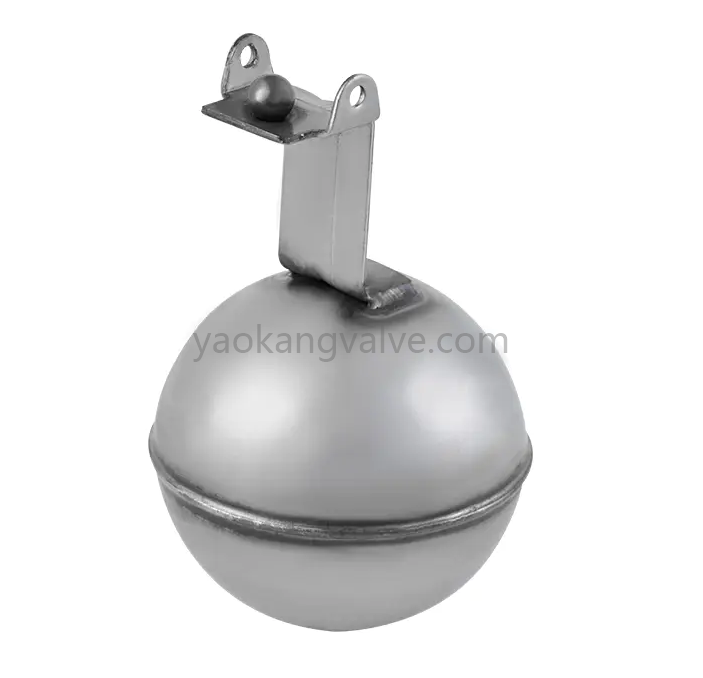
The manufacturing quality of floating components plays an important role in the reliability of automatic liquid level control equipment. A Float Ball Factory produces components that help valves, switches, and monitoring systems respond to changes in liquid height. These products are used in water storage tanks, industrial fluid equipment, agricultural installations, and water treatment facilities. For international buyers, understanding how these components are designed, processed, and inspected helps establish realistic purchasing requirements and identify suitable manufacturing partners.
Production usually begins with an assessment of the intended application. A floating body must provide enough displacement to support its own weight and operate the connected control mechanism. Its external dimensions, shape, wall construction, and connection arrangement influence the final performance. Manufacturers therefore need to understand the working liquid, installation position, available space, and required movement range. For customized products, engineering drawings and physical samples are useful references because they communicate structural details more accurately than a general product description.
Material selection is an early manufacturing decision. Stainless steel is widely used in industrial float production because it provides mechanical strength and resistance to many corrosive environments. Grade 304 is commonly selected for general industrial and water-related applications. Grade 316L may be considered for certain environments involving chloride exposure or more demanding corrosion conditions. The correct choice depends on the actual liquid composition, concentration, temperature, and exposure duration. Other materials may also be appropriate for specialized applications, depending on the required performance and compatibility.
After material confirmation, production moves to cutting and forming. Depending on the design, stainless steel sheets may be processed through stamping, drawing, bending, or other forming operations. These methods create the basic geometry required for the floating body. Spherical, cylindrical, elongated, and flat configurations may require different tooling and processing arrangements. Consistent forming is important because variations in shape and dimensions can affect displacement volume, installation clearance, and the movement of the finished component.
The assembly stage is particularly important for hollow metal products. Formed sections must be joined to create an enclosed body with the required internal volume. Welding quality influences structural stability and the ability of the body to retain its internal space. If a joint is not properly formed, liquid may enter the cavity during operation, increasing the component's weight and reducing its intended buoyancy. Joint preparation, welding consistency, and surface finishing should therefore be managed according to the product structure and technical requirements.
Different product designs require different manufacturing and assembly considerations. Threaded versions need suitable connection dimensions and accurate thread processing to fit compatible equipment. Through-hole configurations require consistent central openings for guide rods or shafts. Bracket-style designs involve additional mounting structures that must correspond to the installation arrangement. These details are important for equipment manufacturers because even a structurally sound product may be unsuitable if its connection position or dimensions do not match the original assembly.
Inspection should be integrated into the manufacturing process rather than treated only as a final visual check. Dimensional measurements help verify external diameter, height, connection size, and other critical features. Visual inspection can identify surface defects, irregular joints, and processing marks. For products where internal sealing and buoyancy are essential, suitable functional inspection procedures may be established according to customer specifications. The inspection method and acceptance criteria should be discussed before production, particularly for customized orders.
The applications of these products cover several industrial sectors. Water treatment facilities use floating components in storage tanks, filtration systems, and wastewater equipment. Agricultural irrigation installations may use mechanical level controls to manage water storage. Marine equipment can require carefully selected materials for exposure to moisture and salt-containing environments. Chemical processing facilities need application-specific material assessments. Other uses include pump assemblies, pipeline equipment, industrial valves, and specialized liquid monitoring systems.
Customization is an important consideration for overseas equipment manufacturers. Standard designs may meet common installation requirements, but some equipment uses unusual dimensions, limited clearance, or specific connection arrangements. In these situations, production based on drawings or samples allows the manufacturer to evaluate the requested configuration. Buyers should provide complete technical information, including material grade, dimensions, tolerances, connection details, and operating medium. Confirming these requirements before manufacturing helps reduce errors and unnecessary adjustments during assembly.
When comparing manufacturing suppliers, buyers should examine technical communication, production consistency, inspection practices, and experience with similar component structures. It is also useful to clarify how drawings are approved, how changes are handled, and how repeat orders are controlled. Packaging and delivery coordination should be included in the purchasing discussion because metal components may require suitable protection during international transportation. A clear specification and approval process can make long-term sourcing more predictable.
For international distributors and equipment manufacturers, selecting a suitable Float Ball Factory means evaluating both manufacturing capability and the ability to understand application requirements. Yongjia County Yaokang Technology Co., Ltd. specializes in stainless steel float products and related components, including threaded, original, through-hole, and bracket configurations. The company supports customized development according to customer drawings or samples. Buyers can explore available product designs and technical information at https://www.yaokangvalve.com/product/ when evaluating components for their liquid level control equipment.
- Technology for Students
- Admissions & Applications
- Online Courses
- Career and Jobs
- Campus Life
- Drinks
- Film
- Fitness
- Food
- Oyunlar
- Gardening
- Health
- Home
- Literature
- Music
- Networking For Students
- Insights
- Party
- Religion
- Shopping
- Sports
- Theater
- Wellness
- Education News
- Business & Finance For Students
- Security, Law & Crime Education
- Insurance
- Science & Technology For Students
 Turkish
 English
 Arabic
 French
 Spanish
 Portuguese
 Deutsch
 Dutch
 Italiano
 Russian
 Romaian
 Portuguese (Brazil)
 Greek