


Strong Gear Transmission Components for Machinery
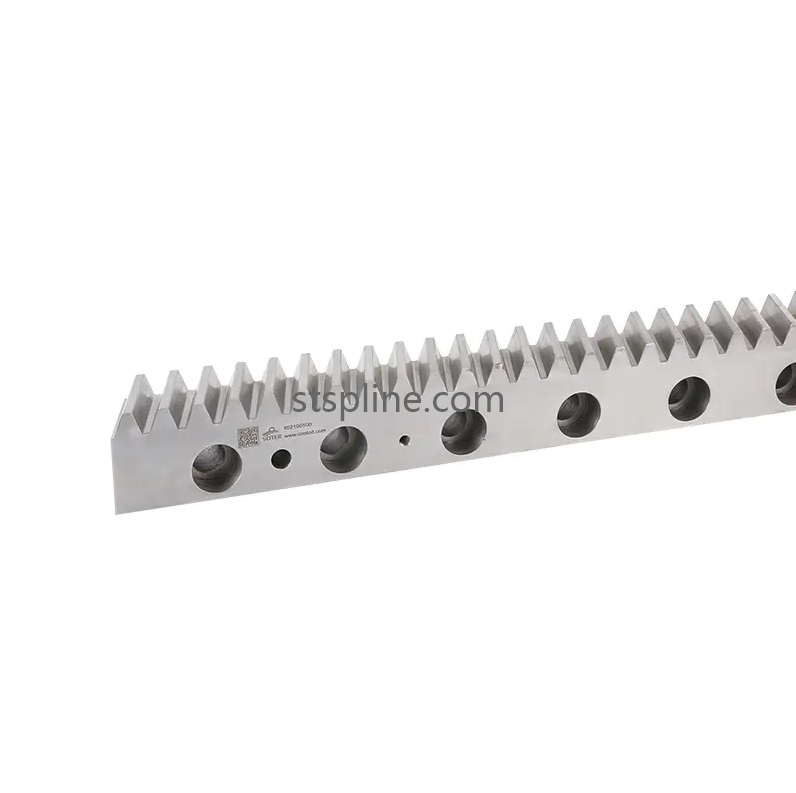
Metal gear components play an important role in mechanical transmission systems where strength, dimensional stability, and dependable tooth engagement are required. In equipment involving repeated linear movement, a Metal Rack And Pinion arrangement provides a practical method of converting rotary motion into linear displacement. The system combines a toothed metal rack with a compatible circular pinion, creating a mechanical connection that can be integrated into different machine structures. Its straightforward working principle and flexible installation arrangements make it useful in industrial machinery, automated equipment, and mechanical positioning applications.
A typical assembly includes a linear rack, a rotating pinion, supporting structures, and a drive mechanism. The rack carries a series of evenly arranged teeth, while the pinion contains corresponding teeth designed to engage with the rack profile. When the pinion rotates, its movement drives the rack or moves the pinion along the stationary rack, depending on the machine configuration. This arrangement allows mechanical energy from a motor or gearbox to produce controlled linear movement.
Metal is commonly selected for gear transmission components because engineering metals offer a range of mechanical properties suitable for industrial environments. Steel is an important option where strength and resistance to operational loading are relevant. Other metal grades may be considered according to equipment requirements, manufacturing processes, and environmental exposure. The appropriate material should be determined by the intended application, expected loading, and required service conditions rather than by material category alone.
Material quality is only one part of the manufacturing process. Gear performance also depends on tooth geometry, machining accuracy, surface condition, and dimensional consistency. The spacing between adjacent teeth must remain suitable for the corresponding pinion, while the tooth profile should provide appropriate contact during movement. Errors in these areas can contribute to irregular engagement, increased noise, vibration, and uneven wear. Accurate production and inspection are therefore important considerations when sourcing metal transmission components.
The manufacturing route depends on the component design and material specification. Machining processes can be used to produce the required tooth profiles and dimensional features. Additional finishing operations may be considered where the application requires particular surface characteristics or dimensional control. Depending on the material and intended operating conditions, suitable heat treatment or surface treatment may also form part of the manufacturing specification. Such processes should be selected according to actual technical requirements rather than assumed to be necessary for every gear component.
One reason metal gearing is widely considered for industrial machinery is its ability to support different mechanical arrangements. Automated production lines may use rack drives for the movement of equipment modules, while lifting and handling machinery may incorporate linear gear transmission into positioning mechanisms. Machine tools, assembly systems, and industrial adjustment equipment can also use this type of mechanism where rotary-to-linear movement is required. The final design should account for the forces, movement frequency, and installation conditions involved in each application.
Tooth compatibility is essential when selecting a rack and pinion pair. Engineers should check the module, pressure angle, tooth profile, pitch, and other relevant dimensions before assembling the components. Even when two gears have similar external dimensions, differences in tooth geometry can prevent proper engagement. When replacing existing parts, checking the original specifications or measuring the installed assembly can help reduce the risk of purchasing incompatible components.
Load capacity should be evaluated as part of the complete transmission design. The weight of the moving assembly, applied force, operating speed, acceleration, and possible impact loads all influence component selection. Supporting structures are equally important because excessive deformation can affect alignment and tooth contact. For long travel systems, the mounting surface should provide sufficient support throughout the operating path. These engineering considerations help maintain consistent engagement under normal working conditions.
Environmental exposure can influence the selection of metal components and protective measures. Machinery operating in humid, dusty, or corrosive environments may require additional attention to surface protection, lubrication, and maintenance. Metal components can experience corrosion or wear if the operating environment is not considered during equipment design. Buyers should communicate environmental conditions when requesting product recommendations or technical quotations.
For international procurement, buyers should review technical specifications, manufacturing consistency, inspection arrangements, and supplier communication. Drawings, material requirements, dimensions, and application details provide a useful basis for evaluating quotations. Importers and distributors may also need consistent product identification and packaging arrangements to support warehouse management and subsequent customer orders. Clear documentation can make repeat purchasing and replacement-part planning more efficient.
Maintenance is another factor that affects long-term transmission performance. Regular inspection can identify damaged teeth, abnormal surface wear, loose mounting connections, and alignment changes. Suitable lubrication helps reduce friction between contacting surfaces, while cleaning can limit the accumulation of contaminants around the engagement area. Maintenance frequency should be determined by operating intensity and environmental conditions.
When evaluating a Metal Rack And Pinion, equipment manufacturers should consider the relationship between material properties, gear geometry, installation accuracy, and operating loads. A suitable selection process helps ensure that the transmission components match the machine's actual requirements. Engineers and purchasing professionals can review available product information at https://www.stspline.com/product/straight-teeth-rack/ when sourcing metal gear rack components for industrial applications.
- Technology for Students
- Admissions & Applications
- Online Courses
- Career and Jobs
- Campus Life
- Drinks
- Film
- Fitness
- Food
- Giochi
- Gardening
- Health
- Home
- Literature
- Music
- Networking For Students
- Insights
- Party
- Religion
- Shopping
- Sports
- Theater
- Wellness
- Education News
- Business & Finance For Students
- Security, Law & Crime Education
- Insurance
- Science & Technology For Students
 Italiano
 English
 Arabic
 French
 Spanish
 Portuguese
 Deutsch
 Turkish
 Dutch
 Russian
 Romaian
 Portuguese (Brazil)
 Greek