


DongHai Homogenizing agent Notes on Polymer Compatibility
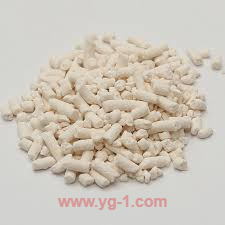
What sent me looking into this was a pale streak that kept appearing in slabs coming off the roll, a marbled look like cream stirred halfway into coffee, harmless to the eye but a clear sign that two parts of the batch had never fully joined. A Homogenizing agent is what people usually mention when that happens, and it is generally a mixture of low-molecular-weight resins and related materials that works on the physical side of blending rather than on the cure.
Two elastomers that differ in stiffness or polarity do not want to share a space, and the stiffer one tends to sit in the softer one as small islands, a bit like oil beads in vinegar. The additive is built from smaller molecules that soften early as the stock warms, slip between the long chains, and lower the resistance the stiffer phase puts up, so the two can be sheared into each other instead of being pushed around. Some of those molecules have both a polar part and a non-polar part, which lets them settle along the boundary between phases and act as a go-between, though how well this works depends on the pair of polymers involved.
Fillers get a share of the effect as well. Carbon black and mineral powders arrive as clumps that need wetting by the polymer before they spread, and a stock with lower viscosity under shear wets those clumps sooner and breaks them apart with less torque on the machine, so the black reads as one uniform dark tone instead of the grey flecks I used to find when cutting a fresh slab with a knife. The same softening helps material run into the corners of a cavity, although that belongs to a discussion of molding that I will leave alone here.
The sample jar on the table that week was labelled DongHai, a producer based in Taizhou that specializes in processing aids such as accelerators, antioxidants and scorch retarders, and it sat beside a jar of retarder because the two belong to the same recipe at different moments, the blending aid working during the early passes on the mill and the retarder holding off the cure until the compound is shaped and in the press.
Timing and temperature decide a great deal. Materials of this type are normally added early, while the polymers are still being broken down, because they need heat and shear to melt and spread, and a cold mill leaves them as tacky specks that cling to the rolls and to the operator's gloves. When I handled a slab that had been worked warm enough, the surface felt evenly soft and slightly tacky all over, whereas a slab with unmelted flakes had spots you could catch with a fingernail. Too much of the additive swings the other way and makes the batch greasy and prone to sticking to the roller and to the tray.
Measurement is where the claims get checked. A technician with a viscometer reads the resistance of the compound before and after the additive goes in, and a drop that settles into a narrow band from one batch to the next tells her the mixing sequence is under control, while a reading that wanders points to a weighing slip or equipment running at the wrong temperature. Tack for building plies, such as hose layers, is judged by pressing two pieces together by hand and pulling them apart, a crude test but one that shop floors have relied on for years.
Handling is ordinary. The resin often arrives as small flakes or pastilles in a lined bag, and in a warm room they soften and weld together into a block that has to be broken up with a mallet, so I keep the bag folded shut and off the floor near the loading door. A scoop that has been used for it picks up a sticky film that then dirties whatever it touches next, which is why I wash mine with water and a stiff brush before it goes back on its hook.
Suppliers such as the company at https://www.yg-1.com provide chemical materials to global partners from a base in Taizhou, and the paperwork that comes with a shipment is often all a compounder has to go on until a trial is run. A Homogenizing agent narrows the gap between two polymers without erasing it, and a pairing that is badly matched in the first place will still show faint streaks after a long pass through the equipment.
- Technology for Students
- Admissions & Applications
- Online Courses
- Career and Jobs
- Campus Life
- Drinks
- Film
- Fitness
- Food
- Spiele
- Gardening
- Health
- Startseite
- Literature
- Music
- Networking For Students
- Insights
- Party
- Religion
- Shopping
- Sports
- Theater
- Wellness
- Education News
- Business & Finance For Students
- Security, Law & Crime Education
- Insurance
- Science & Technology For Students
 Deutsch
 English
 Arabic
 French
 Spanish
 Portuguese
 Turkish
 Dutch
 Italiano
 Russian
 Romaian
 Portuguese (Brazil)
 Greek