


What Can fengyinmotor Offer for Different Appliance Projects?
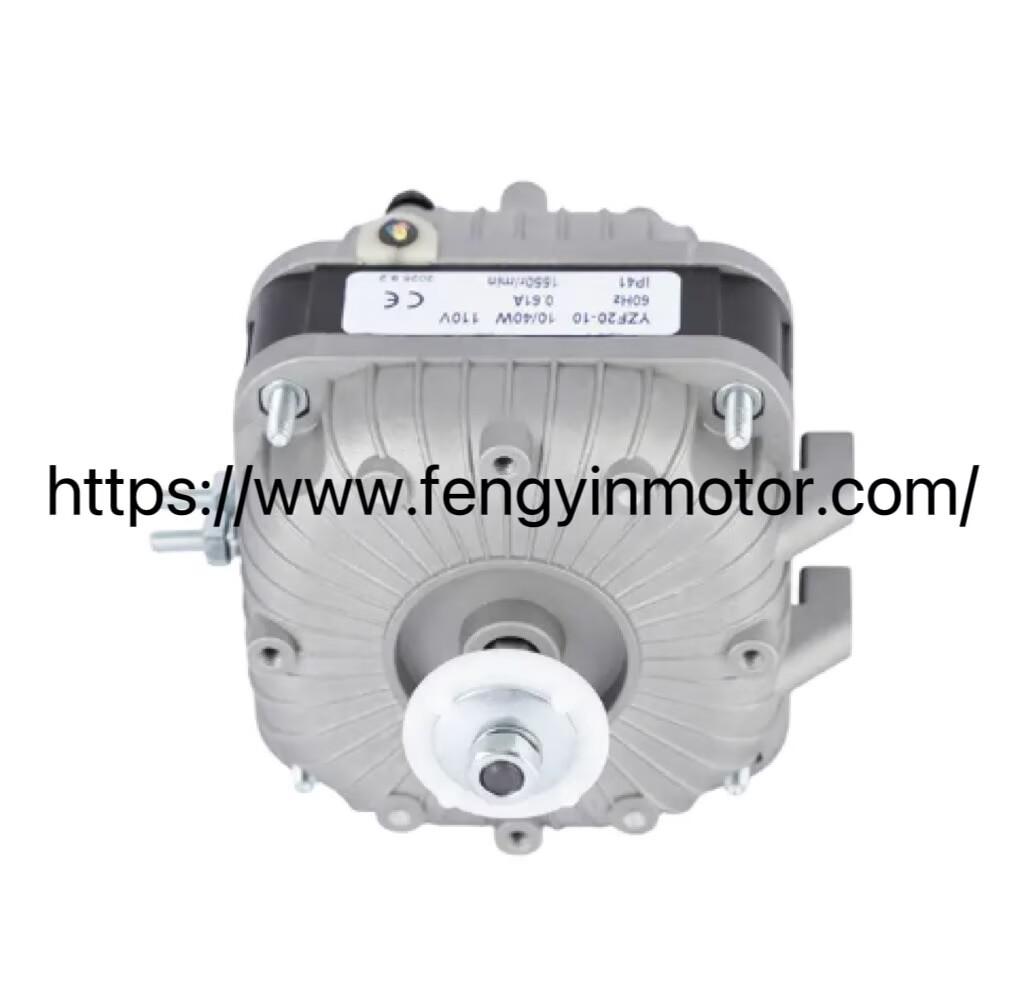
Fan Motor Manufacturer selection requires careful evaluation when buyers are sourcing components for refrigeration systems, household appliances, ventilation equipment, or commercial cooling products. A component may look suitable in a catalogue, but its actual compatibility depends on electrical specifications, installation dimensions, operating conditions, and the requirements of the finished equipment. Importers, appliance producers, wholesalers, and engineering teams should examine these factors before discussing prices or confirming a supply agreement. A structured evaluation also helps both parties communicate technical expectations more clearly.
Identify the Appropriate Product Category
Different appliances use different internal structures and operating arrangements. Buyers should begin by identifying the equipment in which the component will be installed.
For example, commercial refrigerators and freezers may require products designed for air circulation around cooling components. Ventilation equipment, air purifiers, kitchen appliances, and heating devices can have different airflow and installation requirements.
Ask the supplier about its product categories and application experience. Available options may include shaded-pole asynchronous units, capacitor-driven designs, DC brushless products, and related assemblies. Each design has its own operating characteristics, so the selection should be based on equipment requirements rather than appearance alone.
Confirm Electrical and Mechanical Specifications
Technical compatibility is essential when integrating a component into an appliance. Buyers should prepare the required voltage, frequency, power rating, rotational speed, current, and connection details before requesting a quotation.
Mechanical dimensions also deserve attention. Shaft size, mounting holes, housing dimensions, rotation direction, and wiring outlet positions can affect installation and assembly. Even a small dimensional difference may require adjustments to the surrounding structure.
For projects intended for different countries, electrical requirements should be reviewed according to the target market. Buyers should clarify whether a 110V or 220V configuration is needed and whether the proposed product supports the required operating frequency.
A technical data sheet can help purchasing teams, engineers, and production staff work from the same specifications. Any agreed changes should be recorded before the order enters manufacturing.
Examine Production Equipment and Process Management
Factory production arrangements can influence the consistency of components supplied in repeated batches. Buyers should ask about assembly equipment, winding processes, component handling, production scheduling, and process monitoring.
It is also useful to understand whether the supplier has dedicated teams for product development, manufacturing, and quality control. These functions help coordinate technical adjustments and address production questions during an order.
At fengyinmotor, the product range includes single-phase shaded-pole asynchronous units, single-phase capacitor asynchronous products, dual-voltage models, DC brushless designs, and related assemblies. The company also operates automated production lines and supporting testing equipment for micro-appliance component manufacturing. These capabilities provide useful context for buyers evaluating product categories and manufacturing arrangements.
Review Quality Control and Testing Procedures
A purchasing decision should consider how products are inspected throughout production. Buyers can ask which checks are performed on incoming materials, assembled components, and finished units.
Depending on the design, relevant inspection items may include electrical performance, operating noise, vibration, temperature rise, rotational direction, starting behavior, and dimensional accuracy.
For applications involving continuous operation, buyers should also discuss the expected working environment and operating conditions. Temperature, humidity, installation position, and ventilation can influence component selection and testing requirements.
Ask whether inspection records or product test information can be provided for the proposed model. Buyers should clarify the acceptance criteria before production begins, especially when the order involves multiple specifications or repeat shipments.
Evaluate Customization and OEM Communication
OEM projects often involve requirements that differ from standard catalogue configurations. A buyer may need a particular mounting arrangement, wire length, connector type, rotation direction, housing dimension, or electrical specification.
Before requesting customization, prepare drawings, photographs, sample components, or equipment information where available. These materials help the technical team understand the intended installation and evaluate possible adjustments.
Buyers should also ask which changes can be accommodated, whether samples are available for evaluation, and how design revisions are approved. A written confirmation of the final specifications helps prevent confusion between quotation, sample approval, and batch production.
Clear communication is particularly important when a project involves several product models or different appliance platforms.
Compare Order Planning and Supply Arrangements
Price is only one part of a purchasing decision. Buyers should also discuss minimum order quantities, production lead times, packaging, payment terms, shipping arrangements, and documentation.
For distributors and appliance manufacturers, repeat supply planning matters. Ask how approved specifications are retained, how production schedules are coordinated, and how changes in order quantities are handled.
It is also helpful to establish a contact person for technical questions and order updates. This gives purchasing teams a clear communication channel when they need to confirm specifications, request documents, or plan subsequent shipments.
Consider Long-Term Product Development Needs
A suitable supplier should be able to discuss more than an immediate purchasing requirement. Buyers developing new appliances may need technical cooperation during product design, sample evaluation, and later specification adjustments.
Discuss whether the supplier can review new application requirements and provide information about available structures and related products. This conversation can help buyers assess whether the product range matches their future sourcing plans.For businesses evaluating manufacturing cooperation, fengyinmotor offers product categories covering refrigeration applications, household appliances, kitchen and bathroom equipment, and other equipment sectors. Buyers can review the available range and discuss their technical requirements through https://www.fengyinmotor.com/product/ before preparing a quotation request or planning an OEM project.
- Technology for Students
- Admissions & Applications
- Online Courses
- Career and Jobs
- Campus Life
- Drinks
- Film
- Fitness
- Food
- Games
- Gardening
- Health
- Home
- Literature
- Music
- Networking For Students
- Insights
- Party
- Religion
- Shopping
- Sports
- Theater
- Wellness
- Education News
- Business & Finance For Students
- Security, Law & Crime Education
- Insurance
- Science & Technology For Students
 English
 Arabic
 French
 Spanish
 Portuguese
 Deutsch
 Turkish
 Dutch
 Italiano
 Russian
 Romaian
 Portuguese (Brazil)
 Greek