


Cordless Blending Technology for Flexible Food Preparation
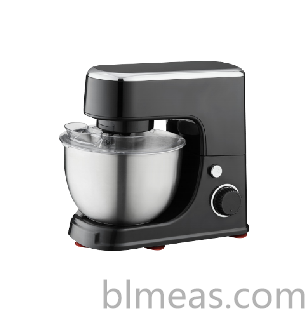
Hand blenders have become essential tools in kitchens where convenience, versatility, and efficient food preparation are important. Unlike traditional countertop blenders, these appliances allow users to process ingredients directly inside suitable containers, reducing the need to transfer food between different vessels. For manufacturers and international buyers, understanding the structure and functionality of these products is important when developing competitive kitchen appliance collections. A professional Hand Blender Factory needs to consider motor performance, attachment compatibility, ergonomic design, electrical safety, and manufacturing consistency throughout product development.
A hand blender, also known as an immersion blender or stick blender, is a handheld appliance that uses a motor-driven rotating blade to process ingredients. Its typical construction includes a motor housing, operating buttons, a blending shaft, a blade assembly, and an electrical power source. Depending on the model, additional accessories may include a whisk, chopping container, measuring beaker, or other food preparation attachments. These components allow one appliance to perform several related kitchen tasks without requiring a large countertop installation.
The motor is one of the most important components because it determines how effectively the appliance handles different ingredients. Blending soft fruits, preparing salad dressings, and pureeing cooked vegetables require different operating conditions from processing thicker mixtures. Motor power, rotational speed, transmission efficiency, and blade geometry all influence the final results. Product designers need to balance these factors while considering heat generation, operating noise, energy consumption, and the expected service life of the appliance.
Blade construction also affects blending performance. The blade assembly must create sufficient movement to draw ingredients toward the cutting area while supporting consistent processing. Stainless steel is commonly selected for food-contact cutting components because of its corrosion resistance and durability. The shape, angle, and number of blades can influence the movement of liquids and solid ingredients during operation. A suitable protective guard around the blade area can help control splashing and improve handling during food preparation.
Different attachments expand the practical applications of a hand blender. A standard blending shaft is suitable for preparing soups, purees, sauces, and certain beverages. A whisk attachment can support beating eggs, whipping suitable mixtures, and incorporating air into ingredients. A chopping attachment provides another option for processing vegetables, herbs, and other compatible foods. A measuring beaker can simplify ingredient preparation and help users work with smaller quantities. The available accessories depend on the appliance configuration and should be evaluated according to the intended market.
Cordless technology has created additional possibilities for hand blender development. Rechargeable models allow users to move around the kitchen without being restricted by a power cable. This arrangement can be especially useful when preparing food at different workstations or working in kitchens with limited outlet access. Some cordless product systems also use removable batteries that can be shared with compatible appliances. This approach supports a coordinated product ecosystem and can simplify charging arrangements for households purchasing several battery-powered kitchen tools.
Ergonomics should not be overlooked when designing handheld equipment. The motor housing needs to provide a comfortable grip, accessible operating buttons, and a suitable balance between weight and functionality. Users may hold the appliance for extended periods when processing larger quantities, so excessive weight or poorly positioned controls can reduce comfort. Surface finishes should also be practical for regular handling and routine cleaning. Safety-related features, including protective operating arrangements and secure attachment connections, contribute to a more dependable user experience.
Cleaning and maintenance are equally important purchasing considerations. Food residues can accumulate around blade guards, attachment connections, and container surfaces if the product is difficult to disassemble or clean. Removable blending shafts and accessible accessories can make routine maintenance easier. However, the motor housing and electrical components must be protected from water exposure according to the manufacturer's instructions. Clear cleaning guidance helps consumers maintain the appliance while reducing the risk of inappropriate handling.
For importers and distributors, evaluating a hand blender involves more than comparing motor power. Buyers should consider the intended food applications, available accessories, operating speed options, battery or corded configuration, housing materials, product dimensions, packaging, and target retail positioning. Cordless models require additional attention to battery capacity, voltage, charging arrangements, and operating duration. Buyers should also confirm whether the proposed accessories are included in the standard configuration or supplied as optional components.
Manufacturing quality depends on coordinated engineering and production management. Motor assembly, blade alignment, electrical connections, housing fit, and attachment locking structures all influence the finished product. Inspection procedures should cover operating functions, assembly consistency, switching performance, and the stability of important mechanical components. For rechargeable equipment, battery integration and charging functions also require appropriate verification. Consistent production standards help international buyers manage product quality across repeat orders.
Customization may be relevant to distributors and private-label businesses seeking differentiated products. Depending on the available development resources, manufacturers may support changes to product appearance, housing colors, accessory combinations, packaging, and branding. Before confirming an order, buyers should review samples, technical documentation, material requirements, and the feasibility of requested modifications. This helps ensure that the finished configuration matches the intended market and commercial positioning.
As consumers look for more flexible alternatives to conventional food preparation equipment, handheld blending solutions continue to serve a wide range of household needs. When evaluating a Hand Blender Factory, international buyers should assess engineering capabilities, product variety, quality control, and communication throughout the sourcing process. BLMEAS develops small kitchen appliances, including cordless and multifunctional hand blenders, and its product range can be explored at https://www.blmeas.com/.
- Technology for Students
- Admissions & Applications
- Online Courses
- Career and Jobs
- Campus Life
- Drinks
- Film
- Fitness
- Food
- Oyunlar
- Gardening
- Health
- Home
- Literature
- Music
- Networking For Students
- Insights
- Party
- Religion
- Shopping
- Sports
- Theater
- Wellness
- Education News
- Business & Finance For Students
- Security, Law & Crime Education
- Insurance
- Science & Technology For Students
 Turkish
 English
 Arabic
 French
 Spanish
 Portuguese
 Deutsch
 Dutch
 Italiano
 Russian
 Romaian
 Portuguese (Brazil)
 Greek