


Material Selection for Reliable Pipeline Equipment
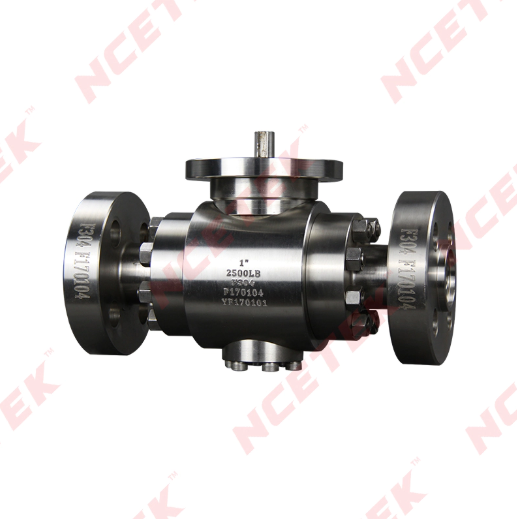
Material selection and manufacturing methods are important considerations for industrial pipeline equipment, particularly when sourcing from a Forged Steel Ball Valve Supplier for applications involving demanding pressure and temperature conditions. Forged steel valves are manufactured using metal forming processes that shape heated or otherwise suitable metal stock under compressive force. Compared with cast construction, forging can provide a different internal material structure and may be preferred for selected pressure-containing components. However, the suitability of a forged valve depends on its design, material grade, dimensions, manufacturing controls, and the operating conditions specified by the project.
A ball valve uses a spherical closure element with a central passage to control fluid movement. When the bore aligns with the pipeline, the valve allows flow. Rotating the ball approximately 90 degrees places the bore across the flow direction and closes the passage. The main components include the body, ball, stem, seats, packing, and operating mechanism. Each component has a specific mechanical or sealing function, and the overall design must maintain structural integrity while allowing consistent movement and shutoff performance.
Forged body construction is commonly considered for particular valve sizes and pressure requirements. The forging process applies controlled force to metal stock, forming it into a required shape before subsequent machining. Depending on the manufacturing method, the process can help produce a more uniform material structure and reduce certain internal discontinuities associated with unsuitable casting processes. Nevertheless, forging alone does not guarantee product quality. Material composition, forging temperature, deformation control, heat treatment, machining accuracy, and inspection procedures all influence the final component.
Different forged body arrangements may be used according to the valve design. One-piece and two-piece configurations are common options, while other structures may be available for specialized applications. A split-body construction can provide access to internal components during assembly and maintenance. The body must accommodate the ball, seats, stem, and pressure-containing connections without creating unnecessary stress concentrations. Buyers should review sectional drawings and confirm the construction method, dimensions, and applicable design requirements before placing an order.
Carbon steel is frequently selected for general industrial services where its strength and compatibility meet operating requirements. Stainless steel grades may be appropriate for applications involving particular corrosive environments. Alloy steel can be considered when project requirements involve specific mechanical properties or temperature conditions. The selection process should account for fluid composition, operating pressure, temperature variation, corrosion potential, and relevant engineering standards. It is also important to distinguish the body material from the materials used for the ball, stem, seats, and fasteners because these components may require different properties.
Heat treatment may form part of the manufacturing process for certain forged materials. Depending on the specified grade and component dimensions, suitable treatment can help achieve the required mechanical properties and material condition. Subsequent machining creates the precise dimensions needed for body connections, internal cavities, seat installation, and stem assembly. Critical sealing surfaces require appropriate finishing because dimensional deviations or surface defects can affect shutoff performance. Material certificates and inspection records may also be required when specified by the purchaser.
Seat design determines how the ball establishes contact with the sealing surfaces. Soft-seated configurations may use PTFE or other engineered polymers where temperature and chemical compatibility permit. Metal-seated arrangements can be considered for elevated temperatures, abrasive media, or other services where soft materials may not be suitable. The choice depends on leakage requirements, pressure conditions, fluid characteristics, and expected operating cycles. Surface treatments or hard coatings may be specified for certain metal components, but their availability and suitability should be confirmed for each design.
The stem and packing assembly require particular attention because they form part of the external sealing arrangement. Stem dimensions, surface finish, packing compression, and alignment can influence operating torque and leakage control. Depending on the application, packing may use flexible graphite, PTFE-based materials, or other compatible compounds. Buyers should clarify the required stem sealing arrangement and whether additional design features are needed for the intended operating environment.
Manufacturing inspection should cover the relevant production stages. Depending on the purchase specification, this may include raw material verification, forging inspection, heat treatment records, dimensional checks, surface examination, and pressure testing. Shell testing evaluates the pressure-containing body, while seat testing checks the sealing performance under the specified procedure. API and ASME requirements may apply to particular designs and project configurations. Buyers should identify the relevant standard, edition, pressure class, and acceptance criteria instead of assuming that all products follow the same specification.
Forged steel ball valves can be used in oil and gas facilities, petrochemical plants, power generation systems, industrial process pipelines, and other services where their design and material characteristics meet project requirements. Procurement teams should compare connection types, dimensions, pressure ratings, material grades, seat arrangements, and operating mechanisms. Installation space and maintenance access should also be considered when selecting manual or automated configurations.
An experienced Forged Steel Ball Valve Supplier should be able to clarify material options, manufacturing processes, inspection arrangements, and customization possibilities according to the actual project specification. Zhejiang Naishi Valve Co., Ltd. provides industrial valve solutions with different structural and material configurations for pipeline applications. Buyers can review available products and technical information at https://www.ncevalve.com/product/
- Technology for Students
- Admissions & Applications
- Online Courses
- Career and Jobs
- Campus Life
- Drinks
- Film
- Fitness
- Food
- الألعاب
- Gardening
- Health
- الرئيسية
- Literature
- Music
- Networking For Students
- Insights
- Party
- Religion
- Shopping
- Sports
- Theater
- Wellness
- Education News
- Business & Finance For Students
- Security, Law & Crime Education
- Insurance
- Science & Technology For Students
 Arabic
 English
 French
 Spanish
 Portuguese
 Deutsch
 Turkish
 Dutch
 Italiano
 Russian
 Romaian
 Portuguese (Brazil)
 Greek