


Precision Assembly and Filling Systems for Syringes
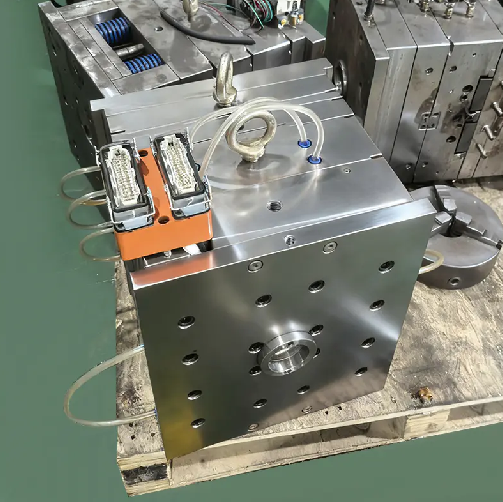
Syringe manufacturing requires careful coordination between plastic component production, assembly operations, filling processes, and quality inspection. As medical device manufacturers respond to changing market demand and increasingly detailed product specifications, integrated automation has become an important consideration in production planning. An Automated Syringe Assembly and Filling Production Line combines multiple manufacturing operations into a coordinated system designed around the syringe structure and its intended application. Depending on the product type, the system may handle barrel positioning, component feeding, plunger assembly, filling, sealing, and other production stages.
A conventional disposable syringe generally consists of a barrel, plunger, piston or gasket, and other components depending on its design. Some models also include needles, protective caps, safety mechanisms, or specialized connectors. Each component has a specific function, and the final assembly must meet the dimensional and functional requirements defined for the product. Manufacturing equipment therefore needs to handle different component geometries while maintaining accurate positioning throughout the production sequence.
The assembly process usually begins with component preparation and feeding. Barrels, plungers, gaskets, and other parts must be supplied to the equipment in the correct orientation. Automatic feeding mechanisms reduce the need for repetitive manual placement and provide a more consistent material supply to downstream stations. Since syringe components may have narrow openings, smooth surfaces, or small assembly features, feeding equipment should be designed to avoid scratches, deformation, and incorrect orientation.
After feeding, components move through positioning and assembly stations. Depending on the syringe design, these operations may include gasket placement, plunger insertion, needle installation, protective cap assembly, or safety mechanism installation. Mechanical fixtures help maintain alignment while controlled actuators perform the required movements. The insertion force and positioning conditions should be established through engineering tests because excessive force may damage components, while insufficient engagement may lead to incomplete assembly.
Filling introduces additional process considerations. The equipment configuration depends on whether the product is designed to be filled during the same manufacturing sequence or undergoes filling in a separate process. For liquid-filled products, important factors include the liquid characteristics, target fill volume, container geometry, dispensing mechanism, and environmental requirements. Filling equipment may use controlled dispensing systems to achieve repeatable dosing, but actual accuracy must be established and verified for the specific product and process. The filling environment must also meet the applicable hygiene and contamination-control requirements.
Sealing and closure operations protect the contents and help maintain the intended condition of the finished product. Depending on the syringe format, this may involve cap placement, closure installation, or another validated sealing method. Equipment designers must consider the compatibility of closure materials, mechanical fit, sealing conditions, and the potential effect of the process on the syringe structure. These requirements should be defined before selecting the relevant automation modules.
Integrated control systems coordinate the different stations and help maintain production sequence stability. PLC technology can manage actuator movements, feeding operations, machine interlocks, and process timing. Sensors can detect missing components, incorrect positions, or abnormal operating conditions. A human-machine interface allows operators to monitor production status and manage authorized machine settings. Where appropriate, CCD vision inspection can be incorporated to check visible assembly characteristics, component presence, and product orientation.
The combination of automated assembly and inspection can help manufacturers reduce variability associated with repetitive manual operations. It also makes it easier to organize production records and identify process interruptions. However, the benefits depend on appropriate equipment design, maintenance, process validation, and operator training. Automation should be viewed as one part of a complete manufacturing quality system rather than a replacement for product testing and regulatory controls.
Production flexibility is another important purchasing consideration. Syringe manufacturers may produce different barrel sizes, connection types, plunger configurations, and product versions. A line designed with suitable interchangeable tooling and adjustable fixtures may simplify changeovers between compatible models. Buyers should clarify which product specifications can be accommodated, how long changeovers take, and whether additional tooling is required for different configurations. These questions are particularly important for manufacturers serving multiple customers or operating private-label production programs.
Before investing in equipment, buyers should prepare product drawings, component samples, target output requirements, filling specifications, and available factory layout information. They should also determine whether assembly and filling will be integrated into one line or managed through separate production stages. Other considerations include inspection requirements, cleanroom classification, material compatibility, utility connections, maintenance access, and finished-product handling. A practical supplier evaluation should include machine demonstrations or acceptance testing using representative components.
China Zhejiang Taizhou Ambe Trading Co., Ltd. focuses on medical automation equipment, precision medical injection molds, and medical plastic products. Its equipment portfolio includes automatic syringe assembly machinery as well as other specialized production systems for disposable medical consumables. The company also develops customized automation solutions according to product structures and manufacturing requirements. For medical device producers evaluating an Automated Syringe Assembly and Filling Production Line, understanding the relationship between syringe design, assembly accuracy, filling technology, and inspection requirements is essential when selecting suitable equipment. More information about AMBE TRADE's medical manufacturing equipment and product solutions is available at https://www.ambemedi.com/.
- Technology for Students
- Admissions & Applications
- Online Courses
- Career and Jobs
- Campus Life
- Drinks
- Film
- Fitness
- Food
- Jogos
- Gardening
- Health
- Início
- Literature
- Music
- Networking For Students
- Insights
- Party
- Religion
- Shopping
- Sports
- Theater
- Wellness
- Education News
- Business & Finance For Students
- Security, Law & Crime Education
- Insurance
- Science & Technology For Students
 Portuguese
 English
 Arabic
 French
 Spanish
 Deutsch
 Turkish
 Dutch
 Italiano
 Russian
 Romaian
 Portuguese (Brazil)
 Greek