


Industrial Pump Construction and Operating Principles
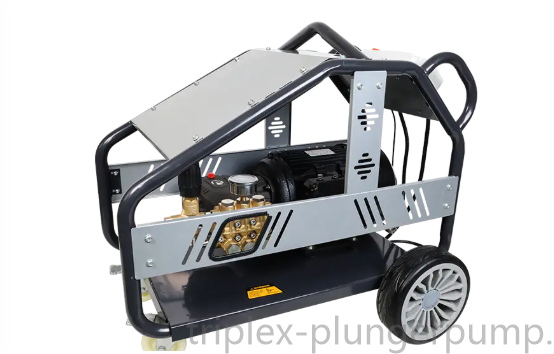
Mechanical fluid transfer systems are used in manufacturing, industrial processing, water supply, and specialized machinery. When selecting a Piston Pump, engineers need to understand how the movement of an internal piston produces liquid displacement and how the design influences pressure, flow, and operating characteristics. Although piston-based equipment can be designed for different media and applications, its suitability depends on the specific construction, materials, sealing arrangement, and hydraulic requirements of the installation.
The basic operating principle involves a piston moving back and forth inside a cylinder. As the piston moves away from the cylinder head, the internal chamber volume increases. This creates a pressure difference that allows liquid to enter through an inlet valve or port. When the piston reverses direction, the chamber volume decreases and the liquid is pushed toward the discharge passage. This repeated movement converts mechanical energy from a motor or drive system into hydraulic energy.
The main components usually include a cylinder, piston, connecting rod, crankshaft or drive mechanism, sealing elements, and fluid control components. Depending on the design, the assembly may also include a pump head, valve housing, lubrication system, and protective enclosure. The dimensions of the piston and its travel distance influence the displacement per cycle. Operating speed determines how frequently these cycles occur and therefore contributes to the overall flow capacity.
Different configurations are available for different engineering requirements. Single-cylinder arrangements have a relatively straightforward mechanical structure, while multiple-cylinder designs can distribute pumping activity across several chambers. The number of cylinders, their arrangement, and the drive mechanism influence the size, output characteristics, and maintenance requirements of the equipment. Buyers should therefore identify the actual operating principle of a product instead of assuming that all reciprocating pumps share identical internal structures.
Piston and plunger designs are related but are not mechanically identical. A piston generally moves within a cylinder using a sealing arrangement around its outer surface. A plunger typically passes through a stationary packing or sealing system while moving through the pumping chamber. These differences influence the construction of the cylinder, sealing components, and fluid-contact arrangement. In some industrial applications, both technologies are used to achieve controlled liquid displacement under different operating conditions.
The quality of the cylinder surface is important because it directly affects the movement and sealing behavior of the piston assembly. Dimensional accuracy, surface finish, and material hardness should be appropriate for the intended duty. Excessive clearance may contribute to leakage, while unsuitable surface conditions can increase friction and wear. Sealing materials must also be compatible with the liquid, operating temperature, and pressure range.
Material selection depends on the environment and the transferred medium. Metallic components may be selected according to their mechanical strength, corrosion resistance, and machinability. Stainless steel can be suitable for certain fluid-contact applications, while other alloys may be appropriate for structural parts. Seals and valve components require different material properties because they must accommodate repeated movement, pressure changes, and possible chemical exposure.
In industrial applications, reciprocating equipment can support liquid transfer, pressure generation, and specialized machinery operations. Certain designs are used in hydraulic systems, while others are developed for water delivery, cleaning equipment, or industrial processing. It is important to distinguish between a hydraulic actuator pump, a process-fluid pump, and a water jetting pump because their working media, pressure requirements, and internal arrangements may differ considerably.
Selection begins with the characteristics of the liquid. Viscosity, temperature, chemical composition, suspended particles, and cleanliness can influence component wear and hydraulic efficiency. Engineers must then identify the required flow rate, working pressure, operating speed, and duty cycle. A system intended for intermittent use may have different thermal and maintenance requirements from one designed for extended operation.
Installation conditions also influence service performance. The drive mechanism must be properly aligned, the mounting structure should support operating loads, and the inlet line must provide adequate liquid supply. Incorrect alignment may increase vibration and mechanical stress. Restricted inlet flow can interfere with chamber filling, while unsuitable discharge piping may create excessive resistance. Pressure protection and other system safeguards should be designed according to the application.
Routine inspection should cover cylinder condition, sealing components, valve operation, lubrication, and connection integrity. Changes in pressure, leakage, unusual vibration, and increased operating temperature may indicate developing problems. Maintenance intervals should be established according to manufacturer recommendations and actual working conditions. Using suitable replacement components is important because differences in dimensions or materials can affect the behavior of the complete assembly.
For industrial buyers, procurement documentation should identify the pump model, rated operating conditions, connection dimensions, recommended drive arrangement, and service parts. Machinery manufacturers may also need installation drawings and component information for system integration. A carefully specified Piston Pump can be evaluated more accurately when buyers understand both its mechanical design and its intended working environment. Product information and available industrial pumping categories can be found at https://www.triplex-plungerpump.com/product/pumps/.
- Technology for Students
- Admissions & Applications
- Online Courses
- Career and Jobs
- Campus Life
- Drinks
- Film
- Fitness
- Food
- Oyunlar
- Gardening
- Health
- Home
- Literature
- Music
- Networking For Students
- Insights
- Party
- Religion
- Shopping
- Sports
- Theater
- Wellness
- Education News
- Business & Finance For Students
- Security, Law & Crime Education
- Insurance
- Science & Technology For Students
 Turkish
 English
 Arabic
 French
 Spanish
 Portuguese
 Deutsch
 Dutch
 Italiano
 Russian
 Romaian
 Portuguese (Brazil)
 Greek