


Industrial Valve Manufacturing for High Temperature Use
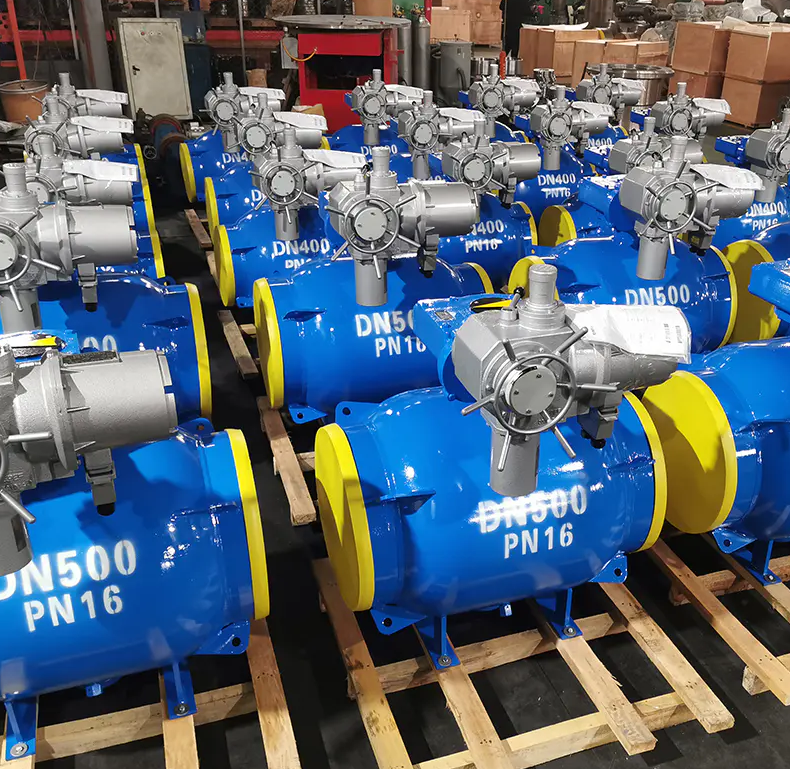
Industrial pipelines that handle elevated temperatures, abrasive particles, or demanding process media often require specialized sealing structures. A Metal Seat Ball Valve Factory must combine appropriate material selection, accurate machining, and controlled assembly to produce valves suited to these conditions. Metal seated designs use metal-to-metal contact between the ball and seat components rather than relying exclusively on soft polymer sealing surfaces. Their performance depends on the selected materials, surface treatment, contact geometry, and operating environment.
A ball valve controls fluid flow through the rotation of a spherical closure element. The ball contains a bore that allows the medium to pass when aligned with the pipeline. Rotating the ball through a quarter turn moves the bore away from the flow path and creates an isolation position. In metal seated configurations, the sealing interface is formed through carefully engineered contact between the ball surface and metal seat rings. This arrangement can be considered where conventional soft seats may not be suitable for the specified temperature, media, or service conditions.
Material selection determines how the valve components respond to operating loads, temperature changes, corrosion, and wear. The body may be manufactured from carbon steel, stainless steel, alloy steel, or other materials according to the project requirements. Ball and seat materials require additional consideration because they form the primary sealing interface. Depending on the application, the design may use different alloy combinations or surface engineering treatments to improve resistance to wear, erosion, or corrosion. The final selection should be based on the actual fluid composition and operating conditions.
Surface treatment is a significant part of metal seat valve production. The ball and seat surfaces may require specialized hardening or coating processes to achieve the specified surface characteristics. The purpose is to improve the durability of the contact surfaces under the intended service conditions. However, no single coating or treatment is suitable for every medium. The treatment process must be compatible with the base material, operating temperature, fluid properties, and required sealing behavior. Buyers should confirm the specified treatment and inspection requirements during technical review.
Machining precision directly influences the contact relationship between the ball and metal seats. The ball surface must meet the required geometry and finish, while the seat rings must be manufactured with suitable dimensional accuracy. Small deviations can affect contact distribution, operating torque, and sealing consistency. Manufacturers therefore need appropriate machining equipment, measurement procedures, and process controls. Inspection should cover critical dimensions and surface characteristics before the components move to final assembly.
The seat structure may vary according to the valve design. Some configurations use spring-loaded seat arrangements to help maintain contact with the ball, while others rely on different mechanical structures to achieve the specified sealing behavior. The appropriate arrangement depends on pressure direction, differential pressure, temperature, and the intended operating function. Buyers should also consider whether the valve is designed for bidirectional shutoff or a specific flow direction. These details should be confirmed through technical drawings and product documentation.
Floating and trunnion-mounted ball valves may both be developed with metal seating arrangements. In a floating design, line pressure helps push the ball toward the downstream seat, creating the sealing contact. In a trunnion-mounted design, the ball is mechanically supported by upper and lower trunnions, while the seats move or respond according to the design structure. Trunnion-mounted configurations are often considered for larger sizes or higher-pressure applications, but the final selection depends on the complete specification. Metal seating does not automatically determine the ball support structure.
Assembly requires careful control of component positioning and contact conditions. The ball, seats, springs where applicable, stem, packing, and body components must be installed according to the approved procedure. Operating torque should be checked against the expected operating conditions and selected actuation system. If a gearbox or actuator is required, the manufacturer should evaluate the torque demand and operating frequency. Excessive friction or unsuitable component combinations can affect operation and may shorten the service life of internal parts.
Quality assurance should cover both manufacturing consistency and product-specific performance requirements. Typical activities may include material verification, dimensional inspection, surface examination, assembly checks, operating tests, and pressure testing. For projects involving abrasive or high-temperature service, additional testing or documentation may be specified by the purchaser. Applicable standards and acceptance criteria should be agreed upon before production. Testing requirements should reflect the actual valve design and should not be assumed to be identical across all metal seated products.
Metal seated ball valves may be used in petrochemical processing, power generation, mining-related processes, industrial gas systems, and other applications where the operating environment places special demands on sealing components. The conveyed medium, particle characteristics, temperature, pressure, and frequency of operation all influence the suitable configuration. For example, a valve used in a high-temperature process line may require a different material combination from one handling abrasive slurry or corrosive fluids. Careful application review helps avoid selecting a design based on only one operating factor.
For international distributors, contractors, and procurement teams, evaluating a Metal Seat Ball Valve Factory involves reviewing its engineering capability, material control, machining precision, surface treatment processes, and inspection arrangements. Clear communication about operating conditions and project standards is essential to selecting an appropriate product. Zhejiang Naishi Valve Co., Ltd. provides industrial valve solutions for different pipeline applications. Product information and configuration options are available at https://www.ncevalve.com/product/.
- Technology for Students
- Admissions & Applications
- Online Courses
- Career and Jobs
- Campus Life
- Drinks
- Film
- Fitness
- Food
- Giochi
- Gardening
- Health
- Home
- Literature
- Music
- Networking For Students
- Insights
- Party
- Religion
- Shopping
- Sports
- Theater
- Wellness
- Education News
- Business & Finance For Students
- Security, Law & Crime Education
- Insurance
- Science & Technology For Students
 Italiano
 English
 Arabic
 French
 Spanish
 Portuguese
 Deutsch
 Turkish
 Dutch
 Russian
 Romaian
 Portuguese (Brazil)
 Greek