


Protecting Fuel Hoses During Vehicle Movement
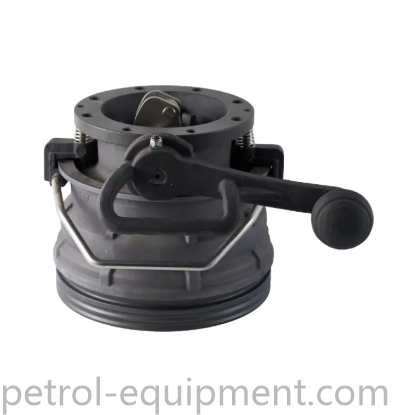
Fuel dispensing systems require connection components that can accommodate normal operation while addressing potential mechanical hazards. At fueling stations and other petroleum transfer facilities, Reconnectable Breakaway assemblies are designed for applications where a connection may need to separate under specified pulling conditions and subsequently be restored according to the manufacturer's procedures. Their purpose is closely related to hose protection and the management of accidental vehicle movement during dispensing operations.
A breakaway coupling is generally installed within a fuel hose assembly or at another designated connection point in a dispensing system. Its structural design allows the connected sections to separate when subjected to an applicable pulling force. This separation can help reduce the risk of extensive hose damage and limit the consequences of a vehicle moving away while still connected to dispensing equipment. The exact operating mechanism and separation characteristics depend on the product design and must be confirmed through manufacturer documentation.
The internal structure is an important factor when evaluating a breakaway assembly. Different designs may include connection bodies, internal valves, sealing elements, locking mechanisms, and separation interfaces. These components must work together to provide the intended connection and separation functions. Some products incorporate arrangements intended to limit liquid release when separation occurs. Buyers should verify the actual valve configuration and safety functions of each model rather than assuming that all breakaway products have identical internal structures.
Material selection influences the suitability of the coupling for its operating environment. The external body may be manufactured from metal materials selected for mechanical strength, corrosion resistance, and compatibility with the intended fuel. Internal sealing components require particular attention because they remain exposed to the transported liquid and may experience repeated mechanical loading. Material compatibility should be evaluated according to the actual fuel type, environmental conditions, and manufacturer's recommendations.
The reconnecting mechanism distinguishes certain breakaway designs from conventional one-time separation components. After an appropriate separation event, a reconnectable model may allow trained personnel to restore the connection through a specified procedure. This can be useful in applications where controlled restoration is part of the equipment maintenance process. However, reconnection should never be treated as a simple replacement for inspection. The assembly must be examined for damage, contamination, worn sealing elements, and other conditions that could affect its intended operation.
Compatibility with the dispensing system is essential during product selection. Breakaway assemblies may be available with different connection configurations, interface dimensions, and installation arrangements. Buyers should confirm the connection type at both ends and check whether the selected product is suitable for the existing hose, nozzle, and dispenser arrangement. Incorrect installation or incompatible connection specifications can create operational difficulties and may affect the intended safety function. Manufacturer instructions should always determine the correct installation orientation and procedure.
Different fueling environments create different requirements. Retail fuel stations may install breakaway components to address the possibility of vehicles moving away before dispensing hoses are disconnected. Commercial fleet facilities may require similar protection where vehicles are fueled frequently. Industrial petroleum installations may also use designated separation components when their system design identifies a need for controlled mechanical disconnection. In each situation, the product must be selected according to the equipment configuration and relevant operating conditions.
Manufacturing quality is important because the assembly must perform its intended mechanical function consistently. Accurate machining helps maintain the dimensions of connection interfaces and internal components. Assembly procedures should ensure that moving and sealing elements are positioned correctly. Depending on the product and manufacturer's quality system, inspection may involve dimensional verification, visual examination, assembly checks, and functional testing. Buyers should request relevant technical information when comparing suppliers, particularly when the component forms part of a safety-related installation.
Installation and maintenance practices also influence long-term reliability. Before installation, technicians should check the product for visible damage, contamination, and irregularities around the connection surfaces. The hose assembly and adjoining components should be examined to confirm that they are suitable for the selected coupling. After installation, the system should be checked according to the manufacturer's instructions and applicable site procedures. Operators should not modify the internal structure or attempt unauthorized repairs.
Regular inspection is necessary because breakaway components are exposed to mechanical stress and environmental conditions. Maintenance personnel should look for cracks, deformation, corrosion, leakage, and deterioration of external surfaces. Following a separation event, the assembly should be inspected before any reconnection is attempted. If the product shows damage or cannot be restored according to the approved procedure, it should be removed from service. Maintenance records can help operators track inspection dates, separation incidents, and replacement activities.
For international B2B buyers, evaluating suppliers involves more than comparing product appearance or purchase price. Important considerations include connection standards, material specifications, available technical drawings, product testing information, and compatibility with different dispensing arrangements. Distributors should also confirm whether replacement components and installation guidance are available. Clear documentation makes it easier for equipment integrators and service providers to select appropriate products for their customers.
When sourcing Reconnectable Breakaway products, procurement teams should focus on the specified separation function, reconnection procedure, fuel compatibility, installation requirements, and maintenance arrangements. These factors help determine whether a particular assembly is appropriate for the intended fueling system. HAIBO supplies petroleum equipment and related components for transportation and fuel handling applications. Buyers can explore the available product range through https://www.petrol-equipment.com/product/petrol-chemical-tank-truck-parts/ when reviewing connection accessories for petroleum equipment installations.
- Technology for Students
- Admissions & Applications
- Online Courses
- Career and Jobs
- Campus Life
- Drinks
- Film
- Fitness
- Food
- Oyunlar
- Gardening
- Health
- Home
- Literature
- Music
- Networking For Students
- Insights
- Party
- Religion
- Shopping
- Sports
- Theater
- Wellness
- Education News
- Business & Finance For Students
- Security, Law & Crime Education
- Insurance
- Science & Technology For Students
 Turkish
 English
 Arabic
 French
 Spanish
 Portuguese
 Deutsch
 Dutch
 Italiano
 Russian
 Romaian
 Portuguese (Brazil)
 Greek