


Choosing a Reliable Stainless Steel Parts Supplier
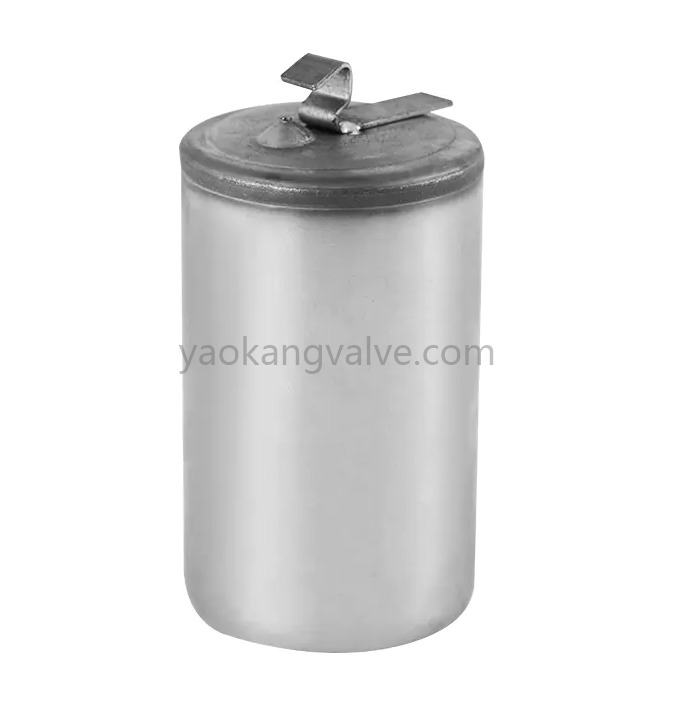
Stainless steel fabrication requires careful control of materials, forming processes, joining techniques, and finished product inspection. For industrial equipment manufacturers, selecting a reliable Stainless Steel Float Ball Factory is an important step in securing components that meet their structural and application requirements. These products are commonly used in mechanical liquid level control systems, water tanks, float valves, and industrial fluid equipment. Their performance depends not only on the selected stainless steel grade but also on the quality of the hollow structure and the accuracy of the manufacturing process.
The first stage of manufacturing involves understanding the product's intended application. Different customers may require different shapes, diameters, connection arrangements, and structural designs. Some components are developed for standard water tank assemblies, while others need to match customized industrial valve mechanisms. Manufacturers should review technical drawings, physical samples, or detailed specifications before confirming production feasibility. This process helps establish the required dimensions, material characteristics, surface treatment, and inspection criteria.
Stainless steel is frequently selected because of its combination of strength, durability, and corrosion resistance. SS304 is widely used in general industrial and water-related equipment, while SS316 may offer advantages in environments involving certain corrosive substances. The choice should be based on the actual operating conditions rather than a general assumption that one grade is suitable for every application. Factors such as liquid composition, temperature, cleaning chemicals, and exposure conditions should be reviewed before material approval.
The working principle of the finished component relies on buoyancy. When the metal structure is placed in liquid, the displaced liquid creates an upward force. This allows the component to move with changes in the liquid surface and operate a connected mechanical mechanism. In a float valve assembly, the movement can be transmitted through a lever or connecting rod to regulate the inlet flow. As the liquid rises, the mechanism may gradually close the valve; when the level decreases, the mechanism can reopen it. The design must provide suitable displacement while maintaining sufficient structural strength.
Hollow construction is therefore a central manufacturing consideration. The internal cavity helps reduce product weight and provides the volume needed for buoyancy. Manufacturers must control the forming process to maintain a consistent external shape and suitable wall construction. Uneven forming can affect dimensional accuracy and may create difficulties during assembly. The design should also consider how the component moves within the tank and whether its external dimensions provide enough clearance from surrounding structures.
Manufacturing methods vary according to the product design and order requirements. Common operations may include stainless steel cutting, stamping, drawing, forming, welding, trimming, and polishing. Each process contributes to the final dimensions and surface condition. Forming operations require suitable tooling and process control to avoid unwanted deformation. Welding is particularly important for hollow products because the joints must maintain structural integrity and prevent liquid from entering the internal cavity.
Quality inspection should be integrated throughout production rather than limited to a final visual check. Dimensional measurements help confirm compliance with approved drawings. Surface inspection can identify dents, scratches, uneven polishing, and other visible defects. For hollow structures, appropriate leak testing helps evaluate the integrity of welded joints. Manufacturers may also maintain material records and production inspection documents to support customer quality requirements. The specific inspection plan should reflect the product design and the intended application.
Surface finishing contributes to the appearance, cleanliness, and maintenance characteristics of stainless steel components. Polishing can create a smoother external surface and make routine cleaning more convenient. However, buyers should communicate the required finish before production because different applications may have different expectations. For specialized environments, material documentation, manufacturing controls, and applicable industry requirements should be evaluated together. A polished appearance alone does not establish compliance with a particular industry standard.
These products can serve a broad range of applications, including commercial water storage, industrial tanks, automatic filling systems, agricultural water equipment, cooling installations, and general fluid management machinery. Each environment creates different demands for material compatibility, product dimensions, and mechanical movement. Buyers should explain the actual working conditions so that the manufacturer can assess whether the proposed design is appropriate. This is especially important when the liquid contains substances that may affect material performance.
OEM and ODM manufacturing can provide additional flexibility for equipment brands and distributors. OEM production allows buyers to supply established drawings or samples for manufacturing, while ODM cooperation can support the development of customized structures. During project discussions, buyers should confirm material grades, dimensions, connection details, surface finish, packaging requirements, and quality inspection arrangements. Sample approval before mass production is a practical way to reduce design misunderstandings and improve consistency across repeat orders.
When evaluating suppliers, international purchasing teams should consider manufacturing experience, welding capabilities, material sourcing, inspection procedures, customization support, and communication efficiency. Production capacity and delivery arrangements are also important for distributors and equipment manufacturers managing regular procurement schedules. A supplier that can maintain clear technical communication and consistent quality is often more valuable than one offering only a lower initial quotation.
For industrial buyers seeking dependable stainless steel components, cooperation with an experienced Stainless Steel Float Ball Factory can simplify product development and long-term sourcing. Yongjia County Yaokang Technology Co., Ltd. provides manufacturing support for stainless steel floating components and related liquid level control products, with options for customized specifications and OEM/ODM cooperation. Buyers can explore the product range and discuss their manufacturing requirements at https://www.yaokangvalve.com/product/ when planning wholesale or bulk purchasing projects.
- Technology for Students
- Admissions & Applications
- Online Courses
- Career and Jobs
- Campus Life
- Drinks
- Film
- Fitness
- Food
- Giochi
- Gardening
- Health
- Home
- Literature
- Music
- Networking For Students
- Insights
- Party
- Religion
- Shopping
- Sports
- Theater
- Wellness
- Education News
- Business & Finance For Students
- Security, Law & Crime Education
- Insurance
- Science & Technology For Students
 Italiano
 English
 Arabic
 French
 Spanish
 Portuguese
 Deutsch
 Turkish
 Dutch
 Russian
 Romaian
 Portuguese (Brazil)
 Greek