


Ceramic Plates for Modern Engineering Applications
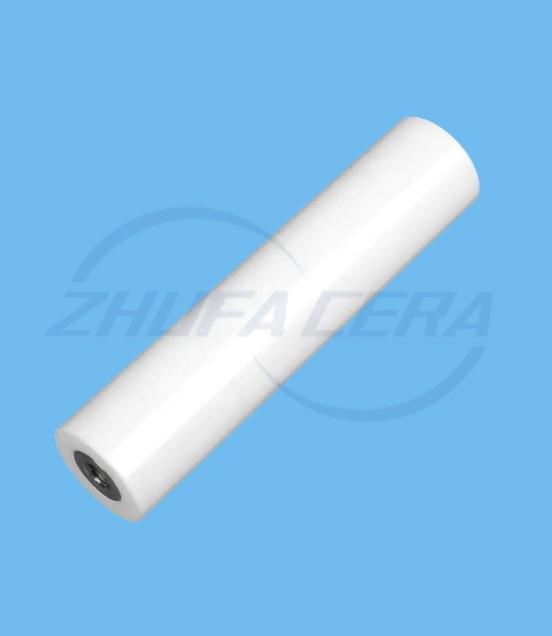
Industrial manufacturing increasingly requires materials that can withstand demanding working environments while maintaining reliable structural characteristics. From electronic assemblies to precision machinery, engineers must carefully evaluate material hardness, insulation properties, and dimensional stability. In this context, Ceramic Plates offer useful possibilities for manufacturers developing specialized industrial components, while the selection of suitable Ceramic Plates also allows engineers to consider different material compositions, surface treatments, and structural configurations according to specific application requirements.
The Importance of Ceramic Materials in Modern Manufacturing
Advanced ceramics have become valuable materials in industries where conventional metals or plastics may not satisfy particular engineering requirements. Their characteristics depend on chemical composition, manufacturing methods, and final processing conditions.
Alumina ceramics are commonly selected for applications requiring electrical insulation, hardness, and dimensional stability. Zirconia ceramics offer different mechanical characteristics, including relatively high fracture toughness and resistance to certain forms of wear.
These material differences allow manufacturers to develop components for various working environments. However, choosing an appropriate ceramic requires understanding the actual operating conditions rather than relying on general material descriptions.
Engineers should evaluate temperature exposure, mechanical loading, chemical contact, and installation requirements before confirming a material specification. This approach helps ensure that the selected component corresponds with its intended industrial function.
How Structural Design Influences Ceramic Component Performance
The geometry of a ceramic component can influence its suitability for different equipment structures. Thickness, edge configuration, surface flatness, and dimensional tolerances are important considerations during product development.
For example, components used in precision instruments may require carefully controlled flatness to support accurate positioning. Electrical assemblies may prioritize insulation characteristics and appropriate thickness, while mechanical applications can place greater emphasis on surface hardness and contact conditions.
Manufacturers should also consider how ceramic components interact with surrounding materials. Differences in thermal expansion between ceramics and metals may influence assembly design, particularly in equipment exposed to changing temperatures.
By evaluating these engineering factors during the design stage, product developers can establish more appropriate component specifications and reduce unnecessary modifications during manufacturing.
ZFCERA Solutions for Customized Ceramic Components
Different industries require ceramic components with specific material compositions and physical dimensions. ZFCERA provides ceramic product solutions for manufacturers developing structural parts for specialized industrial applications.
Alumina and zirconia are two important material options for customized ceramic manufacturing. Each offers different characteristics, making it necessary to select materials according to the intended function.
When requesting customized products, buyers should prepare several technical details:
-
Material selection: Identify the required ceramic composition according to the working environment.
-
Product dimensions: Provide detailed length, width, and thickness specifications.
-
Tolerance requirements: Explain the expected dimensional accuracy and flatness.
-
Surface finishing: Specify whether grinding, polishing, or other finishing processes are required.
-
Application information: Describe mechanical loads, temperature conditions, and possible chemical exposure.
Technical drawings and clear communication help manufacturers understand the intended component structure. They also provide a useful foundation for evaluating suitable production and inspection procedures.
Applications Across Electronics and Mechanical Engineering
Advanced ceramic components are used in different electronic and mechanical systems because their properties can accommodate specialized engineering requirements.
In electronic assemblies, alumina materials are often considered for insulating structures and component supports. Their electrical insulation characteristics can help separate conductive elements within equipment.
Mechanical engineering offers another application area. Ceramic components may be incorporated into machinery where hardness, surface durability, and resistance to wear are important considerations.
Laboratory instruments and measurement devices can also use precision ceramic structures. In these applications, dimensional consistency and surface quality may influence the positioning of internal components.
Industrial automation introduces additional possibilities. Sensors, electrical assemblies, and specialized equipment may require ceramic parts with customized geometries that fit compact installation spaces.
The appropriate material and component design should always be determined by the equipment's operating requirements and the relationship between the ceramic part and the complete assembly.
Manufacturing Processes and Quality Evaluation
Producing reliable structural ceramic components involves several interconnected manufacturing stages. Raw material preparation establishes the foundation for product consistency, while forming and sintering influence the final structure and physical characteristics.
After sintering, machining processes may be used to achieve specific dimensions and surface conditions. Depending on the application, grinding and polishing can help manufacturers meet particular finishing requirements.
Quality inspection is equally important. Dimensional measurements, flatness evaluation, and visual inspection help verify whether finished components correspond with technical drawings.
Buyers should also discuss packaging and transportation requirements with suppliers. Ceramic materials can be sensitive to impact, so appropriate protection during handling and delivery is an important part of supply chain management.
As industrial equipment continues to require specialized materials, advanced ceramics provide useful possibilities for structural, electrical, and mechanical applications. Businesses interested in alumina materials, zirconia components, and customized ceramic manufacturing solutions can visit https://www.zfcera.com/ to explore available products and discuss their project requirements.
- Technology for Students
- Admissions & Applications
- Online Courses
- Career and Jobs
- Campus Life
- Drinks
- Film
- Fitness
- Food
- Spiele
- Gardening
- Health
- Startseite
- Literature
- Music
- Networking For Students
- Insights
- Party
- Religion
- Shopping
- Sports
- Theater
- Wellness
- Education News
- Business & Finance For Students
- Security, Law & Crime Education
- Insurance
- Science & Technology For Students
 Deutsch
 English
 Arabic
 French
 Spanish
 Portuguese
 Turkish
 Dutch
 Italiano
 Russian
 Romaian
 Portuguese (Brazil)
 Greek