


Flexible Packaging Designs for Personal Care Products
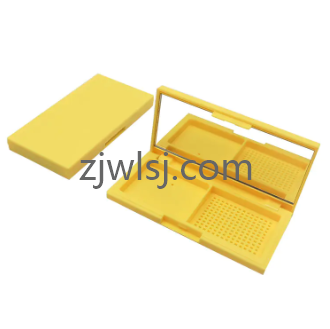
Packaging plays an important role in protecting cosmetic formulations, improving product usability, and creating a recognizable brand image. A Tubes and Other Series collection can cover different packaging formats for beauty, skincare, and personal care products, allowing brands to select containers according to their product characteristics and market requirements. For international buyers, the selection process involves evaluating material properties, container structures, dispensing methods, manufacturing capabilities, and customization options. Understanding these factors helps businesses develop packaging solutions that balance functionality, appearance, and production efficiency.
Plastic is widely used in cosmetic packaging because it supports a variety of shapes, sizes, and structural designs. Different plastic materials offer different characteristics in terms of flexibility, rigidity, transparency, weight, and chemical compatibility. The choice of material should correspond to the intended application and the formulation being packaged. For example, flexible structures may be suitable for products that require squeezing during dispensing, while rigid containers can provide a more stable form for creams and other personal care products. Buyers should communicate product requirements clearly so manufacturers can evaluate appropriate material options.
Cosmetic tubes are commonly selected for products that require controlled dispensing and convenient application. Their elongated structures make them suitable for many skincare and personal care formulations. The body, shoulder, nozzle, and closure need to work together to support the intended dispensing experience. Tube diameter, opening design, wall thickness, and cap structure can influence how easily consumers access the contents. Manufacturers should consider the viscosity and intended use of the formulation when developing the packaging structure.
Other cosmetic packaging formats may include bottles, jars, containers, and specialized plastic components. Each format serves different storage and application purposes. Cream products may require containers with convenient openings, while liquid formulations may need dispensing structures that support controlled use. The design should also consider how the packaging will be stored, transported, displayed, and handled by consumers. A product collection containing several packaging types benefits from consistent visual elements, even when the individual structures differ.
Manufacturing processes depend on the specific packaging format. Injection molding is frequently used for rigid plastic components such as caps, closures, jars, and container parts. Other forming processes may be selected for flexible packaging bodies or specialized structures. During production development, manufacturers need to evaluate mold design, material flow, dimensional accuracy, wall thickness, and component compatibility. Proper process selection helps establish repeatable manufacturing conditions and supports consistent product quality across larger orders.
Closure and dispensing design deserve particular attention. A container should be easy to open and use while maintaining suitable protection during storage and transportation. Caps, threaded connections, snap-fit structures, and other closure designs need to correspond with the container body. Poor component matching may lead to loose assembly, difficult operation, or unwanted leakage risks. Depending on the product application, manufacturers may evaluate sealing structures and conduct appropriate compatibility or performance checks before approving the final design.
Surface decoration helps cosmetic brands establish a distinctive appearance across different product categories. Available options may include color matching, screen printing, hot stamping, labeling, coating, and other decorative treatments, depending on the material and manufacturing process. Brands may choose consistent colors and logo placement to create a unified visual identity across tubes, bottles, jars, and other containers. The finishing method should be selected with consideration for the intended market, product presentation, and production requirements. Sample approval is useful for confirming the final appearance before mass manufacturing.
Quality management is essential when producing multiple packaging formats. Inspection procedures may cover dimensions, surface appearance, color consistency, assembly quality, closure performance, and dispensing-related functions. Different packaging structures require different inspection priorities. For example, flexible tubes may need evaluation of their sealing areas, while rigid containers may require closer attention to dimensional accuracy and component fitting. Establishing clear quality standards helps buyers and manufacturers maintain consistent expectations throughout production.
Customization is a valuable option for brands developing private-label cosmetic collections. Buyers may request customized shapes, dimensions, colors, cap styles, printing designs, and surface finishes. OEM and ODM services can support projects that require adjustments to existing packaging or the development of new structures. During cooperation, buyers should provide information about formulation characteristics, filling requirements, branding preferences, and expected order quantities. Manufacturers can then assess the design and discuss suitable production arrangements.
International B2B buyers should also consider supplier reliability and supply chain coordination. Important factors include material sourcing, mold development, production planning, quality inspection, packaging arrangements, and delivery management. When a project includes several container categories, clear product specifications and sample records can help reduce communication difficulties. Buyers should also consider how different packaging sizes affect carton organization, warehouse storage, and transportation efficiency. These practical details can influence the overall purchasing experience.
For cosmetic businesses expanding their product ranges, choosing compatible packaging formats can simplify product development and support consistent brand presentation. A well-planned Tubes and Other Series collection offers flexibility across different cosmetic applications while allowing individual products to maintain their own functional requirements. Brands and distributors interested in plastic cosmetic packaging options can explore the product range at https://www.zjwlsj.com/product/eye-shadow-palette/shadow-palette-1-grid/.
- Technology for Students
- Admissions & Applications
- Online Courses
- Career and Jobs
- Campus Life
- Drinks
- Film
- Fitness
- Food
- Jogos
- Gardening
- Health
- Início
- Literature
- Music
- Networking For Students
- Insights
- Party
- Religion
- Shopping
- Sports
- Theater
- Wellness
- Education News
- Business & Finance For Students
- Security, Law & Crime Education
- Insurance
- Science & Technology For Students
 Portuguese
 English
 Arabic
 French
 Spanish
 Deutsch
 Turkish
 Dutch
 Italiano
 Russian
 Romaian
 Portuguese (Brazil)
 Greek