


Floor Stand Medical Monitor Arm for Clinical Spaces
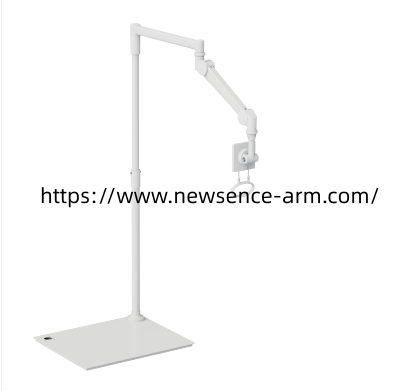
Medical facilities require reliable equipment support systems that accommodate different room layouts, clinical activities, and display requirements. A well-designed Floor Stand Medical Monitor Arm provides a flexible installation option for healthcare environments where wall or ceiling mounting may not be suitable. When comparing a Floor Stand Medical Monitor Arm, hospitals, clinics, and medical equipment distributors should consider mobility, structural stability, monitor compatibility, height adjustment, and storage requirements to select a practical solution for their working environments.
Flexible Equipment Placement Without Permanent Installation
Different healthcare departments have different requirements for medical equipment positioning. Examination rooms may need adjustable display locations, while diagnostic areas can require monitors to be positioned near specific instruments or workstations.
Floor-standing monitor support systems offer flexibility because they do not necessarily depend on permanent wall or ceiling installations. Their independent structures allow displays to be positioned in different areas according to workspace requirements.
This arrangement can be particularly useful in facilities where room layouts change frequently or where existing building structures limit mounting options. Medical staff can also benefit from having a display positioned near the equipment or patient area where visual information is needed.
Before purchasing, facility managers should consider the available floor space, movement routes, nearby medical equipment, and intended viewing positions. These factors help determine whether a floor-standing configuration is suitable for the planned application.
Structural Design and Monitor Compatibility
The structural design of a floor-standing monitor arm directly influences its stability and practical application. A complete system generally includes a supporting base, vertical column, adjustable arm, connection joints, and monitor mounting interface.
Each component needs to work together to support the installed display. The base should provide appropriate stability, while the column and arm should accommodate the intended monitor weight and positioning requirements.
Monitor compatibility is another important purchasing consideration. Buyers should confirm the display dimensions, weight, mounting interface, and connection specifications before selecting a product.
Important details to review include:
-
Load capacity: Verify that the support system can accommodate the monitor's weight.
-
Mounting interface: Check compatibility between the display and mounting bracket.
-
Height adjustment: Determine whether the screen can be positioned at the required viewing level.
-
Arm movement: Review the available rotation and tilting functions.
-
Base construction: Evaluate the supporting structure and its suitability for the intended environment.
Understanding these specifications helps purchasing teams compare products according to actual application requirements.
Newsence-Arm Floor Stand Monitor Support Solutions
Newsence-Arm provides monitor arm products for professional environments, including floor-standing solutions designed for medical display applications. These products offer an alternative for healthcare facilities looking for independent monitor support structures.
When selecting a floor stand, buyers should evaluate how the product fits into their existing equipment arrangement. The monitor position, base dimensions, adjustment range, and surrounding workspace all influence installation planning.
For medical equipment distributors, detailed product specifications are essential when communicating with hospitals and clinical customers. Information about supported monitor sizes, weight limitations, mounting interfaces, structural materials, and available adjustment functions can help clarify product suitability.
It is also useful to discuss optional accessories and configuration requirements before placing an order. Different facilities may have different preferences regarding display positioning, cable arrangements, and equipment integration.
A clear understanding of product specifications makes procurement more efficient and helps distributors recommend suitable mounting systems for different healthcare projects.
Mobility, Cable Management, and Daily Maintenance
One practical feature of floor-standing monitor systems is the possibility of incorporating a mobile base. Depending on the design, wheels or casters may allow the complete support structure to move between suitable working areas.
For facilities considering mobile configurations, wheel quality, locking mechanisms, base dimensions, and floor compatibility deserve attention. The structure should remain stable during normal use, and movement should follow the facility's equipment management procedures.
Cable organization is another important consideration. Power and signal cables should be arranged along the support structure to reduce tangling and prevent interference with adjustment or movement.
Some products may include cable channels or clips to help keep connections organized. This can contribute to a cleaner workspace and make routine maintenance more convenient.
Regular inspections should cover the base, column, adjustment joints, fasteners, wheels, and mounting brackets. Healthcare facilities should follow manufacturer recommendations for cleaning, maintenance, and equipment inspection.
Selecting a Suitable Floor Stand for Medical Projects
Choosing a floor-standing medical monitor arm requires an understanding of both the display equipment and the working environment. Purchasing teams should collect monitor specifications, room layout information, movement requirements, and installation preferences before requesting product recommendations.
For projects involving multiple departments, it may be helpful to compare different configurations according to screen size, adjustment needs, base design, and mobility requirements.
Distributors should also discuss product availability, packaging, delivery schedules, technical documentation, and after-sales support with manufacturers. These details contribute to smoother purchasing coordination and help businesses manage long-term supply arrangements.
A suitable floor stand should balance positioning flexibility, structural stability, equipment compatibility, and practical maintenance. By reviewing these factors carefully, medical facilities can identify support systems that fit their operational requirements.
As healthcare equipment arrangements continue to evolve, independent monitor support systems provide additional options for organizing clinical displays. Businesses interested in medical monitor mounting products can visit https://www.newsence-arm.com/ to explore available solutions and discuss their sourcing requirements.
- Technology for Students
- Admissions & Applications
- Online Courses
- Career and Jobs
- Campus Life
- Drinks
- Film
- Fitness
- Food
- Spiele
- Gardening
- Health
- Startseite
- Literature
- Music
- Networking For Students
- Insights
- Party
- Religion
- Shopping
- Sports
- Theater
- Wellness
- Education News
- Business & Finance For Students
- Security, Law & Crime Education
- Insurance
- Science & Technology For Students
 Deutsch
 English
 Arabic
 French
 Spanish
 Portuguese
 Turkish
 Dutch
 Italiano
 Russian
 Romaian
 Portuguese (Brazil)
 Greek