


What Should Buyers Ask compressedsofafactory Before Ordering?
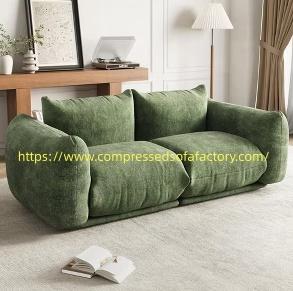
Compressed Sofa purchasing involves more than checking the appearance of a finished piece. Furniture importers, distributors, retailers, and online brands should examine the internal construction, seating comfort, upholstery, compression process, and packaging details before placing an order. Each factor can influence the customer experience after delivery. A structured evaluation also helps buyers communicate specifications clearly and compare manufacturing proposals with greater confidence.
Evaluate the Seating Structure and Support
The internal structure determines how the furniture feels and performs during everyday use. Buyers should ask how the seat, backrest, armrests, and supporting sections are constructed. Depending on the design, the product may use foam-based construction, a supporting frame, or a combination of different materials.
Seat depth and height are worth checking because they affect sitting posture and the overall experience. Backrest angle, cushion thickness, and armrest dimensions also influence how the product fits different users and room layouts.
For commercial purchasing, request a detailed specification sheet instead of relying only on product photographs. Measurements and construction descriptions make it easier to compare samples and confirm whether the proposed design matches the intended market.
Check Foam Quality and Shape Recovery
Foam selection is an important consideration for furniture designed for compact packaging. Buyers should ask about foam type, density, firmness, resilience, and the arrangement of different layers. These characteristics describe different properties, so one specification alone cannot establish seating comfort or recovery performance.
A sample should be examined before and after the proposed packing process. Once unpacked, observe whether the cushions regain their intended shape and whether the surface appears even. Pay attention to corners, edges, seat areas, and back cushions, where uneven recovery may be easier to notice.
The evaluation should follow an agreed schedule. Buyers can record the appearance and dimensions at several stages after opening, then compare the results with the approved sample. This creates a practical reference for later production inspections.
Review Upholstery and Sewing Details
Fabric affects appearance, touch, cleaning requirements, and suitability for different sales channels. Options may include corduroy, linen-look fabric, velvet, and other upholstery materials, depending on the manufacturer's available range.
When selecting a material, consider its texture, color consistency, abrasion performance, and maintenance requirements. A fabric intended for a residential collection may have different priorities from one selected for rental apartments or hospitality projects.
Sewing quality also deserves attention. Buyers should inspect seam alignment, stitching density, corner finishing, zipper placement, and the way the cover fits around cushions. Ask for close-up sample photographs or inspect a physical sample before approving the material and workmanship for production.
Understand the Compression and Packaging Process
Compact packaging is a central feature of this furniture category, but buyers should evaluate the complete packing process rather than focus only on carton size.
Request the packed dimensions, gross weight, packaging photographs, and details of the compression method for the exact model. The expanded dimensions should also be recorded so that logistics teams can calculate storage and shipping requirements accurately.
Carton strength is another important factor. The packaging should protect the upholstery and internal components during handling, stacking, and transportation. Buyers can ask about protective layers, sealing methods, corner protection, and moisture-related precautions where relevant.
A sample packing trial can help identify issues before a large production run. Check whether the carton is easy to handle and whether the unpacking instructions clearly explain the opening and recovery process.
Consider the Unpacking Experience
The end customer's experience begins when the carton arrives. Clear instructions can help users understand how to open the package, position the furniture, and allow the materials to recover.
Buyers should request instructions that match the actual product design. Avoid using generic recovery time claims without testing the specific model. Foam composition, cushion thickness, packaging pressure, storage conditions, and temperature can affect the observed recovery process.
It is also useful to confirm whether the product requires assembly. If legs, connectors, or other accessories are supplied separately, check that all parts are included and that the instructions show how to install them correctly.
For online retailers, clear product information and unpacking guidance can help reduce customer confusion and support a more consistent delivery experience.
Check Customization and Production Consistency
Furniture brands may have different requirements for color, dimensions, fabric, labels, carton printing, and accessories. Before requesting a quotation, prepare a clear list of customization needs and ask which options are available for the selected model.
Buyers should also discuss minimum order quantities, sample arrangements, production schedules, and approval procedures. A confirmed sample can serve as a reference for materials, dimensions, appearance, and packaging.
For repeat orders, specifications should be documented and retained. If a fabric, foam grade, or structural detail changes, both parties should review the updated information before production continues. This helps maintain consistency across different batches and purchasing periods.
Prepare an Inspection Checklist Before Ordering
A useful inspection checklist should cover the product from several angles:
Dimensions: Confirm expanded measurements and packed carton size.
Comfort: Review seat depth, height, firmness, and back support.
Materials: Record foam details, upholstery type, and supporting components.
Workmanship: Inspect seams, stitching, covers, and finishing.
Packaging: Check carton condition, protective materials, and product labels.
Documentation: Confirm specifications, instructions, and agreed inspection records.
These points give purchasing teams a consistent basis for reviewing samples and finished goods. They also help manufacturers understand the buyer's expectations before production begins.For furniture businesses seeking a manufacturing partner, compressedsofafactory can discuss product configurations, upholstery preferences, packaging requirements, and order details according to individual project needs. Buyers can review product options and submit their specifications through https://www.compressedsofafactory.com/product/ to begin a focused discussion about samples, customization, and production arrangements.
- Technology for Students
- Admissions & Applications
- Online Courses
- Career and Jobs
- Campus Life
- Drinks
- Film
- Fitness
- Food
- Jeux
- Gardening
- Health
- Domicile
- Literature
- Music
- Networking For Students
- Insights
- Party
- Religion
- Shopping
- Sports
- Theater
- Wellness
- Education News
- Business & Finance For Students
- Security, Law & Crime Education
- Insurance
- Science & Technology For Students
 French
 English
 Arabic
 Spanish
 Portuguese
 Deutsch
 Turkish
 Dutch
 Italiano
 Russian
 Romaian
 Portuguese (Brazil)
 Greek