


High-Quality Tooling for Modern Rear Lamp Designs
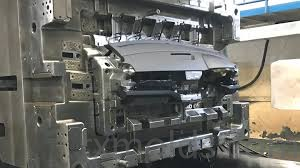
Rear lighting systems are important components of modern vehicles, combining safety functions with exterior styling and brand identity. Tail lamps contain multiple plastic parts, including housings, lenses, reflectors, bezels, and mounting structures. Each component has different structural and visual requirements, making mold engineering an important part of the manufacturing process. A professionally developed Tail Lights Mold helps manufacturers produce components with accurate geometry, consistent surface quality, and reliable compatibility with the complete vehicle lighting assembly.
The development of rear lamp tooling begins with an understanding of the product structure. Modern tail lamps often feature curved surfaces, complex contours, decorative patterns, and integrated connection points. These details must be accurately reproduced by the mold to ensure that individual parts fit together correctly. Engineers need to evaluate product drawings and three-dimensional models before determining the mold structure. This analysis helps identify potential manufacturing challenges related to undercuts, wall thickness, draft angles, and parting lines.
Material selection is one of the primary considerations in automotive rear lamp production. Different components may require different plastic materials according to their intended functions. Transparent lenses require suitable optical characteristics and surface quality, while internal housings generally prioritize structural strength, dimensional stability, and heat resistance. Decorative elements may require particular surface finishes to match the appearance of the vehicle. Understanding these material differences allows mold designers to develop appropriate cavity structures and processing arrangements.
The selection of mold steel influences tooling durability and manufacturing accuracy. Automotive lighting molds often contain detailed cavity structures that require repeated machining and finishing operations. The mold material should provide suitable hardness, wear resistance, and stability for the intended production environment. Heat treatment and material preparation are also important because they influence the mechanical properties of the mold. A properly constructed mold base helps maintain alignment between the cavity and core during repeated molding cycles.
Cavity design directly determines the shape and appearance of the finished tail lamp components. Rear lamp products may include curved edges, decorative grooves, thin sections, and complex internal structures. These features require accurate machining and careful consideration of material flow. Engineers need to determine suitable cavity arrangements while ensuring that the tooling can reproduce the intended geometry consistently. Attention to dimensional tolerances is particularly important around assembly interfaces, mounting positions, and connecting surfaces.
Surface finishing is another important aspect of rear lighting mold production. Tail lamp lenses and decorative covers are highly visible parts of the vehicle exterior. Their appearance can be affected by polishing quality, cavity marks, scratches, or uneven surface textures. Precision finishing helps create the required surface characteristics and supports consistent reproduction during molding. Different areas of the same component may require different finishing treatments depending on whether they are transparent, decorative, or functional surfaces.
The injection system should be designed to support stable cavity filling. Gate location, runner configuration, and material flow paths can influence the appearance and structural quality of molded components. Poor filling conditions may create weld lines, air traps, short shots, or uneven material distribution. These issues can be particularly noticeable on transparent and appearance-sensitive parts. Mold engineers need to evaluate the geometry of each component and select an appropriate injection arrangement to reduce potential molding defects.
Cooling system design also affects product quality. Automotive rear lamp components can contain areas with different wall thicknesses and complex geometric transitions. Uneven heat removal may result in warpage, shrinkage differences, or dimensional variation. Cooling channels should therefore be arranged according to the cavity geometry and expected heat distribution. Balanced cooling supports more stable production conditions and helps maintain the dimensions needed for accurate assembly.
The ejection mechanism must release molded components without damaging their surfaces or changing their shape. This is particularly important for thin-wall lenses and decorative parts. Ejector positions should be determined according to the component structure, material characteristics, and available release areas. A suitable ejection arrangement helps reduce deformation and improves the consistency of repeated production cycles.
Modern mold manufacturing uses several precision technologies to achieve complex product structures. CAD software supports mold design and three-dimensional analysis, while CNC machining provides accurate cavity and core processing. EDM technology is useful for detailed features that are difficult to produce through conventional machining. Measurement equipment helps verify critical dimensions, and polishing operations improve the surface condition of the tooling. Combining these processes creates a controlled manufacturing workflow from initial design to final mold assembly.
Mold trials are necessary to evaluate the actual performance of the tooling. During testing, manufacturers inspect sample parts for dimensional accuracy, surface appearance, filling quality, and assembly compatibility. Engineers also evaluate the operation of the cooling and ejection systems. If defects are identified, adjustments may involve gate positions, venting structures, processing conditions, or specific cavity details. Trial testing helps establish a more stable production process before the mold enters regular manufacturing.
Quality management should cover every major stage of tooling production. Material inspection, machining accuracy checks, component fitting, surface evaluation, and final testing all contribute to mold reliability. Detailed inspection records also help manufacturers identify the source of potential problems and maintain consistency between different production stages. For automotive suppliers, these procedures are important because lighting components must meet the requirements of vehicle assembly and appearance standards.
Long-term maintenance is equally important for maintaining tooling performance. Repeated production can gradually affect guide components, moving structures, ejector systems, and cavity surfaces. Regular cleaning, lubrication, inspection, and replacement of worn components help prevent unexpected interruptions. Proper storage and handling procedures also protect molds when they are removed from production.
As vehicle exterior designs continue to evolve, rear lighting components are becoming more sophisticated in shape and appearance. Manufacturers increasingly need tooling solutions that can accommodate curved geometries, integrated decorative details, and complex component structures. Choosing a capable Tail Lights Mold manufacturer requires evaluating engineering experience, machining technology, material knowledge, quality control, and technical communication. Taizhou Rixin Mold Technology provides mold development and manufacturing solutions for automotive plastic components. Further information is available at https://www.rxmolds.com.
- Technology for Students
- Admissions & Applications
- Online Courses
- Career and Jobs
- Campus Life
- Drinks
- Film
- Fitness
- Food
- Jeux
- Gardening
- Health
- Domicile
- Literature
- Music
- Networking For Students
- Insights
- Party
- Religion
- Shopping
- Sports
- Theater
- Wellness
- Education News
- Business & Finance For Students
- Security, Law & Crime Education
- Insurance
- Science & Technology For Students
 French
 English
 Arabic
 Spanish
 Portuguese
 Deutsch
 Turkish
 Dutch
 Italiano
 Russian
 Romaian
 Portuguese (Brazil)
 Greek