


Modern Automation Solutions for Disposable Syringe Factories
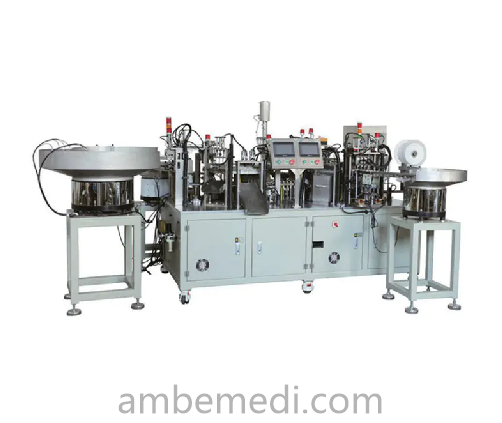
Syringe manufacturing involves several connected operations, including component preparation, assembly, filling, and product inspection. Each stage must be coordinated to maintain an orderly workflow and meet the manufacturer's quality requirements. An Automated Syringe Assembly and Filling Production Line integrates these processes into a connected manufacturing system, helping reduce repetitive manual handling and improve coordination between production stations. By combining mechanical equipment, control systems, and inspection functions, manufacturers can organize their operations around the specific structure and requirements of their syringe products.
The first consideration in equipment development is the syringe structure. Common components include the barrel, plunger, gasket, and protective parts, although different product designs may require additional components or alternative assembly methods. Each part has distinct material properties and dimensional characteristics that influence feeding, positioning, and assembly. Technical drawings and product samples help equipment engineers understand these differences and determine suitable handling mechanisms. A clear understanding of the product is essential for designing a production sequence that supports consistent manufacturing.
Component feeding systems prepare parts before they enter the assembly process. Feeding mechanisms separate individual components, orient them, and transfer them to designated stations. Different parts may require different feeding arrangements because of variations in shape, weight, and flexibility. For example, rigid plastic components and elastomeric gaskets may need different positioning methods. A stable feeding process helps prevent interruptions and ensures that assembly stations receive the required components in the correct orientation.
The assembly section combines individual parts according to the product design. Operations may include barrel positioning, gasket installation, plunger insertion, and protective component fitting. Fixtures hold components in suitable positions, while controlled mechanical movements perform the required operations. The number and arrangement of assembly stations depend on the product structure and production process. When these stations are connected through suitable transfer mechanisms, the system can reduce unnecessary product movement and support a more continuous manufacturing workflow.
Filling is a separate but closely connected process that requires appropriate equipment configuration. The filling method must match the material being handled, the container structure, and the manufacturer's process requirements. Equipment may need to coordinate container positioning, filling operations, and subsequent product transfer. The filling station should receive products in a suitable condition and maintain consistent process control. The specific filling technology and associated inspection requirements should be determined according to the intended application and applicable manufacturing procedures.
An Automated Syringe Assembly and Filling Production Line can incorporate inspection functions at multiple stages. During assembly, inspection may focus on component presence, positioning, and visible defects. During filling, monitoring can address selected process conditions and product characteristics defined by the manufacturer. Sensors, visual inspection systems, and dedicated checking mechanisms can be integrated where appropriate. The inspection plan should reflect the product's quality requirements and the manufacturer's established quality management procedures.
Coordination between assembly and filling stations is essential for production continuity. If the assembly section produces components faster than the filling section can process them, products may accumulate between stations. If filling operates more quickly than assembly, the downstream equipment may remain idle. Transfer systems and suitable buffer arrangements can help manage differences in station operating cycles. Equipment planning should consider the entire production sequence rather than evaluating each machine independently.
Material compatibility also influences the design of the production system. Syringe components may be made from different plastics and elastomeric materials, each requiring suitable contact surfaces and handling methods. Equipment structures should avoid unnecessary pressure or friction that could damage components. Cleaning access, routine maintenance, and the manufacturer's production environment should also be considered during design. These details contribute to the practical operation of the equipment over time.
Manufacturers may need to produce several syringe models with different component configurations or filling requirements. Adjustable fixtures, replaceable tooling, and configurable control programs can help accommodate product variations. The degree of flexibility should be based on the manufacturer's production plan and the differences between product models. A well-planned changeover arrangement can make equipment adaptation more manageable without adding unnecessary complexity to the operating process.
Before equipment enters regular production, integrated testing helps evaluate the coordination of different manufacturing stages. Product samples can be used to assess component feeding, assembly accuracy, filling operations, transfer stability, and inspection functions. Testing can reveal process conflicts that may not be obvious during initial design reviews. Feedback from production trials allows engineers to refine mechanical structures, tooling, and control sequences. Close cooperation between the manufacturer and equipment supplier is important throughout this stage.
AMBE TRADE develops medical manufacturing automation solutions based on product characteristics and customer process requirements. An Automated Syringe Assembly and Filling Production Line can combine component preparation, precision assembly, filling, and inspection into a coordinated production system. Manufacturers interested in related equipment and customized automation solutions can explore the company's capabilities at https://www.ambemedi.com/product/.
- Technology for Students
- Admissions & Applications
- Online Courses
- Career and Jobs
- Campus Life
- Drinks
- Film
- Fitness
- Food
- Παιχνίδια
- Gardening
- Health
- Κεντρική Σελίδα
- Literature
- Music
- Networking For Students
- Insights
- Party
- Religion
- Shopping
- Sports
- Theater
- Wellness
- Education News
- Business & Finance For Students
- Security, Law & Crime Education
- Insurance
- Science & Technology For Students
 Greek
 English
 Arabic
 French
 Spanish
 Portuguese
 Deutsch
 Turkish
 Dutch
 Italiano
 Russian
 Romaian
 Portuguese (Brazil)