


Modern Solutions for Reactive Power Management
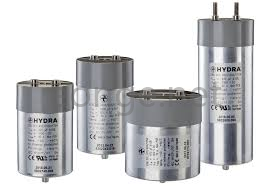
Electrical installations in factories, commercial buildings, and infrastructure facilities often contain inductive loads that consume reactive power. Motors, transformers, pumps, compressors, and lighting equipment can increase reactive current in a distribution network, affecting power factor and the capacity available for useful electrical loads. A Low Voltage Capacitor provides capacitive reactive power to compensate for part of this demand, helping improve electrical efficiency and supporting more stable operation of the local power distribution system.
The main functional element is the capacitor unit, which stores and releases electrical energy through an electric field formed between conductive electrodes and an insulating dielectric. In modern industrial applications, metallized polypropylene film is a common dielectric solution. This material offers favorable dielectric strength, low dielectric losses, and stable electrical characteristics under suitable operating conditions. The thin film and metalized electrode layers are carefully wound or arranged to achieve the required capacitance and electrical performance.
Manufacturing quality has a direct influence on the reliability of the finished product. Film thickness, electrode uniformity, winding tension, insulation treatment, and connection quality must be controlled throughout production. In metallized film construction, a self-healing mechanism can isolate certain localized dielectric defects by removing the conductive layer around the affected area. This helps limit the impact of minor internal faults, although it cannot replace proper electrical protection or correct application design.
The capacitor element is assembled with terminals, internal connections, insulating supports, and a protective enclosure. Depending on the product configuration, the enclosure may be designed for installation inside a compensation cabinet or electrical distribution panel. Mechanical strength, insulation distances, heat dissipation, and protection against dust or moisture should be considered according to the intended environment. Terminal design is also important because loose or poorly connected conductors can increase contact resistance and create localized heating during operation.
The operating principle is based on supplying capacitive reactive power to an electrical circuit. When an inductive load operates, its current tends to lag behind the supply voltage. Connecting a capacitor introduces leading current that offsets part of this lagging reactive component. As a result, the distribution system may carry less reactive current for the same active power demand. This can reduce current loading on upstream cables and transformers and may help lower associated electrical losses.
Power factor correction is especially relevant in facilities where motor-driven equipment operates for extended periods. Manufacturing lines, refrigeration systems, water treatment plants, ventilation installations, and processing equipment can create considerable inductive demand. Capacitor banks installed near the main distribution board or close to major loads can provide compensation according to the electrical arrangement. The appropriate location depends on the facility's load structure, cable layout, control strategy, and maintenance requirements.
A fixed capacitor arrangement may be suitable when the reactive power demand remains relatively stable. However, facilities with changing production schedules or frequently starting and stopping motors may require automatic power factor correction. In these systems, a controller monitors the power factor and switches capacitor stages according to the measured demand. Contactors or suitable switching devices connect and disconnect individual stages. The number and size of stages should be selected to provide sufficient adjustment without excessive switching or unnecessary compensation.
Harmonic distortion must also be considered before installing compensation equipment. Variable-frequency drives, rectifiers, welding equipment, and other nonlinear loads can introduce harmonic currents into the network. Capacitors may interact with system inductance and create resonance at certain frequencies. This can increase current stress and temperature, potentially affecting both the capacitors and other electrical equipment. An engineering assessment may identify the need for detuned reactors or harmonic filtering rather than a conventional capacitor-only arrangement.
Selecting a suitable unit requires more than matching the rated voltage. Engineers should evaluate the nominal system voltage, frequency, required reactive power, capacitance tolerance, ambient temperature, harmonic environment, installation space, and expected operating conditions. They should also consider whether the capacitor will operate continuously or through an automatic switching system. The switching method, discharge arrangement, overcurrent protection, and short-circuit coordination should be consistent with the complete electrical installation.
Installation and maintenance practices are equally important. Capacitors should be mounted with the required ventilation and clearances, and electrical connections must follow the manufacturer's torque specifications. The enclosure and terminals should be inspected for contamination, corrosion, discoloration, and signs of overheating. Before maintenance, the circuit must be isolated, the capacitor discharged, and the absence of hazardous voltage verified using approved procedures. A disconnected unit may retain stored electrical energy, so safety instructions must always be followed.
For equipment manufacturers, electrical contractors, and industrial procurement teams, evaluating production consistency, dielectric materials, test procedures, and technical documentation helps support a suitable purchasing decision. A properly selected Low Voltage Capacitor can contribute to improved power factor and more efficient distribution when integrated into a compensation system designed around actual load characteristics. Product information and related electrical solutions from Shanghai Yongjin Electric Technology Co.,Ltd. are available at https://www.eonge.net/product.
- Technology for Students
- Admissions & Applications
- Online Courses
- Career and Jobs
- Campus Life
- Drinks
- Film
- Fitness
- Food
- Spellen
- Gardening
- Health
- Home
- Literature
- Music
- Networking For Students
- Insights
- Party
- Religion
- Shopping
- Sports
- Theater
- Wellness
- Education News
- Business & Finance For Students
- Security, Law & Crime Education
- Insurance
- Science & Technology For Students
 Dutch
 English
 Arabic
 French
 Spanish
 Portuguese
 Deutsch
 Turkish
 Italiano
 Russian
 Romaian
 Portuguese (Brazil)
 Greek