


Durable Solutions for Industrial Stone Handling
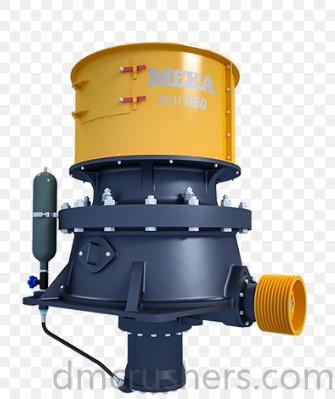
In quarrying, mining, and construction material production, a Stone Crushing Machine plays an important role in converting natural rock into aggregates suitable for infrastructure and industrial applications. Extracted stone is rarely ready for direct use. It often needs to be reduced, screened, and classified into different particle sizes before it can become suitable for concrete production, road construction, drainage systems, railway foundations, and other projects. Choosing appropriate processing equipment helps establish a reliable production process.
The working principle of crushing equipment depends on the mechanism used to reduce material size. Compression, impact, and other mechanical forces are applied according to the equipment design and the characteristics of the raw stone. Different crushing methods are suitable for different stages of production. Primary equipment generally handles larger feed materials, while secondary and tertiary machines provide further reduction to achieve the required product dimensions.
Jaw crushers are widely used for primary crushing in many quarry operations. Their working principle involves compressing material between a fixed jaw plate and a moving jaw plate. This arrangement is suitable for processing various types of hard rock and reducing large feed pieces into smaller fragments. The size of the feed opening, crushing chamber design, and operating conditions should be considered when selecting a suitable machine for a particular application.
Cone crushers are commonly used for secondary and tertiary processing, especially when working with hard and abrasive stone. Material is reduced through compression between the mantle and concave surfaces. The equipment configuration, feed distribution, and operating settings influence the final particle size and production characteristics. A properly selected cone crushing stage can help improve the coordination between primary reduction and final screening.
Impact crushers operate through repeated collisions between the material and impact components. They may be suitable for certain limestone, construction waste, and other materials with appropriate physical characteristics. Impact-based crushing can also influence particle shape, which is an important consideration in aggregate production. However, material abrasiveness must be evaluated carefully because highly abrasive stone may increase the wear rate of blow bars and impact liners.
The properties of raw materials have a direct influence on equipment selection. Granite, basalt, limestone, sandstone, and river stone differ in hardness, abrasiveness, density, and particle structure. These characteristics affect how material responds to crushing forces and how quickly working components may wear. Moisture content and the presence of clay or other unwanted materials can also influence feeding and screening performance. Evaluating the feed material before selecting equipment helps reduce the risk of an unsuitable configuration.
Feeding and material preparation are essential parts of the process. A suitable feeder delivers raw stone to the crushing chamber at a controlled rate. Consistent feeding helps prevent sudden changes in operating load and supports stable material reduction. Where necessary, grizzly feeders or other separation equipment can remove smaller particles before primary crushing. Removing unsuitable materials and managing oversized feed pieces can also reduce blockages and unnecessary mechanical stress.
Screening equipment separates crushed stone into different size fractions. Vibrating screens are commonly used to classify material according to project requirements. Suitable particles can be transferred to storage, while oversized material may be returned for additional crushing. Conveyor systems connect the different processing stages and transport materials between machines and stockpiles. Proper conveyor alignment, transfer-point design, and regular belt inspection help maintain an organized production flow.
Durability is an important consideration in demanding quarry environments. Crushing equipment is exposed to repeated vibration, impact, and abrasion. Jaw plates, liners, bearings, drive components, and supporting structures require appropriate inspection and maintenance. Operators should monitor changes in noise, vibration, temperature, and material discharge conditions. Regular lubrication and timely replacement of worn parts help protect the machine and reduce the possibility of unexpected downtime.
Safety and environmental management should be considered during installation and daily operation. Protective guards and emergency stopping devices help reduce risks around moving components. Clearly defined access areas and suitable maintenance procedures support safer working conditions. Dust suppression arrangements can help manage airborne particles during feeding, crushing, and conveying. Noise control and organized vehicle routes are also important when equipment operates near other industrial activities or populated areas.
Selecting a Stone Crushing Machine requires a clear understanding of the raw material, production objectives, required aggregate sizes, site conditions, and maintenance resources. The crushing equipment should be compatible with the complete processing line rather than evaluated as an isolated unit. Careful configuration can support reliable material reduction and consistent aggregate production. Businesses looking for stationary crushing equipment and related processing solutions can visit https://www.dmcrushers.com/product/stationary-crusher/ for further equipment information.
- Technology for Students
- Admissions & Applications
- Online Courses
- Career and Jobs
- Campus Life
- Drinks
- Film
- Fitness
- Food
- Jogos
- Gardening
- Health
- Início
- Literature
- Music
- Networking For Students
- Insights
- Party
- Religion
- Shopping
- Sports
- Theater
- Wellness
- Education News
- Business & Finance For Students
- Security, Law & Crime Education
- Insurance
- Science & Technology For Students
 Portuguese (Brazil)
 English
 Arabic
 French
 Spanish
 Portuguese
 Deutsch
 Turkish
 Dutch
 Italiano
 Russian
 Romaian
 Greek