


Which Brush Machine Specs Are Worth Paying Extra For
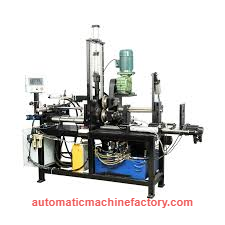
"It runs fine on the demo and then jams the moment I switch to a new brush head" is a complaint I hear from small factory owners again and again, usually after choosing Brush Making Machinery by price and a tidy brochure, so which specifications are actually worth studying?
Start with the products you really make, not the ones you hope to make someday. A toothbrush maker, a household broom producer and a paint brush workshop need very different machines, and a unit built for fine nylon filaments will struggle with thick, stiff fibers. Write down the range of handle sizes, hole patterns and filament types before reading a single datasheet.
Axis count is the next thing I look at. Machines with more controlled axes can handle angled holes, curved head surfaces and complex patterns, while simpler models do straight tufting very well and cost much less. Many buyers pay for extra axes they never use, and I have seen a shop run the same flat pattern for years on a machine built for sculpted heads.
Speed figures need careful reading. A maker may quote the highest tufting rate under ideal conditions, but the useful number is the steady output with your own filament, your own handle material and a normal operator. Ask for a trial run with your samples if possible, and listen to the machine, because a smooth, even rhythm usually signals a stable mechanism while a harsh, uneven clatter suggests trouble.
Filament capacity and feeding deserve a close look as well. The size of the filament magazine, the way fibers are separated and the cutting method all influence how often the line stops for refilling or clearing a jam. A tidy, well guided feed path with smooth metal surfaces tends to produce fewer tangles, and operators will thank you for it by the second week.
Control systems decide how pleasant daily work will be. A clear touch screen with stored programs lets a technician recall a pattern in a minute, whereas a clumsy menu turns every new product into an afternoon of guesswork. Check whether patterns can be edited on the machine, whether error messages are easy to understand and whether the language options suit your team.
Changeover time is a hidden cost that rarely appears on the front page. Swapping fixtures, adjusting the handle holder and loading a new pattern can take a short while or half a shift, depending on the design. If you run many small orders, quick change fixtures and repeatable settings may matter more than raw speed.
Tooling and wear parts are the quiet recurring expense. Needles, punches, cutters and clamps wear with use, and a supplier who keeps them in stock and prices them fairly saves you from long stoppages. Ask which parts are standard, which are custom and how quickly replacements usually arrive, because a stopped line costs far more than a drawer of spares.
Space, power and air supply also need a quick check before the machine arrives. Measure the doorway, the floor and the clearance for the operator to reach both sides comfortably, and confirm the voltage and compressed air requirements. A short conversation with your electrician now can save an embarrassing delay on delivery day.
Support is the last question, though not the least. Ask about installation help, operator training, manuals in a language your team reads and how remote problems are handled, and be wary of answers that sound vague. When you are ready to compare configurations across a wide range of models, the listings at https://www.automaticmachinefactory.com/product are a convenient place to start, and a careful look at axes, speed, changeover and support will tell you far more about Brush Making Machinery than any price tag could.
- Technology for Students
- Admissions & Applications
- Online Courses
- Career and Jobs
- Campus Life
- Drinks
- Film
- Fitness
- Food
- الألعاب
- Gardening
- Health
- الرئيسية
- Literature
- Music
- Networking For Students
- Insights
- Party
- Religion
- Shopping
- Sports
- Theater
- Wellness
- Education News
- Business & Finance For Students
- Security, Law & Crime Education
- Insurance
- Science & Technology For Students
 Arabic
 English
 French
 Spanish
 Portuguese
 Deutsch
 Turkish
 Dutch
 Italiano
 Russian
 Romaian
 Portuguese (Brazil)
 Greek