


Compact Motor Design for Modern Ventilation Systems
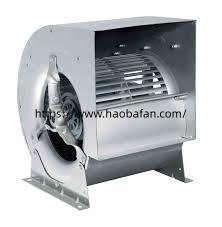
Compact ventilation equipment plays an important role in modern industrial and commercial environments where reliable air movement, practical installation, and efficient motor integration are essential. An External Rotor Fan uses a motor configuration in which the rotor is arranged around the stator rather than positioned inside it. This structural arrangement allows the impeller to be integrated closely with the motor assembly, creating a compact design that can be suitable for different cooling and ventilation applications.
The external rotor motor generally consists of a stator, rotor, shaft or supporting structure, bearings, and electrical components. The stator contains the windings that generate a rotating magnetic field when supplied with electrical power. The rotor surrounds the stator and responds to this magnetic field, producing rotational movement. Because the rotor is located externally, the motor can be integrated into the fan assembly in a way that helps reduce the overall space required for certain equipment configurations.
One important characteristic of this arrangement is the relationship between the motor and impeller. In many designs, the impeller is mounted directly onto the external rotor structure. This integration can reduce the need for separate transmission components and create a relatively streamlined assembly. Fewer mechanical connections may also simplify certain aspects of installation and maintenance, although the actual maintenance requirements depend on the motor design and operating environment.
Material selection is essential for maintaining mechanical stability and operational reliability. Rotor components commonly require materials with suitable magnetic and mechanical properties. The motor housing and supporting structures must withstand operational forces and environmental exposure. Impeller materials may include steel, aluminum, or engineered plastics, depending on the required strength, weight, corrosion resistance, and application conditions. Material selection should consider temperature, humidity, airborne particles, and the characteristics of the surrounding environment.
The impeller is responsible for converting rotational energy into airflow. Its diameter, blade geometry, pitch, and structural design influence how air moves through the fan. Different impeller configurations are developed for different airflow directions and pressure requirements. A well-matched combination of motor and impeller helps the equipment operate within its intended working range. Incorrect component matching may result in unnecessary energy consumption, excessive noise, or reduced airflow effectiveness.
Heat management is another important consideration. Electric motors generate heat during operation, and the temperature of internal components can influence their service life. External rotor configurations may provide opportunities for integrating the motor more closely with the airflow path, depending on the specific fan construction. However, cooling effectiveness depends on the overall design, airflow conditions, operating load, and ambient temperature. Equipment should always be selected according to its intended duty and environmental requirements.
These fans are used in a wide range of applications. Commercial ventilation systems may incorporate compact motor-integrated equipment in air handling units, ventilation cabinets, and building cooling systems. Industrial applications include machinery cooling, electrical enclosure ventilation, equipment rooms, and production facilities. In these environments, reliable air circulation helps manage heat accumulation and supports stable operating conditions for surrounding equipment.
Refrigeration and heat exchange systems are additional application areas. Fans may be incorporated into condensers, evaporators, and other equipment that requires controlled air movement across heat transfer surfaces. Their role is to support the movement of air through the system so that heat can be exchanged more effectively. The specific fan configuration must match the equipment layout and the operating conditions of the refrigeration or cooling system.
Selecting suitable equipment begins with understanding the required airflow and installation environment. Buyers should identify whether the fan is intended for general ventilation, forced cooling, exhaust, or air circulation. The available mounting space, airflow direction, operating temperature, electrical supply, and expected duty cycle should also be considered. For systems involving ducts or filters, resistance within the airflow path must be evaluated because it can influence the actual operating point.
Noise and vibration are important factors in both industrial and commercial installations. Fan noise can originate from the motor, impeller, airflow turbulence, or mechanical vibration. Secure mounting, correct alignment, and suitable installation arrangements can help reduce unnecessary vibration. In occupied environments, the overall system design should also consider noise transmission through supporting structures and connected air passages.
Maintenance requirements should be established according to the product construction and operating conditions. Regular inspections can help identify dust accumulation, damaged impeller blades, loose fasteners, bearing wear, or electrical connection problems. Cleaning is particularly important in environments where airborne particles can collect around rotating components. Maintenance work should follow appropriate electrical safety procedures and the equipment manufacturer's recommendations.
For equipment distributors, engineering contractors, and industrial purchasers, understanding motor construction is important when comparing ventilation products. A well-designed External Rotor Fan can offer a compact equipment arrangement for projects where motor integration and installation space are important considerations. Taizhou Haoba Electromechanical Co Ltd. provides ventilation solutions for different industrial and commercial applications, and buyers can review its product range at https://www.haobafan.com/product/mixed-flow-fan/ when evaluating suitable equipment for their air movement requirements.
- Technology for Students
- Admissions & Applications
- Online Courses
- Career and Jobs
- Campus Life
- Drinks
- Film
- Fitness
- Food
- Jeux
- Gardening
- Health
- Domicile
- Literature
- Music
- Networking For Students
- Insights
- Party
- Religion
- Shopping
- Sports
- Theater
- Wellness
- Education News
- Business & Finance For Students
- Security, Law & Crime Education
- Insurance
- Science & Technology For Students
 French
 English
 Arabic
 Spanish
 Portuguese
 Deutsch
 Turkish
 Dutch
 Italiano
 Russian
 Romaian
 Portuguese (Brazil)
 Greek