


Engineering Valves for Extremely Low Temperatures
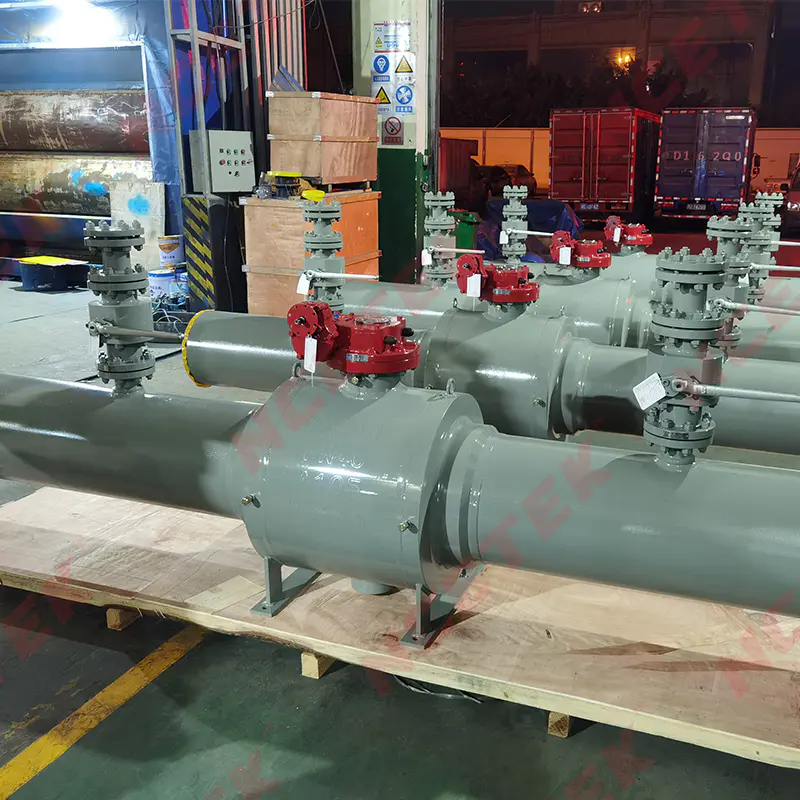
Industrial systems handling liquefied gases and other extremely cold fluids require specialized equipment capable of maintaining mechanical integrity under significant temperature differences. Cryogenic Ball Valve Design involves more than adapting a conventional valve for colder service. Engineers must consider material behavior, thermal contraction, stem sealing, seat performance, pressure conditions, and operational safety throughout the equipment's intended service life.
Cryogenic applications commonly involve liquefied natural gas, liquid nitrogen, liquid oxygen, liquid argon, and other low-temperature media. Each medium has distinct physical and chemical characteristics that influence material compatibility and equipment selection. Operating temperatures can vary significantly depending on the fluid and process. Therefore, valve designs should be developed according to the actual temperature range, pressure conditions, and applicable industry requirements.
Material selection is a fundamental consideration. Metals contract when exposed to lower temperatures, but different materials do not necessarily contract at the same rate. These dimensional changes can affect component clearances, bolted connections, sealing interfaces, and the interaction between the ball and seats. Austenitic stainless steels are frequently considered for cryogenic applications because of their low-temperature toughness characteristics, although the final material selection must follow the relevant design requirements and material specifications.
Other materials may be suitable depending on the product configuration and service conditions. Carbon steel grades commonly used in ordinary industrial applications should not automatically be assumed suitable for extremely low temperatures. Material impact properties, chemical composition, manufacturing history, and heat treatment requirements may all need verification. Buyers should review the specified material grades and relevant inspection records before approving equipment for critical low-temperature service.
An important design consideration is the stem and bonnet arrangement. Many cryogenic valves use an extended stem or extended bonnet to position the stem packing farther away from the cold fluid. This arrangement helps reduce direct exposure of the packing area to extremely low temperatures and provides space for an appropriate thermal gradient. The extension length and internal arrangement must be selected according to the specific design and operating conditions.
The extended structure also influences installation and maintenance. Engineers need to consider available space, insulation thickness, stem accessibility, operating device clearance, and the orientation of the valve. In some installations, the extended bonnet may affect the overall equipment layout. Accurate dimensional drawings are therefore important during the engineering and procurement stages.
Seat design requires particular attention because low temperatures can change the mechanical behavior of sealing materials. Soft seating materials may offer useful sealing characteristics, but their suitability depends on temperature limits, pressure conditions, fluid compatibility, and operating cycles. Specialized polymers may be selected for certain applications where their verified properties satisfy the design requirements. Metal seating may be considered in other services, although the required leakage performance and contact geometry must be evaluated carefully.
Thermal contraction can influence the relationship between the ball and seating components. If the design does not adequately account for dimensional changes, contact pressure may become unsuitable during operation. Excessive contact can increase operating torque, while insufficient contact may affect shutoff performance. Engineers must therefore evaluate the complete assembly under the intended low-temperature conditions rather than relying exclusively on room-temperature dimensions.
Pressure management is another important factor. Certain ball valve configurations can trap fluid within the body cavity when the valve is closed. If the trapped liquid warms and expands, pressure may increase inside the cavity. Depending on the design and service requirements, a suitable pressure-relief arrangement or another engineered solution may be necessary. The correct approach depends on the valve construction, flow direction, seat design, and project specification.
Surface finishing and manufacturing accuracy contribute to reliable operation. The ball surface, stem interface, seat pockets, and sealing areas must be manufactured within the specified tolerances. Cleanliness is especially important in systems handling high-purity gases or oxygen service. Where oxygen compatibility is required, the design, materials, cleaning procedures, and handling processes must follow the applicable project requirements. Ordinary industrial cleaning should not be treated as equivalent to oxygen-service preparation.
Testing procedures for cryogenic equipment may include conventional shell and seat pressure tests, supplemented by low-temperature testing when required by the applicable standard or customer specification. Cryogenic testing can help evaluate sealing behavior and operational characteristics under representative temperature conditions. Inspection plans should clearly identify the tests being performed and the acceptance criteria. Manufacturers should not claim low-temperature qualification solely on the basis of a standard-temperature pressure test.
Industry standards may include applicable API, ASME, and other recognized specifications, depending on the valve design and intended application. Relevant requirements can address pressure containment, dimensions, materials, inspection, and testing. Procurement documents should identify the required standard editions and any project-specific supplementary requirements.
These products are commonly used in LNG receiving terminals, gas liquefaction facilities, cryogenic storage systems, industrial gas plants, and selected energy infrastructure projects. Each application has different requirements concerning fluid compatibility, pressure, temperature, and operating frequency. Engineers should also consider emergency isolation arrangements and maintenance accessibility when integrating valves into a complete process system.
For procurement teams, technical communication is essential. Drawings, material specifications, test requirements, and installation details should be reviewed before production begins. Zhejiang Naishi Valve Co., Ltd. provides industrial valve solutions under the NCETEK and Naishi Valve brands, with configurations selected according to product design and project requirements.
A properly engineered Cryogenic Ball Valve Design must account for the interaction of every pressure-containing and sealing component at low temperature. Material suitability, thermal movement, extended stem construction, cavity pressure management, and testing requirements should be considered together. For further information about available industrial valve products, visit https://www.ncevalve.com/product/.
- Technology for Students
- Admissions & Applications
- Online Courses
- Career and Jobs
- Campus Life
- Drinks
- Film
- Fitness
- Food
- Παιχνίδια
- Gardening
- Health
- Κεντρική Σελίδα
- Literature
- Music
- Networking For Students
- Insights
- Party
- Religion
- Shopping
- Sports
- Theater
- Wellness
- Education News
- Business & Finance For Students
- Security, Law & Crime Education
- Insurance
- Science & Technology For Students
 Greek
 English
 Arabic
 French
 Spanish
 Portuguese
 Deutsch
 Turkish
 Dutch
 Italiano
 Russian
 Romaian
 Portuguese (Brazil)