


Precision Components for Automated Production Systems
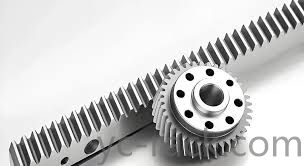
Reliable industrial motion depends on the accurate interaction of mechanical components. In systems that convert rotational power into linear movement, a Helical Gear Rack provides an angled tooth arrangement that supports progressive engagement with a mating pinion. This design can help reduce abrupt tooth contact and promote smoother transmission behavior. For machinery operating through repeated positioning cycles, the relationship between tooth geometry, manufacturing quality, and installation accuracy is essential to dependable performance.
The transmission process begins when the driving pinion rotates and engages with the rack. This interaction converts rotational movement into linear displacement, allowing equipment to move along a controlled path. Because the teeth are angled, contact develops progressively rather than occurring across the entire tooth width at once. This characteristic can contribute to smoother engagement, although the actual operating result also depends on alignment, lubrication, structural support, and the quality of the mating components.
Material selection influences the component's ability to withstand operating conditions. Transmission parts may experience repeated loading, surface friction, and changes in operating temperature. Materials should therefore provide an appropriate balance of strength, wear resistance, and dimensional stability. Steel is widely considered for industrial transmission components because its properties can be adjusted through material selection and suitable processing methods.
At Zhejiang Yuchen Transmission Technology Co., Ltd., manufacturing consistency is an important consideration in producing mechanical transmission components. Material preparation provides the foundation for later machining operations. Consistent material characteristics help manufacturers manage cutting behavior, dimensional accuracy, and finishing requirements. Careful process planning also reduces the risk that variations in early production stages will affect the final tooth geometry.
Tooth profile accuracy is particularly important because it determines how the rack and pinion make contact. The shape and spacing of the teeth influence the transmission of force, while surface condition affects friction during operation. Irregular profiles or inconsistent spacing may create uneven contact and localized stress. Precision machining helps maintain the intended geometry and supports more predictable interaction between mating components.
The production route generally includes several coordinated operations. Initial machining creates the basic component form, while later operations refine the tooth surfaces and important dimensions. Some applications may require additional finishing to improve surface quality. The manufacturing process should be planned around the intended operating requirements, since different machines may have different expectations for movement consistency, load handling, and service conditions.
Inspection is an essential part of production control. Dimensional checks help confirm that the component meets its intended manufacturing requirements. Tooth profile evaluation can identify deviations that may affect engagement, while surface inspection helps detect visible defects or finishing irregularities. Consistent inspection procedures support production reliability and provide equipment manufacturers with greater confidence during assembly.
Installation can significantly influence the performance of the complete transmission system. The rack needs a stable mounting surface, and its alignment with the pinion must be maintained throughout the working path. Poor positioning can cause uneven tooth contact, additional friction, and accelerated wear. Supporting structures should be sufficiently rigid to maintain alignment under operating loads. Designers should also consider access for lubrication and routine inspection.
Lubrication helps reduce friction between the mating surfaces and supports stable operation. The appropriate method depends on operating conditions, including movement frequency, load, temperature, and exposure to contaminants. In environments where dust or metal particles may accumulate, suitable protection and cleaning practices are important. Regular inspection can reveal early signs of wear, unusual noise, or changes in movement quality.
These components are used in different types of industrial equipment. Automated manufacturing lines rely on linear movement to position workpieces and processing tools. Packaging systems require coordinated movement to synchronize different production stages. Material-handling equipment may use linear transmission to move carriers, platforms, or other assemblies. Machine tools and specialized production machinery also depend on reliable mechanical movement to maintain consistent operations.
Selecting a suitable transmission component requires more than comparing individual product features. Engineers should assess the required travel, load direction, operating frequency, installation arrangement, and environmental conditions. The mating pinion must be compatible with the rack, and the overall structure must support the intended working loads. Maintenance requirements should also be included in the selection process to help avoid unnecessary service interruptions.
For equipment manufacturers, a dependable supplier should demonstrate consistent production methods and suitable quality-control procedures. Communication about application requirements helps ensure that material, geometry, and manufacturing processes are appropriate for the intended machine. Zhejiang Yuchen Transmission Technology Co., Ltd. focuses on transmission component manufacturing with attention to machining quality and practical industrial applications.
A Helical Gear Rack should be assessed as part of the complete mechanical drive rather than as an isolated component. Its operating performance depends on material quality, tooth accuracy, mating gear compatibility, installation, and maintenance. Considering these factors together helps equipment designers develop more stable and dependable linear motion systems. Product information and manufacturing details are available at https://www.yc-rack.com/product/spur-gear-rack/
- Technology for Students
- Admissions & Applications
- Online Courses
- Career and Jobs
- Campus Life
- Drinks
- Film
- Fitness
- Food
- Jeux
- Gardening
- Health
- Domicile
- Literature
- Music
- Networking For Students
- Insights
- Party
- Religion
- Shopping
- Sports
- Theater
- Wellness
- Education News
- Business & Finance For Students
- Security, Law & Crime Education
- Insurance
- Science & Technology For Students
 French
 English
 Arabic
 Spanish
 Portuguese
 Deutsch
 Turkish
 Dutch
 Italiano
 Russian
 Romaian
 Portuguese (Brazil)
 Greek