


Why Work with FuNanSheng Pepper Grinder Manufacturer on Design
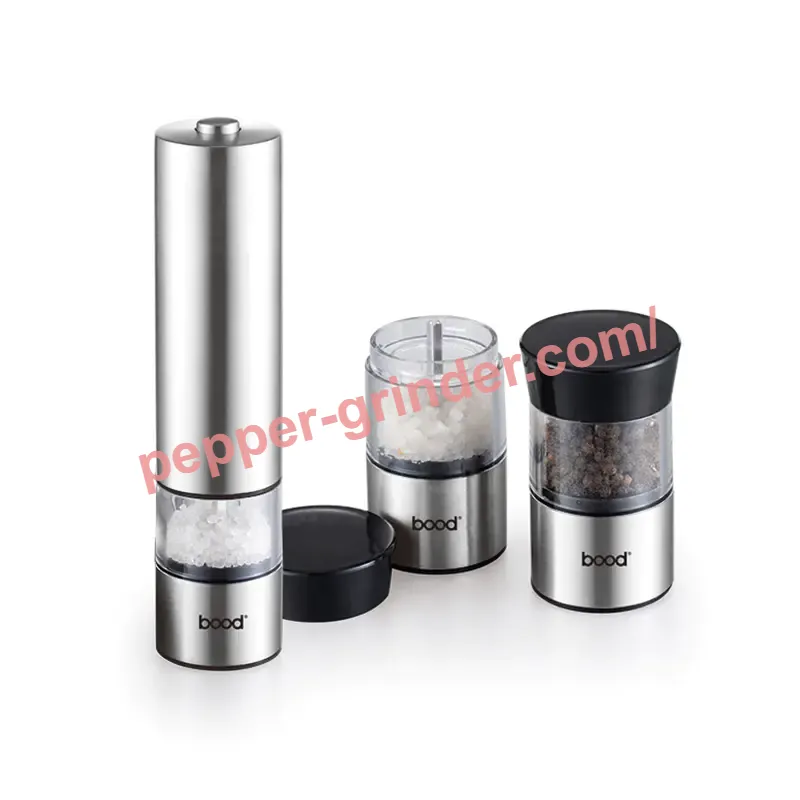
When a brand or retailer begins searching for a reliable source of spice mills, the conversation often turns to material quality and long-term performance. Working with a pepper grinder manufacturer based in Yongkang City, Zhejiang Province, China allows access to workshops that have refined wood, stainless steel, and ceramic combinations over many seasons of production. The middle ground between traditional hand-finishing and modern assembly lines becomes visible once sample pieces arrive and the surface texture, weight distribution, and grinding feel can be judged directly. Buyers who take time to examine these elements early avoid mismatches between the intended kitchen use and the finished product that later reaches shelves.
Material decisions start with the body. Hardwoods such as acacia or beech provide a warm appearance and natural resistance to daily moisture when properly sealed. Stainless steel bodies appeal to those who prefer a cool, uniform surface that cleans with a simple wipe. Acrylic options remain transparent so the pepper level stays visible without opening the mill. Each choice carries its own character in the hand and on the table, and the manufacturer’s willingness to combine them—wood tops with metal mechanisms, for example—gives product developers room to match existing brand aesthetics.
The grinding core itself receives equal attention. Ceramic mechanisms resist corrosion from salt or pepper oils and maintain a consistent bite across repeated use. Metal burrs deliver a different tactile feedback and can be adjusted for coarse or fine results with a simple turn of the dial. The housing that holds these cores must keep the parts aligned so that the grind stays even from the first twist to the last. Factories that keep both ceramic and metal systems in regular production can supply the same outer design with either interior, giving buyers flexibility without redesigning the entire piece.
Everyday handling shapes the final form as much as the materials. A handle or knob that sits comfortably between the fingers encourages regular use rather than leaving the mill unused on a shelf. The base needs enough weight to stay steady when pressure is applied, yet not so heavy that it feels cumbersome to lift and store. Some designs incorporate a clear window or a removable top that makes refilling straightforward. These practical details emerge most clearly when the manufacturer invites early feedback on prototype shapes and then adjusts the curve of a grip or the height of a body before full production begins.
Surface finishes also influence the experience. A matte coating on metal reduces fingerprints, while a light oil finish on wood deepens the grain without creating a sticky feel. Engraving or laser marking can place a brand name discreetly on the side or base, provided the process does not weaken the material. Color consistency across a production run matters for retailers who display multiple units together; workshops that monitor staining and coating batches help keep the visual result uniform.
From a purchasing perspective, clear communication about minimum quantities, sample lead times, and packaging options reduces friction later. A manufacturer that can supply both small trial lots and larger seasonal runs allows a brand to test market response before committing to volume. Packaging itself becomes part of the product story—whether a simple kraft box that highlights the natural wood or a molded insert that protects the mechanism during shipping. Aligning these details early keeps the entire process coherent from factory floor to retail shelf.
User feedback collected after the first shipments often returns to the same points: how quietly the mechanism turns, how evenly the pepper falls, and how easily the mill can be cleaned. Designs that allow the grinding core to be removed and rinsed without special tools tend to stay in regular rotation. Those that trap residue in hidden corners gradually lose favor. Listening to these comments and feeding them back into the next design cycle keeps the product relevant without dramatic overhauls.
Appearance remains the first point of contact for many buyers. Clean lines, balanced proportions, and a finish that complements both modern and traditional kitchens help the mill sit comfortably among other tabletop items. Some prefer a tall, slender profile that stores easily; others favor a shorter, wider form that feels substantial in the hand. Offering a focused range of silhouettes rather than endless variations lets the manufacturer maintain quality while still giving customers meaningful choice.
When the time comes to move from samples to production, the relationship with the source determines how smoothly the transition unfolds. A pepper grinder manufacturer that maintains open channels for design adjustments and quality checks supports the process at every stage, and the collection presented at https://www.pepper-grinder.com/product includes current interpretations of wood, metal, and ceramic combinations that can be reviewed and refined before any larger commitment is made. Matching the chosen materials and mechanisms to the intended daily use creates a piece that feels natural on the table and reliable in the hand.
- Technology for Students
- Admissions & Applications
- Online Courses
- Career and Jobs
- Campus Life
- Drinks
- Film
- Fitness
- Food
- Jeux
- Gardening
- Health
- Domicile
- Literature
- Music
- Networking For Students
- Insights
- Party
- Religion
- Shopping
- Sports
- Theater
- Wellness
- Education News
- Business & Finance For Students
- Security, Law & Crime Education
- Insurance
- Science & Technology For Students
 French
 English
 Arabic
 Spanish
 Portuguese
 Deutsch
 Turkish
 Dutch
 Italiano
 Russian
 Romaian
 Portuguese (Brazil)
 Greek