


How Do the Skills Required for a Security Guard Help Protect People and Property?
Safety is important in every workplace, business, school, shopping center, and public building. People want to feel safe when they visit a place or spend time at work. Businesses also need to protect their buildings, equipment, products, and other valuable assets from possible risks.
Security guards play an important role in maintaining a safe environment. They monitor activities, control access, observe unusual behavior, and respond to different situations. However, performing these responsibilities requires more than simply standing at an entrance or watching a property.
The skills required for a security guard help professionals understand their responsibilities and handle different security situations. These skills include communication, observation, problem-solving, emergency response, patience, and professional behavior.
When security guards develop the right skills, they can identify possible risks, prevent problems, and support the safety of people and property.
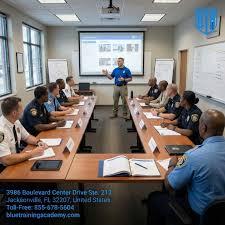
At Blue Training Academy, learning about professional security responsibilities can help individuals understand the knowledge and abilities needed for a security career.
1. Observation Skills Help Identify Security Risks
Observation is one of the most important skills for a professional security guard. Guards must pay attention to their surroundings and notice activities that may create safety concerns.
Good observation helps security staff identify unusual behavior, damaged property, unauthorized visitors, and possible security problems.
For example, a security guard working in an office building may notice someone trying to enter a restricted area without permission. By identifying the situation early, the guard can follow the correct procedures and report the activity.
Observation also helps protect business property. During regular patrols, guards may notice broken windows, damaged doors, or equipment that has been moved without authorization.
By staying alert, security guards can help prevent small problems from becoming serious incidents.
2. Communication Skills Help Maintain a Safe Environment
Communication is another important skill required for a security guard. Security professionals interact with employees, visitors, customers, managers, and emergency personnel.
They need to explain rules, provide directions, answer questions, and share important information.
Clear communication helps prevent misunderstandings and supports better security management.
For example, if a visitor wants to enter a restricted area, the security guard should explain the access requirements politely. This helps maintain workplace rules without creating unnecessary conflict.
Communication is also important during emergencies. Guards may need to alert employees, contact supervisors, and provide clear information to emergency services.
Good communication helps everyone understand what is happening and what actions they should take.
3. Problem-Solving Skills Help Prevent Property Damage
Security guards may face different problems during their shifts. These can include unauthorized access, damaged equipment, suspicious activities, and disagreements between visitors.
Problem-solving skills help guards understand situations and choose appropriate actions.
For example, if a guard notices that a storage room door has been left open, they should follow workplace procedures, report the issue, and help ensure that the area remains secure.
They should also understand when a problem requires assistance from a supervisor or the appropriate authorities.
Good problem-solving does not mean handling every situation alone. It means understanding the problem, considering safety, and taking action within the limits of their training and authority.
4. Emergency Response Skills Help Protect Human Life
Emergencies can happen without warning. Fires, accidents, medical incidents, and security threats can put people at risk.
A professional security guard should understand how to respond to these situations calmly and responsibly.
Emergency response skills help guards follow safety procedures, contact emergency services, and support evacuation when necessary.
For example, if a fire alarm sounds in a commercial building, a guard may need to alert people and guide them toward designated emergency exits when it is safe to do so.
Basic first aid knowledge can also help security staff understand how to provide suitable initial assistance while waiting for qualified medical professionals.
These skills are important because protecting human life should always be a priority.
5. Conflict Management Skills Help Reduce Dangerous Situations
Sometimes, security guards deal with angry customers, upset visitors, or disagreements between individuals.
If these situations are not handled properly, they may become more serious and create risks for others.
Conflict management is one of the essential skills required for a security guard because it helps professionals handle difficult interactions peacefully.
A trained guard should remain calm, listen carefully, speak respectfully, and explain workplace rules clearly.
For example, if two visitors begin arguing inside a business property, the guard may need to approach carefully, maintain a safe distance, and request additional assistance when necessary.
The goal is to reduce tension and protect everyone involved. Guards should avoid unnecessary confrontation and follow approved workplace procedures.
6. Physical Fitness Helps Security Guards Perform Their Duties
Physical fitness is important for many security positions. Guards may spend several hours standing, walking, or patrolling different areas of a property.
Some security jobs also require staff to move quickly between locations or remain active during long shifts.
Good physical fitness helps guards perform these responsibilities more comfortably.
For example, a security guard working at a large shopping center may need to patrol different floors, monitor entrances, and check parking areas throughout the day.
However, physical strength is not the only important factor. Security professionals also need mental alertness, patience, and good judgment.
Maintaining general fitness and following workplace safety practices can support better job performance.
7. Access Control Skills Help Protect Restricted Areas
Businesses often have areas that should only be accessible to authorized people. These may include offices, storage rooms, server rooms, warehouses, and private employee areas.
Security guards help protect these locations by following access control procedures.
They may check identification, record visitor information, monitor entrances, and report unauthorized access attempts.
For example, a warehouse security guard may need to confirm that delivery workers have permission before allowing them into certain areas.
Proper access control helps prevent unauthorized entry, protect valuable equipment, and maintain workplace security.
8. Patience and Self-Control Help Maintain Professional Behavior
Security work sometimes involves stressful situations, long working hours, and repeated daily tasks.
A professional guard needs patience and self-control to perform their responsibilities correctly.
For example, a visitor may become frustrated because they have to wait for permission to enter a building. The guard should remain polite and explain the process instead of reacting emotionally.
Self-control also helps security professionals avoid unnecessary arguments and make better decisions.
These qualities create a more respectful environment for employees, visitors, and customers.
9. Report Writing Skills Help Improve Security Management
Security guards often need to record important information about their daily activities and unusual incidents.
These reports help supervisors understand what happened and decide whether further action is required.
A professional report should include the time, location, details of the incident, and actions taken.
For example, if a guard notices damage to a parking area entrance, they should document the issue and inform the appropriate supervisor.
Reports should be clear, accurate, and based on facts. Security guards should avoid adding personal opinions or unconfirmed information.
Good documentation helps businesses review security problems and improve their safety procedures.
10. Teamwork Skills Help Protect People and Property
Security guards often work with other security staff, managers, employees, and emergency personnel.
Teamwork is important because different security responsibilities may need to be handled at the same time.
For example, during a busy event, one guard may monitor the main entrance while another checks the parking area. Both need to communicate and share important information.
Good teamwork helps security staff understand their responsibilities and avoid confusion.
It also supports better emergency responses because team members can coordinate their actions and request assistance when necessary.
11. Knowledge of Security Procedures Supports Better Protection
Every business has different security requirements. A school, office, hospital, and warehouse may have different rules for visitor access, emergency response, and property protection.
Security guards should understand these procedures and follow them during their shifts.
Training helps learners understand how to monitor assigned areas, report incidents, follow patrol schedules, and protect restricted locations.
For example, a guard working in an office building may need to follow specific procedures for employee identification and visitor registration.
Understanding workplace rules helps security staff perform their duties consistently and professionally.
12. Professional Judgment Helps Prevent Unnecessary Risks
Good judgment is another important part of professional security work. Guards may need to make decisions when they notice unusual activities or unexpected situations.
They should understand the risks involved and choose an appropriate response based on their training and workplace procedures.
For example, if a security guard notices a suspicious situation, they should avoid making assumptions and report the facts to the appropriate supervisor.
Professional judgment also means knowing when to request assistance instead of trying to handle a dangerous situation alone.
This skill helps protect both security staff and the people around them.
How Can Training Help Develop Security Guard Skills?
Professional training helps individuals understand the knowledge and abilities needed to perform security duties.
It introduces learners to important subjects such as communication, observation, access control, emergency response, conflict management, and report writing.
Training also helps individuals understand professional behavior, workplace safety, and the limits of their legal authority.
At Blue Training Academy, individuals can explore security-related learning opportunities to improve their understanding of professional security responsibilities.
By learning the correct procedures and practicing important skills, future security professionals can become better prepared for different workplace situations.
Why Are Security Guard Skills Important for Businesses?
Businesses need reliable security staff who can help protect employees, customers, visitors, and valuable property.
A skilled security guard can identify possible risks, monitor important areas, follow access procedures, and report security concerns.
These responsibilities help businesses maintain a more organized and secure environment.
Good security skills can also improve communication between security staff and business management. This makes it easier to identify problems and take suitable action.
However, every business should assess its security needs and choose trained professionals who understand the responsibilities of the position.
Conclusion
The skills required for a security guard play an important role in protecting people and property. Observation, communication, problem-solving, emergency response, conflict management, and professional judgment help security staff perform their duties effectively.
These abilities allow guards to identify risks, prevent security problems, maintain access control, and respond responsibly to unexpected situations.
- Technology for Students
- Admissions & Applications
- Online Courses
- Career and Jobs
- Campus Life
- Drinks
- Film
- Fitness
- Food
- Spiele
- Gardening
- Health
- Startseite
- Literature
- Music
- Networking For Students
- Insights
- Party
- Religion
- Shopping
- Sports
- Theater
- Wellness
- Education News
- Business & Finance For Students
- Security, Law & Crime Education
- Insurance
- Science & Technology For Students
 Deutsch
 English
 Arabic
 French
 Spanish
 Portuguese
 Turkish
 Dutch
 Italiano
 Russian
 Romaian
 Portuguese (Brazil)
 Greek