


How to Choose the Right Water Purifier for Your Home
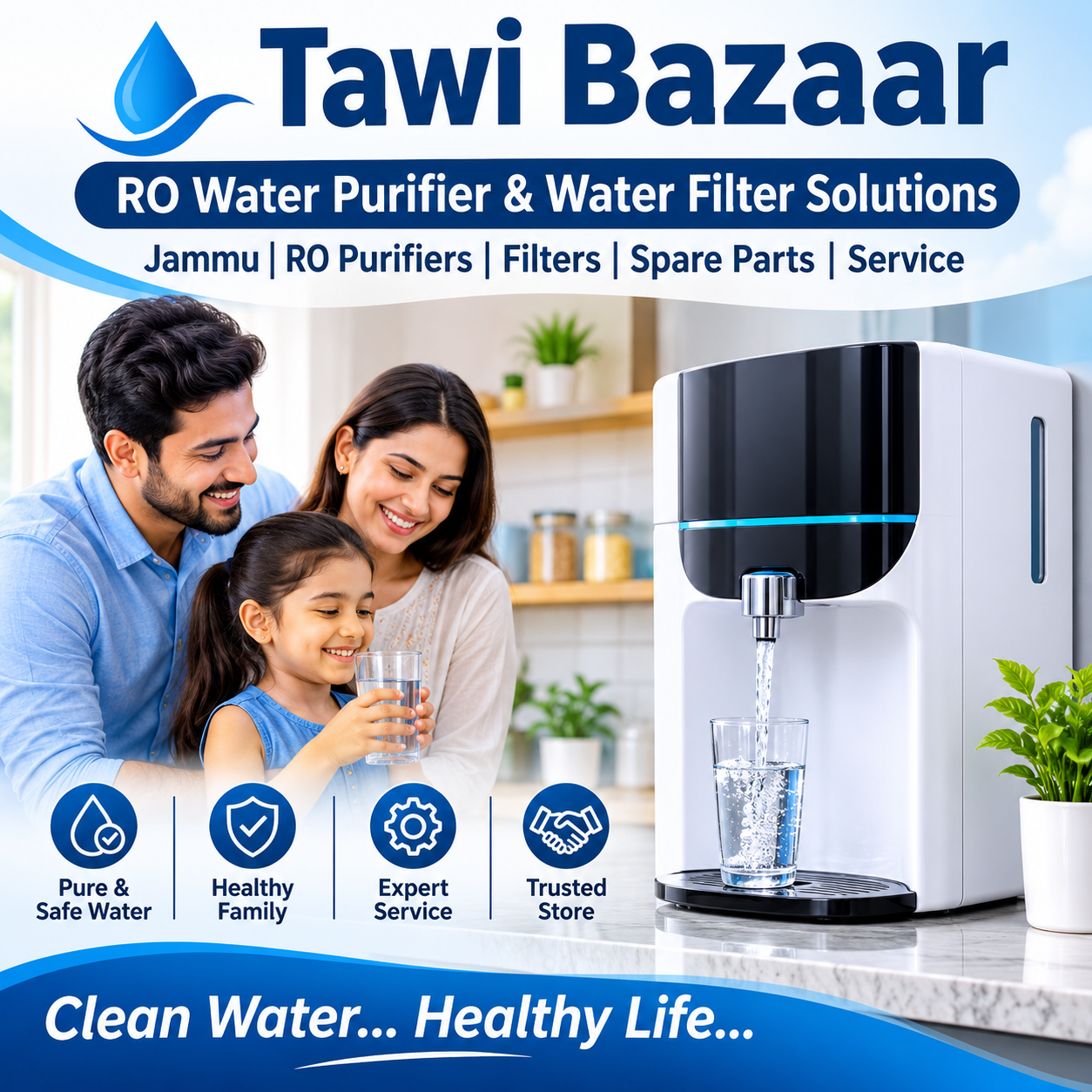
Access to clean drinking water is an important part of maintaining a healthy and comfortable home. Water quality can vary significantly depending on the local source, plumbing system, and treatment process. For this reason, choosing the right purification system requires more than simply selecting the most popular model.
A good water purifier should match the quality of the incoming water, the size of the household, and the type of filtration required. Understanding the available technologies can help consumers make a more practical purchasing decision.
Why Water Purification Matters
Water may contain suspended particles, unpleasant odours, dissolved minerals, microorganisms, or other impurities. While municipal water supplies are treated, contamination can sometimes occur during storage or distribution.
A suitable purification system can improve the taste, odour, and overall quality of drinking water. However, the right solution depends on the source and characteristics of the water being treated.
Before purchasing a purifier, homeowners should consider whether their supply comes from municipal pipelines, borewells, tankers, or another source.
Understanding RO Water Purifiers
An RO Water Purifier uses reverse osmosis technology to reduce many dissolved impurities from water. During the purification process, water passes through a semi-permeable membrane under pressure.
RO systems are often considered for water with relatively high dissolved solids. They may also include additional filtration stages such as sediment filters, activated carbon filters, and post-treatment stages.
However, RO is not automatically necessary for every household. If the incoming water is already suitable for drinking and has low dissolved solids, another purification technology may be more appropriate.
Check Your Water Quality First
One of the most useful steps before purchasing a purifier is checking the quality of the water supply.
A water-quality test can provide information about parameters such as total dissolved solids, hardness, pH, and other characteristics. This information helps determine which purification technology is appropriate.
For example, water with high dissolved solids may benefit from an RO system, while water with primarily microbial concerns may require a different treatment approach.
Compare Different Purification Technologies
Water purifiers are available with several filtration technologies. Each has a different purpose.
RO: Useful for reducing many dissolved substances and salts.
UV: Uses ultraviolet light to help inactivate microorganisms.
UF: Uses a membrane to remove suspended particles and certain microorganisms without the same pressure requirement as RO.
Activated Carbon: Helps reduce chlorine, odours, and some organic compounds.
Many modern systems combine multiple technologies. The best configuration depends on the quality of the incoming water rather than the number of features advertised on the product.
Consider Household Requirements
The size of the household should also influence your choice. A family with several members may require a purifier with an appropriate storage capacity and purification rate.
Storage capacity is particularly useful when water supply is intermittent. However, a larger tank is not always better because stored water should be maintained properly and consumed within a reasonable period.
Consumers should also consider installation requirements, replacement-filter costs, electricity consumption, and routine maintenance.
Don't Ignore Maintenance
Purchasing a purifier is only the first step. Filters and membranes require periodic replacement or servicing depending on usage and water quality.
Neglecting maintenance can affect purification performance and water quality. Before purchasing a system, check the availability and cost of replacement filters and understand the recommended service schedule.
It is also useful to select a product for which replacement components are reasonably accessible.
Choose Based on Water Quality, Not Just Price
Price is an important consideration, but it should not be the only deciding factor. A low-cost purifier may become expensive over time if replacement filters are difficult to find or maintenance costs are high.
Similarly, purchasing an advanced RO system when it is unnecessary can increase electricity use, maintenance requirements, and water wastage.
A better approach is to identify the water-quality problem first and then select a purifier designed to address it.
Final Thoughts
Choosing a water purifier becomes much easier when you understand your water source, household requirements, and the differences between purification technologies. RO systems can be useful for specific water-quality conditions, while UV, UF, carbon filtration, or combination systems may be more appropriate in other situations.
Before making a purchase, compare purification technology, capacity, maintenance requirements, replacement costs, and suitability for your water source. A well-matched purification system can provide a practical solution for cleaner and better-tasting drinking water while supporting everyday household needs.
- Technology for Students
- Admissions & Applications
- Online Courses
- Career and Jobs
- Campus Life
- Drinks
- Film
- Fitness
- Food
- Juegos
- Gardening
- Health
- Home
- Literature
- Music
- Networking For Students
- Insights
- Party
- Religion
- Shopping
- Sports
- Theater
- Wellness
- Education News
- Business & Finance For Students
- Security, Law & Crime Education
- Insurance
- Science & Technology For Students
 Spanish
 English
 Arabic
 French
 Portuguese
 Deutsch
 Turkish
 Dutch
 Italiano
 Russian
 Romaian
 Portuguese (Brazil)
 Greek