


Ningdeli Tension Spring Supplier: Exploring Reliable Spring Manufacturing
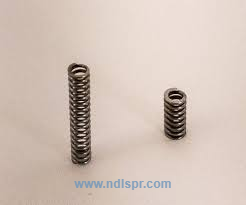
When equipment relies on controlled pulling force and consistent movement, the choice of spring becomes an important part of the overall design, so working with a reliable Tension Spring Supplier can help manufacturers identify suitable solutions for their applications. Tension springs are widely used in mechanical assemblies where components need to return to a certain position, maintain tension, or respond to repeated movement. From everyday equipment to specialized industrial products, their performance depends on material characteristics, structural design, manufacturing quality, and how well the spring fits its working environment. What should buyers understand before selecting a suitable tension spring?
Material selection is one of the first considerations because it influences how a spring responds to stretching, repeated loading, and environmental exposure. Spring steel is commonly considered for applications that require elasticity and dependable mechanical behavior. Stainless steel may be suitable when resistance to moisture, oxidation, or certain environmental conditions is important. Other material choices can be considered according to the operating environment and the characteristics required by the finished assembly. Buyers should avoid choosing materials based only on appearance or general descriptions. Instead, they should consider where the spring will be installed, what surrounding components it will contact, and whether the environment may expose it to moisture, chemicals, or changing temperatures. A suitable material helps support stable operation and reduces the possibility of premature performance problems.
The structure of a tension spring also deserves attention. Unlike compression springs, which work by resisting pushing forces, tension springs are designed to resist pulling forces and return toward their original form after being extended. Their ends are especially important because hooks or other connecting structures allow the spring to attach to surrounding components. Different equipment designs may require different end configurations, so buyers should consider how the spring will connect with the rest of the assembly. A poorly matched connection can affect installation, movement, and the overall operation of the equipment. Understanding the relationship between spring structure and application requirements makes the selection process more practical.
When evaluating a spring for a particular project, buyers should begin with the actual function rather than selecting a product simply because it looks similar to an existing component. Consider whether the spring will support a moving cover, help return a mechanical part, maintain tension in an assembly, or assist with repeated opening and closing actions. These different functions may place different demands on the spring's design. It is also useful to understand how frequently the mechanism will operate and whether the spring will remain under tension for extended periods. Sharing these details with a manufacturer can help narrow down suitable designs and reduce unnecessary adjustments during product development.
Manufacturing technology plays an important role in turning a design concept into a dependable component. Wire forming, controlled coiling, end shaping, and appropriate finishing processes all contribute to the final spring structure. Consistency between production batches is particularly important for manufacturers assembling products on a regular basis. If spring shapes or connection features vary noticeably, installation and equipment performance may become less predictable. Inspection procedures can help identify visible defects, forming inconsistencies, and other issues before products move to the next stage of assembly. Buyers should therefore consider not only the spring itself but also the supplier's ability to maintain production consistency and communicate quality requirements.
A practical sourcing decision also depends on the buying experience. Clear communication helps both parties understand the intended application, preferred material, connection style, and expected working conditions. Buyers may have drawings, samples, or descriptions of an existing component, and these references can provide useful starting points for discussing customization. A responsive manufacturer should be able to review the supplied information, explain possible design considerations, and clarify which details need further confirmation. This exchange is valuable because a spring that appears suitable in a product photograph may not necessarily fit the actual assembly. Cooperation during the development stage can make product selection and later production arrangements easier to manage.
The appearance of a tension spring is closely connected to its functional design. Its coil form, hook shape, surface finish, and overall proportions influence how it fits into a mechanical product. In visible equipment, a clean and consistent finish may also contribute to the perceived quality of the finished assembly. However, appearance should not replace functional evaluation. A spring needs to fit its installation space, connect securely with related parts, and perform its intended movement. Buyers should therefore assess appearance together with material suitability, structural compatibility, and manufacturing quality rather than treating these factors as separate decisions.
For businesses developing new equipment or sourcing replacement components, customization can provide a practical way to address specific installation and operating requirements. Zhejiang Ningdeli Spring Co., Ltd. offers spring manufacturing experience across different application areas, giving buyers an opportunity to discuss product needs and possible design solutions. Through its ndlspr brand, the company presents spring products for customers seeking components for different mechanical assemblies. Buyers can review the available product range at https://www.ndlspr.com/ and consider which design direction may suit their projects. A carefully selected Tension Spring Supplier can support the process from understanding application requirements to identifying a spring design that works naturally with the finished equipment.
- Technology for Students
- Admissions & Applications
- Online Courses
- Career and Jobs
- Campus Life
- Drinks
- Film
- Fitness
- Food
- Игры
- Gardening
- Health
- Главная
- Literature
- Music
- Networking For Students
- Insights
- Party
- Religion
- Shopping
- Sports
- Theater
- Wellness
- Education News
- Business & Finance For Students
- Security, Law & Crime Education
- Insurance
- Science & Technology For Students
 Russian
 English
 Arabic
 French
 Spanish
 Portuguese
 Deutsch
 Turkish
 Dutch
 Italiano
 Romaian
 Portuguese (Brazil)
 Greek